GLP-1 receptor agonists like semaglutide and tirzepatide have fundamentally changed how clinicians think about obesity and metabolic disease. Prescriptions have grown exponentially over the past few years, and the cultural conversation around these medications shows no sign of slowing down. But here’s what most people on these drugs aren’t told at the pharmacy: the medication is only half the equation. What you eat while taking a GLP-1 agonist can determine whether you lose mostly fat or mostly muscle, whether you feel energized or depleted, and whether the weight you lose stays off. The drug suppresses appetite. Your diet determines the quality of the outcome.
This isn’t a minor distinction. A 2025 study published in Frontiers in Clinical Diabetes and Healthcare examining oral semaglutide in individuals with type 2 diabetes found that behavioral factors — including alcohol consumption, smoking status, and even the timing of the dose relative to breakfast — were meaningful predictors of whether patients achieved their glycemic targets. In other words, the drug’s effectiveness isn’t purely pharmacological. The lifestyle context around it matters enormously. If you’re on a GLP-1 medication and you’re not thinking carefully about what goes on your plate, you’re leaving a significant amount of the medication’s potential on the table.
What follows is a practical, evidence-based breakdown of how to eat while on a GLP-1 — structured around the metabolic realities of what these drugs actually do inside your body, and what your nutrition needs to do in response.
Understanding What GLP-1 Medications Actually Do to Your Appetite and Metabolism
Before you can optimize your diet on a GLP-1, you need to understand the physiological terrain you’re working with. Glucagon-like peptide-1 is a naturally occurring gut hormone released after eating. It signals satiety to the brain, slows gastric emptying, and stimulates insulin secretion in a glucose-dependent manner. GLP-1 receptor agonists essentially amplify and extend those signals far beyond what your body produces naturally. The result is a dramatic reduction in hunger, a slower rate at which food leaves your stomach, and a general dampening of food-seeking behavior that many users describe as the “food noise” going quiet.
This mechanism has a direct consequence for how you should eat. Because gastric emptying is significantly slowed, large meals that would have been manageable before can now cause nausea, bloating, and discomfort. Your stomach is holding food for longer, and forcing more volume into it creates real physiological distress. This isn’t a willpower issue — it’s pharmacology. The practical implication is that smaller, more frequent meals or simply eating to true satiety (which on a GLP-1 often arrives much earlier than you’re accustomed to) becomes the default approach. Most people on these medications naturally migrate toward smaller portions. The critical question is whether those smaller portions are nutritionally dense enough to sustain lean mass, metabolic function, and long-term health.
Gut hormones are also deeply intertwined with weight regulation independent of the drug itself. Research published in Pediatric Obesity found that even modest weight loss alters fasting levels of insulin, leptin, and adiponectin in ways that can paradoxically favor weight regain. This means that as you lose weight on a GLP-1, your body’s hormonal environment is shifting in ways that may eventually push back against continued fat loss. Your diet needs to be structured not just to take advantage of the appetite suppression, but to create a metabolic environment resilient enough to sustain results.
The Protein Imperative: Why This Is Non-Negotiable on GLP-1 Therapy
If there is one nutritional principle that towers above every other while on a GLP-1 medication, it is this: eat enough protein. Full stop. The significant caloric restriction that GLP-1 medications produce is powerful for fat loss, but it creates a well-established physiological risk — muscle loss. When you’re eating far less than you were before, your body will draw on both fat and lean tissue for energy. Without adequate protein and resistance training, a meaningful portion of the weight lost on GLP-1 therapy can come from muscle rather than fat. That’s a metabolic disaster in slow motion, because muscle is metabolically active tissue that drives your resting energy expenditure. Less muscle means a slower metabolism, and a slower metabolism makes weight maintenance after stopping the medication significantly harder.
The research-supported target for men in a caloric deficit — particularly those who are physically active — is between 1.6 and 2.2 grams of protein per kilogram of body weight per day, with some evidence supporting even higher intakes during aggressive fat loss phases. For a 200-pound man, that translates to roughly 145 to 200 grams of protein daily. On a GLP-1, where your appetite is dramatically suppressed and total food volume is reduced, hitting that target requires intentional planning. Protein has to become the first priority at every meal, not an afterthought.
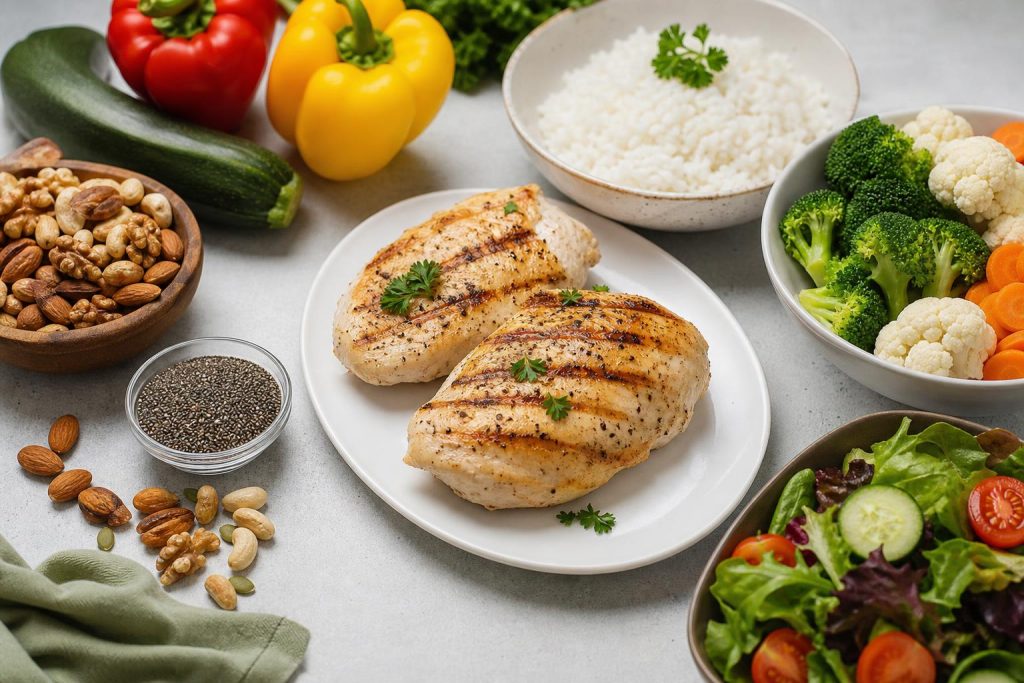
Practically, this means front-loading protein at every eating opportunity. Eggs, Greek yogurt, cottage cheese, chicken breast, lean beef, fish, and whey protein all become strategic tools. If you can only eat a small amount at a meal, that small amount should be protein-dense. A common mistake among GLP-1 users is filling their reduced appetite with whatever sounds palatable — often simple carbohydrates, crackers, or soft foods that go down easy — rather than nutrient-dense protein sources that support body composition. The drug makes it easy to under-eat across the board. Your job is to under-eat strategically.
Leucine deserves specific mention here. This branched-chain amino acid is the primary trigger for muscle protein synthesis, and it requires a sufficient dose — approximately 2.5 to 3 grams per meal — to effectively stimulate muscle building. This is another reason why protein quality and quantity at each sitting matters, not just total daily protein spread across six tiny snacks. Prioritize complete protein sources at your main meals, and if appetite suppression is making it genuinely difficult to hit your protein targets through food alone, a high-quality whey or casein protein supplement is a clinically reasonable bridge.
Building Your Plate: Carbohydrates, Fats, and the Foods That Work With the Medication
Beyond protein, the broader structure of your diet on a GLP-1 should be built around metabolic clarity and digestive tolerance. Because gastric emptying is slowed by the medication, foods that digest quickly and put minimal mechanical burden on the gastrointestinal system tend to be better tolerated, especially in the early weeks of therapy. This doesn’t mean you should eat only bland or processed foods — it means understanding which whole foods sit well and which tend to cause issues.
High-fiber vegetables, legumes, and whole grains are nutritionally excellent, but consuming large quantities of fiber-rich foods while on a GLP-1 can exacerbate bloating and nausea because they’re already slow-digesting, and the medication is already slowing digestion further. The solution isn’t to eliminate fiber — fiber is critical for gut microbiome health, blood sugar regulation, and satiety — but to introduce it gradually and pay attention to your body’s tolerance signals. Cooked vegetables tend to be easier on the system than raw. Smaller, more frequent servings of complex carbohydrates are preferable to large portions consumed at once.
On the carbohydrate side more broadly, the appetite-suppressing effect of GLP-1 medications creates an opportunity to meaningfully clean up carbohydrate quality without feeling deprived. When food noise is quiet, the craving-driven pull toward ultra-processed, high-sugar foods is significantly reduced. Use that window. Prioritize carbohydrate sources that provide glucose stability: oats, sweet potatoes, quinoa, berries, legumes, and whole grains. Avoid the easy trap of filling your reduced caloric intake with refined carbohydrates — even though they’re palatable and easy to eat, they offer poor nutritional value per calorie and can destabilize blood sugar in ways that undermine the metabolic benefits you’re trying to achieve.
Dietary fat plays an important and often underappreciated role on GLP-1 therapy. Fat is calorically dense, which is a consideration when you’re eating less overall, but it also slows gastric emptying independently of the medication. This means very high-fat meals — think greasy, heavy restaurant food or large amounts of added oils — can create pronounced nausea and gastrointestinal discomfort. This doesn’t mean dietary fat is the enemy. Healthy fat sources like avocado, olive oil, nuts, seeds, and fatty fish provide essential fatty acids, support hormonal function, and improve the absorption of fat-soluble vitamins. The key is moderation and quality. A handful of almonds or half an avocado on a salad is very different from a plate of deep-fried food.
Alcohol deserves direct attention here, not just for general health reasons but because the evidence is specific. The 2025 semaglutide study referenced earlier identified current alcohol drinking as a factor associated with not achieving glycemic targets on oral semaglutide. Beyond glycemic control, alcohol is calorically empty, disrupts sleep and recovery, impairs protein synthesis, and when combined with the slower gastric emptying caused by GLP-1 medications, can have unpredictable and amplified effects. Many GLP-1 users report that their tolerance for alcohol changes dramatically on the medication. Reducing or eliminating alcohol isn’t just good advice — it’s mechanistically supported.
Hydration is another factor that often gets overlooked in the GLP-1 conversation. Reduced food intake means reduced water intake from food sources, which can contribute to dehydration, constipation, and fatigue. Aim for consistent water intake throughout the day — at minimum 2.5 to 3.5 liters for most active men — and consider electrolyte support if you’re also training intensely or following a lower-carbohydrate approach that naturally increases electrolyte excretion.
The Stress, Behavior, and Environmental Factors That Quietly Undermine Your Nutrition
Eating well on a GLP-1 isn’t purely a matter of food selection. The behavioral and environmental context around eating shapes outcomes in ways that the medication cannot override. A 2026 study published in Eating and Weight Disorders examined individuals enrolled in a weight management clinic during the acute stress of the 2023 Israel-Hamas conflict and found that roughly one in four patients with overweight or obesity experienced significant weight gain within just two months of the conflict’s onset. Critically, the researchers identified modifiable risk factors — including disruptions to healthy eating and exercise behaviors — as key contributors. Anti-obesity medications were flagged as an important tool to maintain progress during periods of extreme stress, but behavioral anchors were equally essential.
The lesson for men on GLP-1 medications is pointed: stress eating, emotional eating, and environmental disruption can erode progress even when pharmacological appetite suppression is in place. The reduced food noise doesn’t completely eliminate emotionally driven eating patterns, and in some individuals, underlying disordered eating behaviors can persist or emerge during GLP-1 therapy. A nationally representative study published in the International Journal of Eating Disorders found that individuals who screened positive on an eating disorder screener were more likely to seek out GLP-1 medications, particularly through telehealth channels without physician oversight. This finding underscores the importance of approaching GLP-1 nutrition not just mechanically — hit your protein, avoid greasy foods — but with honest self-awareness about your relationship with food.
Building consistent meal structure is one of the most effective behavioral strategies you can implement. Even when appetite is suppressed and you’re not hungry, establishing regular eating windows — perhaps two to three intentional meals per day at consistent times — creates a framework that prevents both under-eating to the point of muscle loss and impulsive eating driven by emotion or environment. The timing of your dose relative to meals also matters practically: the 2025 semaglutide research specifically noted that the duration between oral semaglutide administration and breakfast was a predictive factor in treatment outcomes, reflecting how meaningfully meal timing and drug timing interact.
Resistance training should be viewed as a non-negotiable complement to nutrition on GLP-1 therapy, not an optional add-on. Lifting weights creates the anabolic signal that tells your body to preserve muscle even in a caloric deficit. The combination of adequate protein and progressive resistance training is the most evidence-supported strategy for maintaining lean mass during weight loss — with or without medication. If you’re not currently training, starting a structured resistance program while on a GLP-1 is one of the highest-return investments you can make for long-term metabolic health.
The Takeaway
GLP-1 medications are a genuinely powerful tool for fat loss and metabolic improvement. But a tool is only as effective as the hands using it. The men who get the best long-term outcomes from these medications aren’t the ones who simply take the injection and wait — they’re the ones who use the reduced appetite as a strategic window to build better nutritional habits, prioritize protein relentlessly, clean up their carbohydrate quality, train with weights, limit alcohol, stay hydrated, and manage the behavioral and emotional dimensions of eating with the same rigor they bring to their food choices.
The medication quiets the noise. What you do in that quiet determines everything.
Scientific References
-
Hirotsu, Taniguchi, Nishimura et al. (2025).
Exploring factors predicting the effectiveness of oral semaglutide in Japanese individuals with type 2 diabetes switching from dipeptidyl peptidase 4 inhibitors: a pilot study..
Frontiers in clinical diabetes and healthcare.
View on PubMed → -
Siegel, Mumford, Kresovich et al. (2026).
Eating Disorder Screen Results and GLP-1 Awareness, Interest, and Use in a Nationally Representative Sample of Adults in U.S. Households..
The International journal of eating disorders.
View on PubMed → -
Jensen, Nguo, Baxter et al. (2015).
Fasting gut hormone levels change with modest weight loss in obese adolescents..
Pediatric obesity.
View on PubMed → -
Minsky, Robinson, Alon et al. (2026).
Determinants of acute weight gain during regional conflict among individuals with overweight and obesity receiving targeted multidisciplinary care..
Eating and weight disorders : EWD.
View on PubMed →