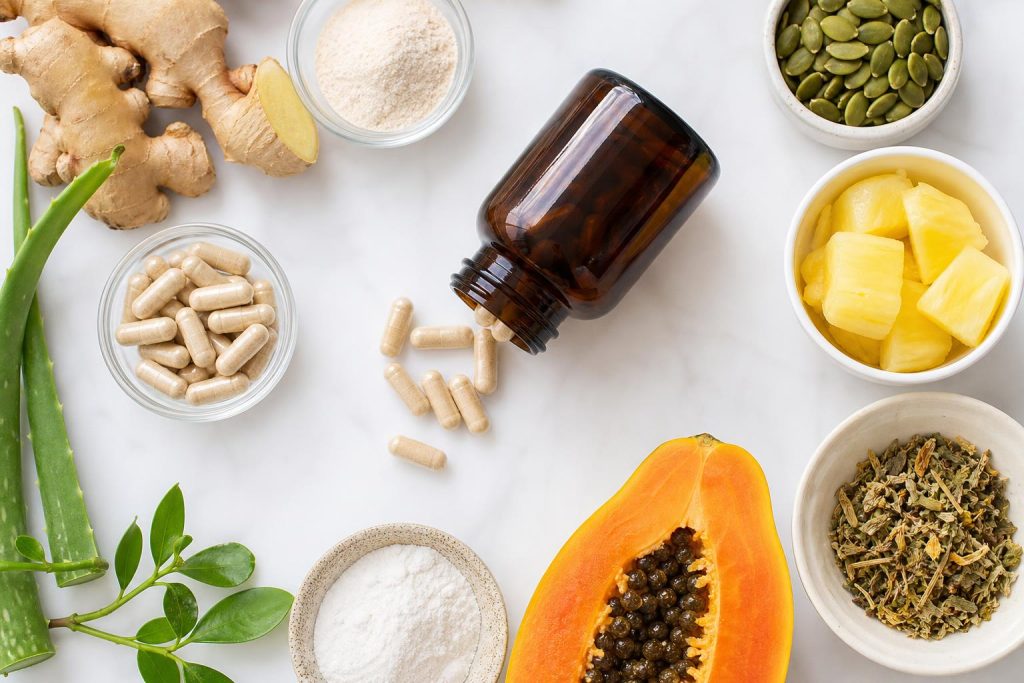
If you’ve ever felt like your stomach declared war on you after starting a GLP-1 medication like semaglutide or tirzepatide, you’re not imagining things. Clinical trial data shows that up to 44% of patients on semaglutide experience nausea, making it one of the most common reasons men reduce their dose or discontinue therapy altogether. But here’s what most people don’t realize: the gut disruption caused by GLP-1 receptor agonists isn’t random. It’s mechanistic, and that means it’s manageable — especially when you understand the role digestive enzymes play in the equation.
GLP-1 receptor agonists slow gastric emptying dramatically. That’s partly how they work — food sits in your stomach longer, signaling fullness and blunting appetite. The problem is that this same mechanism can overwhelm your digestive system’s capacity to break down macronutrients efficiently. Proteins, fats, and complex carbohydrates that would normally be processed and passed along relatively quickly now linger, ferment, and create the gas, bloating, and nausea that make early weeks on these medications miserable. Digestive enzymes — the proteins your body produces to chemically disassemble food — become a practical tool for closing that gap.
Why Digestive Enzyme Insufficiency Matters on GLP-1 Therapy
Your pancreas and small intestine naturally secrete a cocktail of digestive enzymes — amylase for carbohydrates, lipase for fats, and proteases like trypsin and chymotrypsin for proteins. Under normal circumstances, these enzymes meet food at the right time and in the right quantities. When gastric emptying slows, that timing gets thrown off. Research has confirmed that GLP-1 receptor activation significantly inhibits gastrointestinal motility, which means the enzymatic window and the food bolus are no longer synchronized the way your physiology expects.
The result isn’t just discomfort. Undigested fats in particular can trigger nausea through stimulation of cholecystokinin and other satiety hormones that are already heightened by GLP-1 activity. Undigested proteins can ferment in the colon, contributing to bloating and cramping. Supplemental digestive enzymes — particularly broad-spectrum formulas containing lipase, protease, and amylase — can help pick up the slack when your body’s own enzyme timing is disrupted. A randomized controlled trial found that supplemental digestive enzymes significantly reduced gastrointestinal symptoms including bloating, flatulence, and abdominal discomfort in individuals with functional digestive issues — a profile that closely mirrors what GLP-1 users experience.
When choosing a digestive enzyme supplement, lipase activity measured in FIP units is arguably the most important variable for GLP-1 users specifically. Because fat digestion is the most enzyme-dependent process in your gut, and because fatty meals tend to trigger the worst GLP-1-related nausea, a formula with robust lipase content — ideally 5,000 to 10,000 FIP units per serving — should be your starting benchmark. Protease activity matters too, especially if you’re prioritizing protein intake to preserve muscle mass during a caloric deficit, which you absolutely should be. Broad-spectrum options that also include cellulase, bromelain, or ox bile extract offer additional coverage for fiber and fat breakdown respectively.
How to Use Digestive Enzymes Strategically
Timing is everything with digestive enzymes — and this is where most men get it wrong. Taking a capsule an hour before your meal or after you’ve finished eating will do very little. Enzymes need to be present in your stomach at the same time as your food, so the practical protocol is to take your enzyme supplement with the first bite of any significant meal. On GLP-1 therapy in particular, eating smaller meals more frequently than you’re used to will help keep the enzymatic load manageable at any one sitting.
It’s also worth addressing what you’re eating, not just how you’re digesting it. Research on gastric emptying rates shows that high-fat, high-fiber meals delay gastric emptying more than any other meal composition, compounding the slowdown already induced by GLP-1 medications. That doesn’t mean eliminating fat — dietary fat is essential for testosterone production, fat-soluble vitamin absorption, and satiety — but it does mean that meals with moderate fat content are going to be significantly more tolerable than a plate loaded with butter and red meat during the first weeks of dose escalation. Lean proteins, easily digestible carbohydrates like white rice, and well-cooked vegetables tend to move through the system more comfortably while your body adjusts.
Ginger deserves a mention here because it has actual mechanistic data behind it, not just folk medicine credibility. A controlled study demonstrated that ginger accelerates gastric emptying and reduces nausea symptoms, making it a logical complementary strategy alongside enzyme supplementation. Whether you add fresh ginger to meals, use ginger tea, or opt for standardized ginger root capsules, the evidence suggests a meaningful benefit for nausea management specifically — and it pairs well with digestive enzyme use rather than replacing it.
Probiotics are a frequently mentioned addition to the digestive health conversation, and for good reason. Evidence shows that probiotic supplementation can reduce GI symptoms including nausea and bloating, likely through modulation of the gut microbiome and improvements in intestinal transit. Lactobacillus and Bifidobacterium strains are the most studied for GI symptom relief. Using a multi-strain probiotic alongside digestive enzymes creates a more complete approach — enzymes handling the mechanical breakdown problem, probiotics supporting the microbial environment downstream.
The Takeaway
GLP-1 nausea is real, it’s physiologically grounded, and it doesn’t have to be the reason you abandon a tool that’s working for you. Digestive enzyme supplementation — particularly broad-spectrum formulas with meaningful lipase activity taken with meals — addresses the core mechanism behind much of the discomfort. Stack that with strategic meal composition, appropriately sized portions, ginger, and a quality probiotic, and you’ve built a practical, evidence-informed protocol for getting through the difficult early phase of GLP-1 therapy without sacrificing your goals or your quality of life. Your gut can adapt. Give it the right support to do so.