Here’s a number worth remembering: in a randomized controlled trial published in Obesity Reviews, men on GLP-1 receptor agonists lost an average of 10–15% of their body weight — but roughly 25 to 40% of that loss came from lean muscle mass, not fat. The same problem applies to aggressive caloric restriction of any kind. You can shrink the number on the scale and still end up with a softer, weaker body underneath — what researchers now call “skinny fat at a lower weight.” The fix isn’t complicated, but it does require you to actually pick something up.
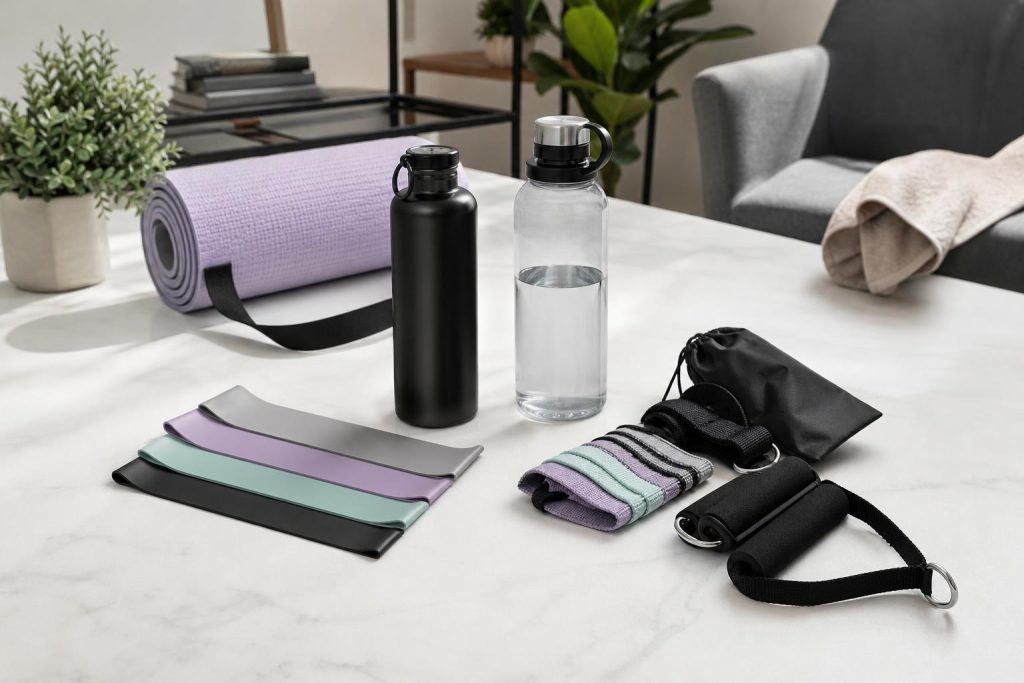
Resistance training is the non-negotiable. Not cardio. Not steps. Resistance training. And for millions of men who work from home, travel frequently, have joint issues, or simply don’t have a gym membership, resistance bands have become a legitimate — and research-supported — alternative to barbells and machines. This isn’t about settling for second best. Done correctly, band training delivers real mechanical tension, real metabolic stress, and real muscle preservation. Here’s how to build a program around them.
Why Resistance Bands Actually Work (The Science You Need to Know)
The skepticism is understandable. Rubber bands versus iron plates — it sounds like a fair fight only on paper. But the mechanism that drives muscle growth doesn’t care what’s creating the tension. A 2019 meta-analysis in the Journal of Human Kinetics found that elastic resistance training produced similar gains in muscular strength and size compared to conventional free weight and machine training when matched for volume and progressive overload. The key phrase there is progressive overload — the principle that your muscles must be consistently challenged with increasing demand over time.
What makes bands particularly useful is their resistance curve. Unlike a dumbbell, which provides constant load throughout a movement, a band increases resistance as it stretches. This means the hardest part of a curl, press, or squat comes at the point where your muscles are naturally strongest — their fully contracted position. Research on variable resistance training suggests this ascending resistance profile may actually enhance neuromuscular activation and strength development, particularly through the top portion of the range of motion that many lifters neglect.
For men in a caloric deficit — whether from a GLP-1 medication like semaglutide or tirzepatide, a structured diet protocol, or simply cleaner eating — preserving muscle is the primary physiological priority. Studies confirm that resistance training during weight loss significantly blunts the loss of lean mass compared to diet alone, regardless of the method used to create the deficit. Bands are a tool that makes this protection accessible every day, in any room, with minimal recovery cost.
Building a Real Program: Structure, Movement Patterns, and Progression
A good band workout isn’t a random collection of exercises. It’s built around the same movement patterns that govern effective barbell programming: push, pull, hinge, squat, and carry. Hit these patterns consistently and you’ve covered every major muscle group in your body. The goal is three to four sessions per week, with each session lasting 30 to 45 minutes. That’s enough stimulus to drive adaptation without overwhelming recovery — particularly important when you’re eating at a caloric deficit and your body’s resources are stretched thin.
For the push pattern, banded push-ups and band chest presses (anchored to a door or post) are your workhorses. Add a banded overhead press for shoulder development. For pulling — the most neglected pattern in most home workouts — banded rows and face pulls are essential. These not only build the back and biceps but counteract the postural rounding that comes from hours at a desk. The hinge pattern, best executed as a banded Romanian deadlift or pull-through, targets the posterior chain: glutes, hamstrings, and lower back. The squat pattern covers your quads and reinforces lower body strength through banded goblet squats or split squats, where the band adds resistance to the descending phase.
On sets and reps: aim for three to four sets of 10 to 15 repetitions per exercise, with the last two reps of each set genuinely difficult to complete. If you can cruise through 15 reps without effort, you need a heavier band. This is where investing in a quality set of bands with multiple resistance levels — typically ranging from 10 to 150 pounds of tension — pays off. Brands like Rogue, Serious Steel, and WODFitters offer calibrated, durable options that hold up under daily use. Rest 60 to 90 seconds between sets. Shorter rest periods increase metabolic demand and are well-tolerated during fat-loss phases without sacrificing meaningful strength stimulus.
Progressive overload with bands looks slightly different than with weights. You can progress by shortening the band (standing further from the anchor point or choking up on the band itself), moving to a heavier resistance band, increasing repetitions before adding resistance, or slowing your tempo — particularly on the eccentric, or lowering, phase. Eccentric emphasis has been shown to produce greater hypertrophic stimulus per unit of effort, making it a smart strategy for men who can’t always access heavier bands immediately.
Protein intake deserves equal weight in this conversation. No resistance training program — band-based or otherwise — will preserve or build muscle without adequate protein. Current evidence recommends 1.6 to 2.2 grams of protein per kilogram of body weight daily for men actively training during a caloric deficit. For a 200-pound man, that’s roughly 145 to 200 grams per day. Men using GLP-1 medications face a specific challenge here because appetite suppression can make hitting protein targets feel difficult — which is exactly why prioritizing protein-dense foods first at every meal, before appetite fades, is a practical and effective strategy.
The Takeaway
The best workout is the one you’ll actually do consistently, with enough intensity to force adaptation. Resistance bands clear both bars. They’re inexpensive, portable, joint-friendly, and backed by real science when used with structure and progressive intent. Whether you’re managing appetite changes on a GLP-1 medication, cutting calories the old-fashioned way, or simply trying to build a stronger body from your living room, a well-designed band program gives you everything you need to protect muscle, accelerate fat loss, and come out the other side of a deficit looking the way you intended. The rubber is ready when you are.