Ozempic is doing something genuinely remarkable in the bodies of the men taking it. By activating GLP-1 receptors, semaglutide suppresses appetite, slows gastric emptying, and — as a 2023 network meta-analysis in Frontiers in Endocrinology confirmed — produces meaningful reductions in liver fat content and improvements in metabolic markers like AST and ALT in men with conditions like NAFLD and type 2 diabetes. The drug works. But here is what most prescribers do not tell you: Ozempic does not operate in a nutritional vacuum. The same mechanisms that drive fat loss and appetite suppression also create real gaps in your nutrient intake — gaps that, left unaddressed, can cost you muscle, energy, and long-term results.
This is not about stacking supplements for the sake of it. It is about understanding what your body is now getting less of, and giving it what it needs to come out of this process leaner, stronger, and metabolically healthier — not just lighter on the scale.
The Nutritional Problem Ozempic Creates
When semaglutide works as intended, you eat significantly less. For many men, daily caloric intake drops by 30 to 50 percent compared to baseline. That is a profound reduction, and with it comes an equally profound reduction in the vitamins, minerals, amino acids, and dietary fiber your body relies on to function. This is not a side effect in the traditional sense — it is a downstream consequence of the drug doing exactly what it is supposed to do.
The most clinically significant concern for men on Ozempic is protein insufficiency. Muscle tissue is metabolically expensive, and when you are in a steep caloric deficit with reduced appetite, your body will break down lean mass to meet its energy demands unless you actively counteract that process. Research on GLP-1 receptor agonists has shown that weight loss from these medications can include a disproportionately high percentage of lean mass compared to more controlled dietary interventions. For a man who wants to emerge from a course of Ozempic looking and performing better — not just smaller — protein intake is non-negotiable.
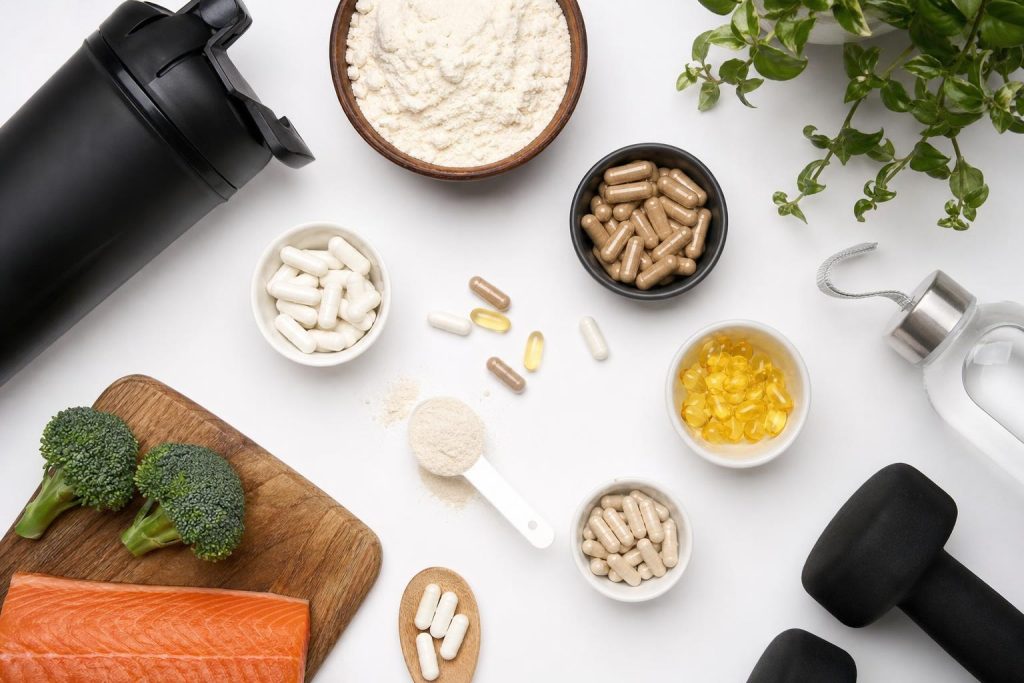
The general target during GLP-1-assisted weight loss is 1.2 to 1.6 grams of protein per kilogram of body weight daily. Getting that through food alone becomes difficult when your appetite is blunted and a few bites of chicken leaves you feeling full. This is where a high-quality whey or casein protein supplement earns its place — not as a luxury, but as a practical tool for hitting a number that protects your physique. A leucine-rich whey isolate in particular is worth the investment, as leucine is the key amino acid trigger for muscle protein synthesis.
Alongside protein, magnesium deserves serious attention. Magnesium is involved in over 300 enzymatic reactions in the body, including those governing insulin sensitivity, muscle contraction, sleep quality, and blood pressure regulation. Deficiency is already endemic in Western men — estimated to affect upward of 50 percent of the population even without dietary restriction. On Ozempic, where food volume and variety shrink, the risk compounds. Magnesium glycinate or magnesium malate are the most bioavailable forms and the least likely to cause the gastrointestinal distress that Ozempic users are already prone to experiencing.
The Supplements That Actually Move the Needle
Vitamin D and omega-3 fatty acids are not glamorous, but they are foundational — and both are commonly under-consumed even in men eating normally. On Ozempic, with dietary fat intake often falling sharply, omega-3 insufficiency becomes a real concern. Eicosapentaenoic acid (EPA) and docosahexaenoic acid (DHA), the active long-chain omega-3s found in fish oil, play critical roles in reducing systemic inflammation, supporting cardiovascular health, and preserving lean muscle mass during caloric restriction. A dose of 2 to 3 grams of combined EPA and DHA daily is supported by the current evidence base for metabolic health applications.
Vitamin D3 works synergistically with omega-3s on the inflammation and metabolic health front, and its role in testosterone production is relevant to any man serious about body composition. Deficiency correlates with reduced androgen levels, poor recovery from training, and impaired immune function. Pairing D3 with K2 ensures that calcium is directed appropriately to bone rather than arterial walls — a detail worth getting right, particularly in men managing cardiometabolic risk alongside their weight loss. A daily dose of 2,000 to 5,000 IU of D3, confirmed by periodic bloodwork, is a reasonable range for most men.
Creatine monohydrate is the most research-supported supplement for muscle preservation and performance, and its relevance on Ozempic is arguably higher than in any other context. When you are eating less, training may feel harder, and recovery slower. Creatine supports ATP resynthesis, meaning more available energy for resistance training sessions that stimulate muscle retention. At 3 to 5 grams daily, it is safe, inexpensive, and thoroughly validated. There is also emerging evidence that creatine may support cognitive function — a welcome benefit for men who report the brain fog sometimes associated with significant caloric restriction.
Zinc and B vitamins round out the core stack. Zinc is critical for testosterone synthesis, immune defense, and wound healing, and absorption can be compromised by reduced food intake and gastrointestinal changes common on GLP-1 medications. B vitamins — particularly B12, folate, and B6 — are essential for energy metabolism and neurological health. Men who have been on metformin alongside their GLP-1 medication should be especially attentive to B12 status, as metformin is a well-documented depleter of this vitamin.
One supplement that often gets overlooked in this context is a greens powder or comprehensive multivitamin. When appetite is suppressed and vegetable intake drops, micronutrient diversity suffers quietly. A quality greens supplement is not a replacement for real food, but it can serve as genuine nutritional insurance during a period when your diet is, by design, restricted.
What This Means For You
Ozempic is a powerful metabolic lever. But levers only work when the rest of the machinery is in good shape. The men who get the best long-term results from semaglutide — the ones who lose fat, hold on to muscle, maintain energy, and actually feel better — are the ones treating nutrition and supplementation as serious parts of the process, not afterthoughts. Prioritize protein above everything else. Build from there with magnesium, omega-3s, vitamin D3 with K2, creatine, and a solid B-complex. Get your bloodwork done. Train with weights consistently. Ozempic can change your body composition trajectory dramatically, but supplements and smart nutrition are what determine the quality of the physique waiting on the other side.
Scientific References
-
Yuan, Gao, Yang et al. (2023).
Comparing the effectiveness of long-term use of daily and weekly glucagon-like peptide-1 receptor agonists treatments in patients with nonalcoholic fatty liver disease and type 2 diabetes mellitus: a network meta-analysis..
Frontiers in endocrinology.
View on PubMed →