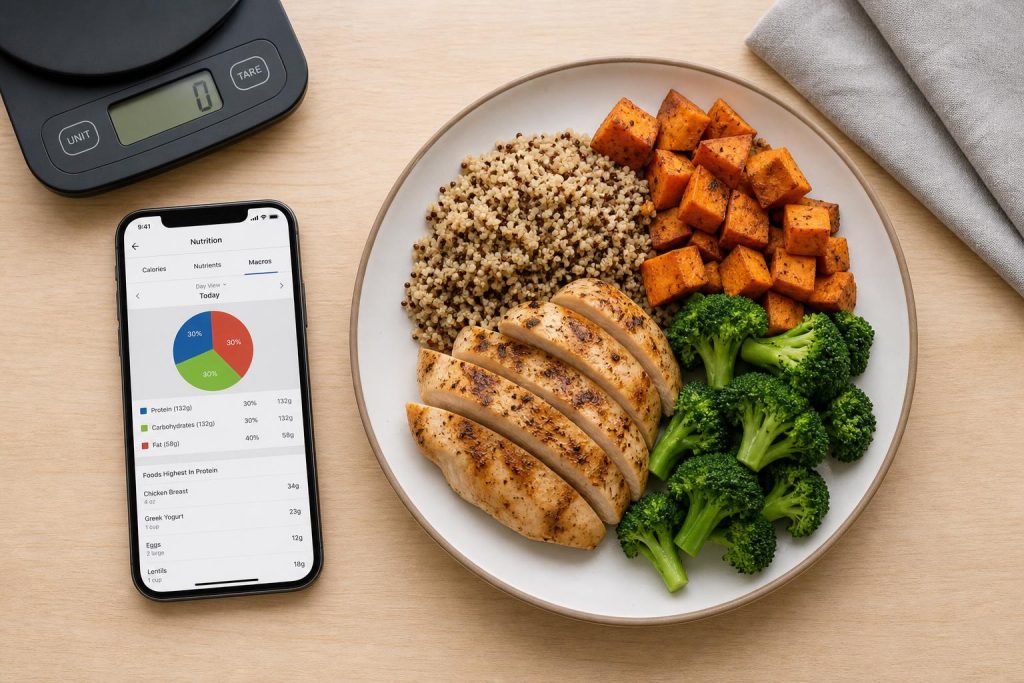
When the SURMOUNT and STEP trials showed semaglutide users losing 15% or more of their body weight, the headlines celebrated. What they buried in the fine print was this: a significant portion of that weight wasn’t fat. It was muscle. For men who care about body composition — not just the number on the scale — that distinction matters enormously. And it starts with protein.
GLP-1 receptor agonists like semaglutide (Ozempic, Wegovy) work by augmenting insulin secretion, suppressing glucagon, decelerating gastric emptying, and reducing overall calorie intake. That last mechanism is where the problem lives. When appetite drops dramatically — and on higher doses of semaglutide, it can crater — most people don’t just eat less junk. They eat less of everything, including protein. The result is a caloric deficit that’s deep enough to trigger meaningful muscle loss alongside fat loss. For a man in his 40s or 50s already fighting age-related muscle decline, that’s not a trade-off worth ignoring.
What the Research Says About Protein Deficiency on GLP-1 Therapy
A 2026 narrative review published in Clinical Obesity synthesizing data from nearly half a million adults found that protein and calcium insufficiency on GLP-1 receptor agonist therapy directly contributed to lean mass loss. More than 60% of GLP-1 users in the reviewed studies consumed below estimated requirements for key nutrients, and the researchers concluded that targeted nutritional assessment may be appropriate for patients at increased risk of malnutrition. That’s a clinical way of saying: if you’re on semaglutide and not paying close attention to what you eat, you may be quietly losing the muscle you’ve spent years building.
The same review identified vitamin D deficiency occurring in nearly 14% of users by 12 months, iron depletion running 26–30% lower than comparator groups, and progressive thiamine and cobalamin deficits over time. This isn’t just an academic concern. Deficiencies in these micronutrients compound the problem of muscle loss by impairing energy metabolism, nerve function, and the hormonal environment needed for muscle protein synthesis. When you’re eating less food overall, the quality and composition of what you do eat becomes exponentially more important — and protein sits at the top of that priority list.
So what does the science actually recommend? While no universal consensus exists specifically for GLP-1 users, the research framework is clear enough to work from. Most sports nutrition and clinical guidelines converge on 1.6 to 2.2 grams of protein per kilogram of body weight per day for individuals in a caloric deficit who want to preserve lean mass. For a 200-pound man, that’s roughly 145 to 200 grams of protein daily — a target that becomes significantly harder to hit when your appetite is suppressed by a medication designed to make you feel full on less food.
How to Hit Your Protein Target When You’re Never Hungry
This is where GLP-1 users face a practical challenge that goes beyond simple willpower. Nausea, early satiety, and delayed gastric emptying — all documented mechanisms of semaglutide — mean that sitting down to a 50-gram protein meal may feel physically impossible on dosing days or during dose escalation. The strategy, then, isn’t to force large protein-dense meals. It’s to restructure how and when you consume protein throughout the day.
Prioritizing protein at the start of every eating occasion is one of the most effective approaches. Before any carbohydrate or fat hits your plate, eat your protein source first. This takes advantage of whatever appetite window you have before fullness sets in. Greek yogurt, eggs, cottage cheese, and protein shakes are particularly useful here because they’re calorie-efficient, easy to eat in smaller volumes, and require minimal preparation — which matters when food aversion is real. Lean meats like chicken breast and white fish work well for those who can manage solid meals, but high-fat protein sources like fatty cuts or nut butters will hit caloric density limits faster, making it harder to reach protein targets without exceeding calorie goals.
Spreading protein across four to five smaller eating occasions rather than two or three larger meals tends to work better for GLP-1 users. Research on muscle protein synthesis consistently shows that distributing protein intake — roughly 30 to 40 grams per sitting — more effectively stimulates anabolic signaling throughout the day than loading protein into fewer meals. On days when even that feels difficult, a high-quality whey or casein protein supplement isn’t optional — it’s a medical-grade nutritional tool for preserving what you’ve built.
Resistance training remains non-negotiable in this equation. No amount of dietary protein will fully protect muscle tissue during aggressive caloric restriction without a mechanical stimulus telling the body that muscle is necessary. For men on semaglutide, two to four sessions of progressive resistance training per week creates the anabolic signal that dietary protein then supports. The combination of adequate protein and structured lifting is the most evidence-informed strategy for maintaining lean mass during GLP-1-driven weight loss — and it’s equally relevant for any man in a caloric deficit, medication or not.
It’s also worth noting that the cardiovascular benefits of GLP-1 medications are real and meaningful. A 2025 study published in JAMA found that semaglutide and tirzepatide were associated with more than a 40% risk reduction in the composite of hospitalization for heart failure or all-cause mortality in patients with cardiometabolic heart failure — a finding that underscores why preserving the benefits of these medications through smart nutrition is worth the effort. Letting muscle waste away while protecting the heart misses the full picture of what metabolic health actually looks like.
Protein Quality Matters as Much as Quantity
When total food volume is restricted, the amino acid profile of what you eat becomes critical. Complete proteins — those containing all nine essential amino acids, particularly leucine — are the priority. Leucine is the primary trigger for muscle protein synthesis, and research consistently shows it needs to reach a threshold of roughly two to three grams per meal to maximally stimulate anabolic pathways. Animal-based proteins — meat, dairy, eggs, fish — naturally deliver this leucine threshold. Plant-based proteins can work, but they typically require larger serving volumes to hit equivalent leucine levels, which can be a limiting factor when appetite is suppressed.
For men using semaglutide who follow plant-forward or vegetarian diets, combining complementary protein sources and supplementing with leucine or a complete essential amino acid product can close this gap effectively. This isn’t about being dogmatic on food sources — it’s about understanding that the metabolic math of muscle preservation requires specific inputs, and those inputs need to come from somewhere.
Regular monitoring of nutritional status also deserves a mention. Given the documented micronutrient deficiencies associated with GLP-1 therapy, asking your prescribing physician for periodic lab work — including ferritin, vitamin D, B12, and a comprehensive metabolic panel — gives you actionable data rather than guesswork. Protein adequacy is harder to measure on a blood panel, but tracking daily intake with a food logging app for even a few weeks provides an honest picture of where you actually stand.
The Takeaway
Semaglutide can be a powerful tool for fat loss and metabolic health, but it doesn’t override the fundamental biology of muscle preservation. Whether you’re on a GLP-1 medication, running a traditional caloric deficit, or simply trying to optimize body composition, the protein math is the same: 1.6 to 2.2 grams per kilogram of bodyweight daily, distributed across multiple meals, anchored in high-quality complete protein sources, and supported by consistent resistance training. On semaglutide, hitting that target requires intentionality — prioritizing protein first at every meal, leaning on convenient high-protein foods when appetite is low, and treating supplementation as a practical tool rather than an afterthought. The goal isn’t just to weigh less. It’s to weigh less while being stronger, leaner, and metabolically healthier than when you started.
Scientific References
-
Nauck, Quast, Wefers et al. (2021).
GLP-1 receptor agonists in the treatment of type 2 diabetes – state-of-the-art..
Molecular metabolism.
View on PubMed → -
Urbina, Salinas-Ruiz, Valenciano et al. (2026).
Micronutrient and Nutritional Deficiencies Associated With GLP-1 Receptor Agonist Therapy: A Narrative Review..
Clinical obesity.
View on PubMed → -
Krüger, Schneeweiss, Fuse et al. (2025).
Semaglutide and Tirzepatide in Patients With Heart Failure With Preserved Ejection Fraction..
JAMA.
View on PubMed → -
Khan, Vazquez, Mehdi et al. (2025).
Otolaryngologic Side Effects of GLP-1 Receptor Agonists..
The Laryngoscope.
View on PubMed → -
Villain, Planche, Lilamand et al. (2025).
Lecanemab for early Alzheimer’s disease: Appropriate use recommendations from the French federation of memory clinics..
The journal of prevention of Alzheimer’s disease.
View on PubMed →