When semaglutide first hit the market, researchers expected weight loss. What they didn’t fully anticipate was the degree to which that weight loss would come from lean tissue. A 2021 analysis published in Obesity Reviews found that during calorie-restricted weight loss, anywhere from 20 to 30 percent of lost weight can come from muscle mass — and GLP-1 medications, by dramatically suppressing appetite, create exactly the kind of severe caloric deficit that accelerates that problem. If you’re on Wegovy and not actively working to preserve muscle, you may be shrinking in ways that hurt your long-term metabolism far more than the number on the scale suggests.
The solution isn’t complicated, but it does require intention. Protein — specifically getting enough of it, consistently — is the single most evidence-backed nutritional strategy for preserving lean mass during weight loss. And for men on Wegovy or semaglutide who are eating significantly less food overall, protein powder isn’t just a convenience. It may be one of the most important tools in your protocol.
Why Muscle Loss Is the Hidden Risk of Rapid Weight Loss
The mechanism behind GLP-1-driven muscle loss isn’t mysterious. Wegovy works by mimicking the glucagon-like peptide-1 hormone, suppressing appetite so effectively that many users report eating 40 to 60 percent fewer calories than before. That level of restriction, without a deliberate protein and training strategy, puts the body in a catabolic state where muscle tissue is broken down for energy.
Research published in the American Journal of Clinical Nutrition has consistently shown that higher protein intake during caloric restriction preserves lean mass significantly better than standard protein recommendations. In one controlled trial, men consuming 2.4 grams of protein per kilogram of body weight while in a caloric deficit lost the same amount of fat as a lower-protein group but retained substantially more muscle. The implication is direct: if you’re eating less, every gram of protein becomes proportionally more important.
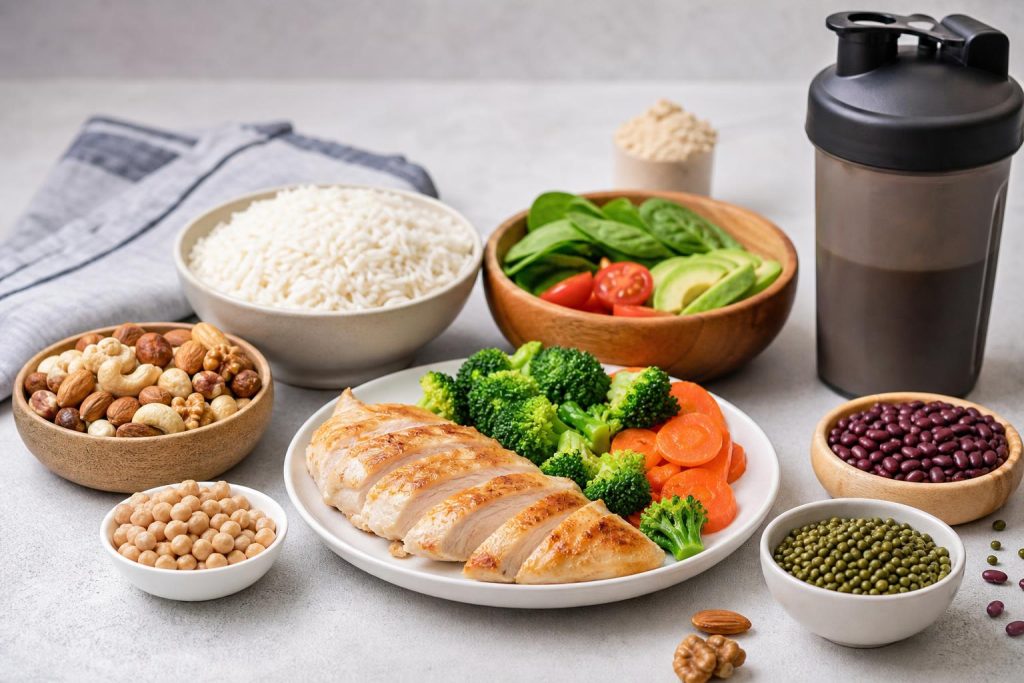
For men on Wegovy, the challenge is that reduced appetite makes hitting even basic protein targets feel impossible. This is where protein powder stops being a gym bro supplement and starts functioning as a clinical nutrition tool. A single serving of a high-quality whey isolate or casein protein can deliver 25 to 30 grams of protein in under 300 calories — making it one of the most protein-dense, low-volume foods available. When your appetite is suppressed and solid food feels unappealing, a protein shake is often the only realistic way to hit your daily target.
How Much Protein You Actually Need — and How to Hit It
The old RDA of 0.8 grams per kilogram of body weight was set to prevent deficiency, not to optimize body composition. For men actively trying to preserve or build muscle — whether on a GLP-1 medication, in a traditional cut, or simply trying to age better — the research points significantly higher. A meta-analysis in the Journal of Sports Sciences found that intakes between 1.6 and 2.2 grams per kilogram of body weight per day maximize muscle protein synthesis in active individuals. For a 200-pound man, that translates to roughly 145 to 200 grams of protein per day.
Hitting that range through whole foods alone — chicken, eggs, Greek yogurt, fish — is challenging for anyone eating a normal diet. On Wegovy, where total daily intake might be 1,200 to 1,500 calories, it becomes nearly impossible without strategic supplementation. One practical approach is front-loading protein early in the day, before appetite suppression peaks. A morning protein shake with 30 grams of whey, combined with two or three eggs, can put you 60 to 70 grams toward your goal before noon. A second shake in the afternoon or evening fills the gap without requiring a large, appetite-dependent meal.
The type of protein powder matters, though not as much as total intake. Whey protein isolate remains the gold standard for post-workout muscle protein synthesis due to its high leucine content and rapid absorption kinetics. Leucine specifically is the branched-chain amino acid most responsible for triggering the mTOR pathway — the molecular switch for muscle building. For men who are lactose intolerant or prefer plant-based options, a well-formulated pea and rice protein blend can match whey’s anabolic effect when matched for leucine content, as shown in a 2020 study in the Journal of the International Society of Sports Nutrition. Casein protein, which digests slowly, works well as a final intake before bed to support overnight muscle protein synthesis.
What men on Wegovy should avoid is falling into a pattern of consuming protein shakes as meal replacements in a way that further reduces total caloric intake. The goal is to use protein powder to hit protein targets within your calorie budget — not to shrink calories even further. If you’re already eating 1,200 calories and adding two protein shakes on top of near-zero food intake, you are not doing yourself any favors. Adequate protein must be paired with adequate overall energy to prevent the body from using dietary protein as fuel rather than for tissue synthesis.
Training Is the Other Half of the Equation
No amount of dietary protein will preserve muscle if there is no training stimulus telling your body to keep it. A landmark study in Medicine and Science in Sports and Exercise found that resistance training combined with high protein intake during caloric restriction preserved nearly all lean mass compared to diet alone. The signal from resistance training — the mechanical stress, the micro-damage to muscle fibers — essentially flags lean tissue as metabolically valuable, making the body less likely to cannibalize it for energy.
For men on Wegovy, this means resistance training is not optional if body composition is a priority. Three to four sessions per week of compound movements — squats, deadlifts, rows, presses — combined with hitting daily protein targets represents the most evidence-supported protocol available for losing fat while keeping muscle. A protein shake consumed within a few hours of training, either before or after, is not mandatory for muscle synthesis but does provide a reliable, convenient way to ensure leucine and amino acids are available when muscle protein synthesis is elevated post-exercise.
The Takeaway
Wegovy is a powerful tool for reducing body weight, but weight loss and fat loss are not the same thing. The men who come out the other side of a GLP-1 protocol looking leaner, stronger, and metabolically healthier are the ones who treated the medication as one piece of a larger strategy — not the whole plan. Protein powder, used intentionally, bridges the gap between a suppressed appetite and the protein intake your muscles actually need. Pair it with consistent resistance training, prioritize leucine-rich sources like whey isolate or a complete plant blend, and aim for 1.6 to 2.2 grams of protein per kilogram of body weight daily. The scale will move regardless. What you keep — or lose — beneath that number is up to you.