GLP-1 receptor agonists like semaglutide and tirzepatide have reshaped the conversation around weight loss — and for good reason. Clinical trials show meaningful reductions in HbA1c and body weight across diverse populations, with real-world studies confirming that oral semaglutide produces improvements comparable to injectable forms. But here’s what the prescription pad doesn’t tell you: what you eat while taking these medications determines whether you lose fat and keep muscle, or simply eat less and feel like garbage for months.
GLP-1 medications work by mimicking a naturally occurring gut hormone that slows gastric emptying, blunts appetite, and improves insulin sensitivity. They are a powerful tool. But they are still just a tool. The men who get the best results — leaner, stronger, metabolically healthier — are the ones who treat their nutrition with the same seriousness they bring to their medication schedule. This guide breaks down exactly what that looks like.
Why Your Food Choices Matter More on GLP-1s, Not Less
There’s a seductive logic that creeps in once men start a GLP-1: the drug is suppressing appetite, so food choices matter less because you’re eating so little anyway. This thinking leads to some of the worst outcomes seen in clinical practice. Severely reduced calorie intake without adequate protein and nutrient density is one of the fastest routes to muscle loss — and muscle is the engine of long-term metabolic health. When you eat less, the composition of what you eat becomes more important, not less.
The nausea, bloating, and gastrointestinal discomfort that many men experience early on GLP-1 therapy aren’t just side effects to white-knuckle through — they’re signals about food-drug interactions that can be managed with smart eating. GLP-1 medications slow the rate at which food moves through your stomach. High-fat, high-sugar, and heavily processed foods sit in your gut longer when gastric emptying is already delayed, compounding nausea and discomfort dramatically. Men who eat clean, protein-forward, minimally processed meals consistently report far fewer side effects, which helps them stay on the medication long enough to see real results.
There’s also the matter of timing. A 2025 pilot study in Frontiers in Clinical Diabetes and Healthcare found that the duration between taking oral semaglutide and eating breakfast was a meaningful predictor of whether patients achieved their HbA1c targets. For men taking oral semaglutide specifically, this means the standard instruction — take the tablet on an empty stomach, then wait at least 30 minutes before eating — isn’t just a formality. It’s a clinically relevant variable. Rushing that window blunts absorption and undermines the medication’s effectiveness before it even gets started.
Alcohol is another factor worth taking seriously. The same study identified current alcohol drinking as a characteristic associated with not achieving glycemic targets on oral semaglutide. Beyond glycemic control, alcohol adds empty calories, disrupts sleep, impairs protein synthesis, and elevates cortisol — all of which work directly against what GLP-1 therapy is trying to accomplish. Reducing or eliminating alcohol during active GLP-1 treatment isn’t just a lifestyle suggestion; it’s a strategic decision backed by outcome data.
The Nutritional Framework That Actually Works
The foundation is protein, and it needs to be non-negotiable. When you’re in a caloric deficit — which GLP-1s tend to create naturally by suppressing appetite — your body faces a choice about where to pull energy from. Adequate dietary protein shifts that choice decisively toward fat rather than muscle. For men on GLP-1 medications, a target of 1.6 to 2.2 grams of protein per kilogram of bodyweight remains the evidence-backed range for muscle preservation during weight loss. Given that appetite suppression can make hitting these numbers feel challenging, prioritizing protein at every meal rather than treating it as an afterthought is essential.
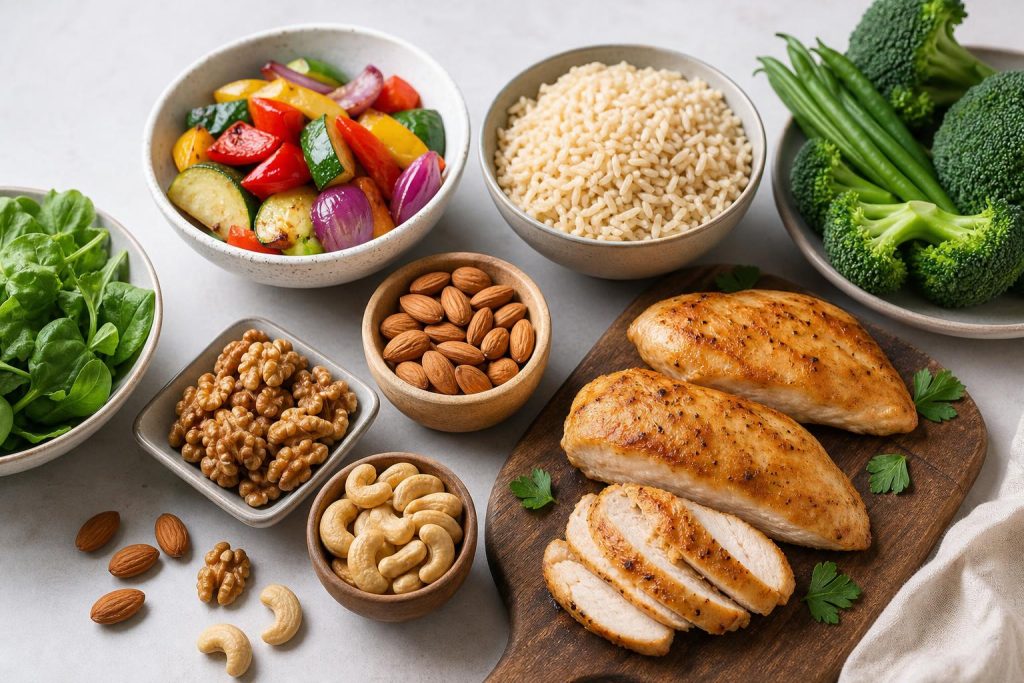
Practically, this means building meals around a protein anchor first — eggs, chicken breast, salmon, Greek yogurt, cottage cheese, lean beef, or legumes — and then filling in carbohydrates and fats around that anchor. A man eating three meals a day at reduced volume might target 40 to 50 grams of protein per meal to hit his daily total. High-quality protein shakes can fill gaps without adding significant volume that might feel uncomfortable when gastric motility is slowed.
Fiber-rich carbohydrates deserve a central role in the GLP-1 diet, but with some nuance around portion size and timing. Foods like lentils, black beans, oats, sweet potato, and cruciferous vegetables provide prebiotic fiber that feeds gut bacteria associated with improved metabolic health — research on gut hormones and weight loss confirms that dietary interventions change the hormonal environment in ways that influence appetite regulation, suggesting that food choices do more than just provide calories. That said, very large portions of high-fiber foods can worsen bloating in men whose gastric emptying is already slowed by medication. Smaller, more frequent servings of fiber-rich foods tend to work better than one large fiber-heavy meal.
Dietary fat is where many men on GLP-1s get into trouble. Fat slows gastric emptying on its own — stack that on top of a medication that’s already doing the same thing, and you have a recipe for prolonged nausea and discomfort. This doesn’t mean eliminating fat, which plays an essential role in testosterone production, joint health, and fat-soluble vitamin absorption. It means choosing leaner proteins, using olive oil in moderate amounts rather than drowning food in butter or cream sauces, and avoiding fried foods during the period of highest GLP-1 side effects. Once the body acclimates to the medication — typically after the first few months — flexibility around fat intake can increase.
Processed foods, refined sugar, and fast food represent the clearest avoidable pitfalls. These foods are engineered to override satiety signals, but GLP-1s are working to restore those signals. Ultra-processed foods also tend to be low in protein and micronutrients relative to their caloric content, which makes them the worst possible choice when you’re operating at a caloric deficit and need every bite to be nutritionally dense. Research on weight management during periods of psychological stress — including a 2023 study examining weight gain during the Israel-Hamas conflict — identified modifiable risk factors including healthy exercise and eating behaviors, reinforcing that food quality and behavioral consistency matter independently of medication use.
Hydration also becomes more critical on GLP-1 therapy. Nausea can suppress the desire to drink, and reduced food intake means less water from food sources. Mild dehydration compounds fatigue, worsens constipation (a common GLP-1 side effect), and impairs cognitive performance. Aim for a minimum of 2.5 to 3 liters of water daily, more on days involving physical activity. Electrolyte balance — particularly sodium, potassium, and magnesium — deserves attention too, since rapid weight loss can accelerate electrolyte shifts that leave men feeling flat, cramped, and fatigued.
Micronutrient density becomes the quiet differentiator between men who thrive on GLP-1 therapy and those who feel depleted by it. Eating less means consuming fewer vitamins and minerals in absolute terms. Prioritizing nutrient-dense whole foods — dark leafy greens, eggs, fatty fish, nuts, seeds, colorful vegetables — helps offset this. Many clinicians working with GLP-1 patients recommend a high-quality multivitamin alongside targeted supplementation with vitamin D, magnesium, and omega-3 fatty acids during active treatment. This isn’t pharmacological complexity — it’s nutritional insurance during a period of reduced intake.
Navigating Meals, Timing, and the Psychological Dimension
One underappreciated challenge of GLP-1 therapy is the psychological shift that comes with dramatically reduced appetite. Some men find themselves eating so little that they begin developing disordered patterns — skipping meals entirely, becoming anxious about food, or losing track of nutrition altogether. A 2026 nationally representative study found that individuals who screened positive for eating disorders were more likely to seek GLP-1 medications, highlighting that the intersection of appetite-suppressing drugs and pre-existing psychological relationships with food deserves clinical attention. If eating feels stressful, chaotic, or compulsive while on GLP-1 therapy, speaking with a clinician or registered dietitian is the right move — not something to push through alone.
For the majority of men without those concerns, structuring eating around two to three planned meals rather than grazing tends to work well with the appetite suppression these medications create. Meal planning matters more on GLP-1s than off them, because when hunger signals are blunted, you can easily go all day eating almost nothing — which feels manageable short-term but leads to muscle loss and metabolic adaptation over weeks and months. Setting scheduled meal times and building protein-forward plates regardless of hunger level is a practical strategy that high-performing GLP-1 users consistently employ.
Resistance training amplifies every dietary decision discussed above. Men who combine GLP-1 therapy with regular strength training preserve more lean muscle mass, improve insulin sensitivity beyond what the medication alone achieves, and maintain higher resting metabolic rates that make long-term weight maintenance more realistic. Protein intake recommendations discussed earlier are calibrated with active muscle tissue in mind — sedentary men can get away with slightly less, but men who train should stay toward the upper end of the range.
Finally, for men on oral semaglutide, the pre-meal fasting window matters practically. A 2026 discrete-choice study on obesity medication preferences noted that only 23% of participants found taking an oral medication on an empty stomach and waiting 30 minutes before eating to be disruptive — meaning most men can realistically build this into their morning routine. Taking the tablet immediately upon waking, drinking water, and using that 30-minute window for a workout, a walk, or morning preparation before sitting down to a protein-rich breakfast is a sustainable structure that protects both absorption and metabolic momentum.
The Takeaway
GLP-1 medications change your appetite. They do not change the rules of nutrition. Protein still drives muscle preservation. Whole foods still outperform processed ones. Fiber still matters. Alcohol still works against your goals. And timing still has measurable consequences for how well the medication works. The men who use GLP-1s as a lever to build genuinely better eating habits — rather than a shortcut around them — are the ones who emerge leaner, stronger, and metabolically healthier on the other side. Eat like your results depend on it, because they do.
Scientific References
-
Hirotsu, Taniguchi, Nishimura et al. (2025).
Exploring factors predicting the effectiveness of oral semaglutide in Japanese individuals with type 2 diabetes switching from dipeptidyl peptidase 4 inhibitors: a pilot study..
Frontiers in clinical diabetes and healthcare.
View on PubMed → -
Almandoz, Tchang, Myers et al. (2026).
Preferences for Obesity Medications Among People With Overweight or Obesity in the United States: A Discrete-Choice Experiment (OPTIC)..
Diabetes, obesity & metabolism.
View on PubMed → -
Siegel, Mumford, Kresovich et al. (2026).
Eating Disorder Screen Results and GLP-1 Awareness, Interest, and Use in a Nationally Representative Sample of Adults in U.S. Households..
The International journal of eating disorders.
View on PubMed → -
Jensen, Nguo, Baxter et al. (2015).
Fasting gut hormone levels change with modest weight loss in obese adolescents..
Pediatric obesity.
View on PubMed → -
Minsky, Robinson, Alon et al. (2026).
Determinants of acute weight gain during regional conflict among individuals with overweight and obesity receiving targeted multidisciplinary care..
Eating and weight disorders : EWD.
View on PubMed →