When researchers at the Pennington Biomedical Research Center put tirzepatide under the microscope, they found something remarkable: the drug didn’t just suppress appetite — it measurably increased fat oxidation and reduced calorie intake during ad libitum eating compared to placebo. In plain terms, people on GLP-1 and GIP receptor agonists aren’t just eating less — their bodies are burning fat more efficiently. But here’s what that research doesn’t tell you: how you eat on these medications determines whether you lose mostly fat or whether you lose fat and muscle together. That distinction is everything.
A GLP-1 meal plan isn’t just a reduced-calorie diet with a new name. It’s a deliberate nutritional strategy built around the unique metabolic environment these medications create — one where appetite is suppressed, food intake drops significantly, and the risk of muscle loss is very real. Whether you’re on semaglutide, tirzepatide, or liraglutide, or you’re pursuing the same metabolic outcomes through diet and exercise alone, the nutritional principles here apply. The goal is the same: lose fat, preserve lean mass, and build a body that performs.
The Nutritional Foundation: Protein First, Every Single Meal
When your appetite is pharmacologically suppressed — or when you’re running a significant calorie deficit through discipline alone — the single biggest mistake you can make is letting protein intake slide. GLP-1 medications reduce overall food volume dramatically. If you’re eating 1,400 calories a day instead of 2,400, and you don’t structure those calories deliberately, you will lose muscle. Research on structured dietary strategies after significant weight loss confirms this concern: a 78-week randomized trial found that structured dietary approaches were essential for preventing weight regain and preserving long-term results, even after GLP-1 agonist withdrawal.
The target for men in a calorie-restricted state on GLP-1 therapy — or any fat-loss protocol — should be a minimum of 0.7 to 1.0 grams of protein per pound of body weight daily. For a 200-pound man, that’s 140 to 200 grams of protein every day, even when you’re not particularly hungry. This means building every single meal around a protein anchor: eggs and Greek yogurt at breakfast, a substantial serving of chicken, turkey, beef, or fish at lunch and dinner, cottage cheese or protein shakes as bridges between meals when appetite is low. Protein preserves lean tissue during a deficit, keeps you satiated, and has the highest thermic effect of any macronutrient — meaning your body burns more calories processing it.
Beyond protein, the GLP-1 meal plan prioritizes nutrient density over calorie volume. Because total intake is lower, every bite needs to count. Leafy greens, cruciferous vegetables, berries, and legumes provide fiber that supports gut motility — particularly important because GLP-1 medications slow gastric emptying, which can cause GI discomfort when food choices are poor. Prioritizing whole foods over processed ones isn’t just good practice — it’s protective when you’re eating less overall.
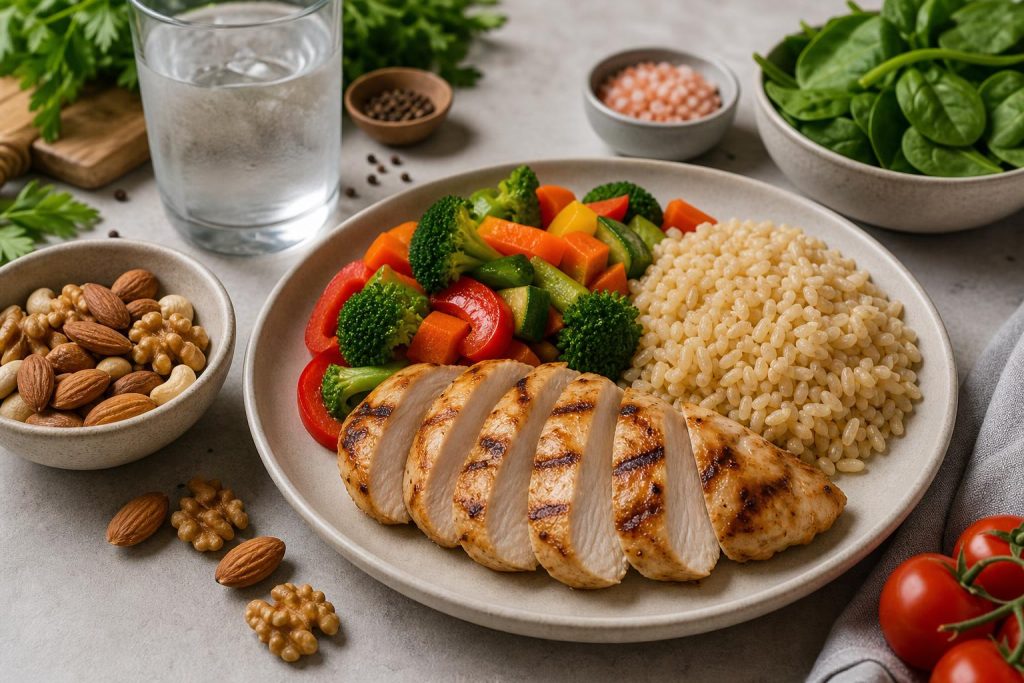
Healthy fats — avocado, olive oil, fatty fish, nuts — should be present but not dominant. Fat is calorie-dense, and with a reduced appetite, you can quickly exceed your calorie budget on fats while leaving protein intake deficient. Structure meals with protein leading, vegetables filling the rest of the plate, and fats as a supporting role rather than the centerpiece.
Training and Movement: The Non-Negotiable Variable
No meal plan operates in isolation. The research is unambiguous on this point: GLP-1 medications alone do not improve cardiorespiratory fitness or preserve functional strength the way exercise does. A major randomized controlled trial found that structured moderate-to-vigorous exercise combined with GLP-1 receptor agonist treatment led to clinically meaningful improvements in peak oxygen consumption and physical performance, while liraglutide alone produced no fitness improvements. The drug reduces bodyweight. Exercise shapes what that body looks like and how well it functions.
For men on a GLP-1 meal plan, resistance training is non-negotiable. Lifting three to four days per week — focusing on compound movements like squats, deadlifts, rows, and presses — provides the anabolic stimulus your muscles need to survive a calorie deficit intact. Cardiorespiratory work adds metabolic benefit and cardiovascular health, but resistance training is the priority when muscle preservation is the goal.
There’s another compelling reason to exercise that goes beyond body composition. A year-long study found that 52 weeks of structured exercise increased late-phase postprandial GLP-1 secretion by 37% compared to usual activity — meaning exercise may naturally amplify the same hormonal pathways that GLP-1 medications target. For men not on medication, this is powerful: consistent training can enhance your body’s own appetite regulation and fat oxidation signals. For men on GLP-1 therapy, exercise compounds the benefits the medication is already producing.
Practically, this means pre-workout nutrition matters even when appetite is suppressed. A small meal with 30 to 40 grams of protein and some easily digestible carbohydrates — oatmeal with a scoop of protein powder, or rice with chicken — consumed 60 to 90 minutes before training ensures you have the fuel to train hard. Post-workout, prioritize protein again within two hours to maximize muscle protein synthesis while your muscles are most receptive.
Meal Timing, Practical Eating Patterns, and Staying on Track
One of the more common challenges men on GLP-1 medications report is simply forgetting to eat — or finding that even small meals cause discomfort. This is where structure becomes critical. Rather than waiting for hunger signals that may not come, eat on a schedule. Three meals per day with a protein-rich snack if needed is a workable framework. Some men do well with two larger meals and one smaller one; others maintain better muscle mass with four smaller eating occasions spread across the day. The specific pattern matters less than the consistency of hitting protein targets daily.
Hydration deserves emphasis here. GLP-1 medications slow gastric emptying, and inadequate water intake compounds GI issues. Aim for at least three liters of water daily, and consider electrolytes — sodium, potassium, magnesium — particularly if training intensity is high. Nausea and fatigue on these medications are often partially attributable to inadequate hydration and electrolyte status, not the medication alone.
For men who are not on GLP-1 medications, the same meal architecture applies — you simply won’t have the pharmacological appetite suppression assisting you. Structuring meals to lead with protein and vegetables before reaching for calorie-dense foods is a proven behavioral strategy that reduces overall intake naturally. It works whether you’re on a medication or not, and it’s a habit that outlasts any pharmaceutical intervention.
The longer-term picture matters too. Research tracking dietary strategies for weight maintenance over 78 weeks found that structured approaches — whether through intermittent total diet replacement or daily meal anchoring — successfully maintained weight losses of over 15 kilograms at both 52 and 78 weeks, including in participants who had previously used GLP-1 agonists. The medication may be temporary. The eating habits have to be permanent.
The Takeaway
A GLP-1 meal plan works because it creates structure around a pharmacologically altered appetite — or around the intentional calorie deficit that serious fat loss requires. Lead every meal with protein, fill the plate with fiber-rich vegetables, keep fats in a supporting role, and drink more water than you think you need. Layer in consistent resistance training and cardiorespiratory work, because the research is clear that medication alone won’t build the body you’re after. Whether you’re on a GLP-1 medication or building these habits through sheer discipline, the blueprint is the same: eat with intention, train consistently, and let the science do the rest.
Scientific References
-
Ravussin, Sanchez-Delgado, Martin et al. (2025).
Tirzepatide did not impact metabolic adaptation in people with obesity, but increased fat oxidation..
Cell metabolism.
View on PubMed → -
Jensen, Fiorenza, Juhl et al. (2026).
Physical Fitness with Exercise and GLP-1 Receptor Agonist Treatment Alone or Combined After Diet-Induced Weight Loss: A Secondary Analysis of a Randomized Controlled Trial in Adults with Obesity..
Sports medicine (Auckland, N.Z.).
View on PubMed → -
Holt, Sandsdal, Byberg et al. (2026).
One Year of Exercise After Weight Loss Increases Postprandial GLP-1 Secretion in Contrast to Usual Activity or GLP-1 Receptor Agonist Treatment..
Obesity (Silver Spring, Md.).
View on PubMed → -
Toledo, Li, Wang et al. (2025).
Pancreatic cancer-related diabetes and type 2 diabetes differ in multiple aspects of glucose homeostasis..
Diabetologia.
View on PubMed → -
Brosnahan, Hankey, Leeds et al. (2025).
Diet strategies for maintaining substantial therapeutic weight loss: 78-week mixed methods randomised trial..
Clinical nutrition (Edinburgh, Scotland).
View on PubMed →