When researchers in the SUMMIT trial treated patients with tirzepatide, they didn’t just see the number on the scale drop — they watched left ventricular mass decrease by 11 grams and paracardiac adipose tissue shrink by 45 milliliters compared to placebo. That’s visceral fat melting away from around the heart. The drug works. But here’s the problem nobody talks about enough: when your appetite is suppressed so aggressively that eating feels like a chore, the quality of what you actually manage to get down becomes everything. Eat the wrong things — or eat too little of the right things — and you don’t just slow your results. You risk losing muscle, depleting critical nutrients, and in extreme cases, entering a dangerous metabolic state.
Tirzepatide works by activating both GLP-1 and GIP receptors, a dual mechanism that slows gastric emptying and dramatically reduces appetite. Research on GLP-1’s role in gastric function confirms that this retardation of gastric emptying is a core driver of both the satiety response and the weight loss itself — your stomach empties slowly, you feel full longer, and hunger signals quiet down. For most men, this is the point. But that suppression can become so complete that some users struggle to eat more than a few hundred calories a day, especially during dose escalations. That’s not a win. That’s a setup for muscle loss, micronutrient deficiency, and metabolic dysfunction.
A 2026 case report published in the Journal of Eating Disorders documented a patient who developed starvation ketosis after tirzepatide use — serum 3-hydroxybutyrate reaching 2,057 µmol/L — not from low-carb dieting, but from eating so little that the body entered a starvation state. This wasn’t a metabolic strategy. It was an unintended consequence of severe appetite suppression with no nutritional guardrails in place. The lesson is stark: the drug suppresses hunger, but it cannot tell your body to stop needing protein, vitamins, and minerals. That responsibility falls entirely on you.
What Your Body Needs When It Stops Asking For It
When appetite disappears, most men default to whatever is easiest — a few crackers, a protein shake if they’re disciplined, maybe nothing until dinner. The problem is that the window for eating becomes narrow, and every bite has to work harder. This is when food quality stops being a preference and starts being a physiological requirement.
Protein is the non-negotiable. When you’re in a significant caloric deficit — which tirzepatide almost guarantees — your body will cannibalize muscle tissue for energy if protein intake is inadequate. Aim for a minimum of 1.2 to 1.6 grams of protein per kilogram of bodyweight daily, even when your stomach rebels at the idea. Lean animal proteins — eggs, Greek yogurt, cottage cheese, chicken breast, salmon, ground beef — are dense enough that you can hit substantial protein targets in small volumes. If solid food feels impossible, a high-quality whey or casein protein shake with milk or kefir can deliver 30 to 40 grams of protein in a single glass without triggering the nausea that larger meals sometimes cause during the first weeks of treatment.
Beyond protein, the priority is micronutrient density. With caloric intake suppressed, you lose the margin for empty calories entirely. Every meal should carry meaningful nutritional payload. That means prioritizing fatty fish for omega-3s and vitamin D, leafy greens for magnesium and folate, eggs for choline and B12, and whole-food carbohydrate sources like sweet potatoes, oats, and legumes for potassium and fiber. Fiber matters more than most men realize when gastric motility is slowed — inadequate fiber on tirzepatide is a fast track to constipation, bloating, and GI discomfort that compounds the nausea the drug can already produce.
Healthy fats deserve a place too, but context matters. Avocados, olive oil, and nuts provide caloric density in small portions — useful when you physically cannot eat enough volume to meet energy needs. That said, high-fat meals can slow gastric emptying even further and amplify nausea. Keep fat intake moderate and pair it with protein and fiber rather than eating it in isolation.
Building a Practical Eating Pattern Around Suppressed Appetite
The biggest practical shift most tirzepatide users need to make is abandoning hunger as their eating cue entirely. If you wait until you’re hungry to eat, you may never eat. Instead, schedule meals at fixed times — two to three per day — and treat them like a medical appointment you cannot skip. Smaller, more frequent eating windows tend to work better than two large meals, because the gastric fullness that accumulates with larger volumes can trigger the nausea and reflux that make eating feel punishing.
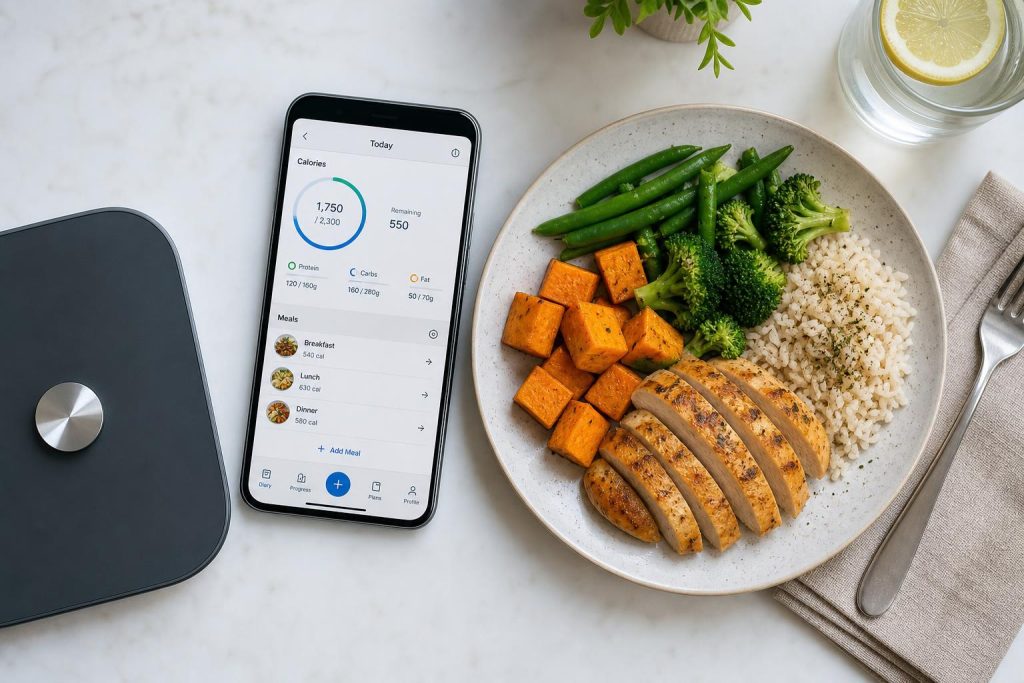
A practical framework that holds up for most men: a protein-forward breakfast within an hour of waking, even if it’s just two eggs and a small portion of Greek yogurt. A midday meal built around a lean protein source, a fist-sized portion of complex carbohydrates, and cooked vegetables — cooked, because raw vegetables can feel overwhelming in volume and may worsen bloating when gastric motility is already slow. An evening meal following the same template, with a small addition of healthy fat. Between meals, a protein shake or a small handful of nuts can bridge gaps without triggering fullness that kills the next meal.
Hydration is frequently overlooked and disproportionately important. Tirzepatide users who eat less also tend to drink less, compounding the risk of electrolyte imbalances. Prioritize water consistently throughout the day, and consider adding an electrolyte supplement — particularly one with sodium, potassium, and magnesium — if you’re also exercising or sweating significantly.
The cardiovascular science on tirzepatide is genuinely exciting. GLP-1 and GIP receptor activation in epicardial adipose tissue appears to drive beneficial remodeling of the heart’s visceral fat depot, and human epicardial adipose tissue expresses GIP, GLP-1, and glucagon receptors that may mediate these cardiometabolic effects beyond simple weight loss. But none of that biology can overcome a body that isn’t getting enough protein to protect its muscle mass or enough micronutrients to sustain metabolic function. The drug opens a window. What you eat while that window is open determines whether you come out the other side leaner and stronger, or lighter and depleted.
The Takeaway
Tirzepatide suppresses appetite powerfully enough that eating can feel optional. It isn’t. When hunger disappears, your nutritional needs don’t disappear with it — they become more concentrated into fewer calories than ever. Prioritize protein above everything else, choose micronutrient-dense whole foods, eat on a schedule rather than on hunger cues, and keep fat moderate to manage GI symptoms. The men who get the most out of this medication — or out of any structured fat loss phase — are the ones who treat their eating plan as seriously as their medication schedule. The drug handles the appetite. You handle the nutrition.
Scientific References
-
Kramer, Borlaug, Zile et al. (2025).
Tirzepatide Reduces LV Mass and Paracardiac Adipose Tissue in Obesity-Related Heart Failure: SUMMIT CMR Substudy..
Journal of the American College of Cardiology.
View on PubMed → -
Iacobellis et al. (2025).
Epicardial Fat Inflammation and GLP-1/GIP Receptor Analogs: Are we Shifting our Perspective?.
Current cardiology reports.
View on PubMed → -
Malavazos, Iacobellis, Dozio et al. (2023).
Human epicardial adipose tissue expresses glucose-dependent insulinotropic polypeptide, glucagon, and glucagon-like peptide-1 receptors as potential targets of pleiotropic therapies..
European journal of preventive cardiology.
View on PubMed → -
Camilleri et al. (2024).
The role of gastric function in control of food intake (and body weight) in relation to obesity, as well as pharmacological and surgical interventions..
Neurogastroenterology and motility.
View on PubMed → -
Yasui-Furukori, Tasaki, Kaiga et al. (2026).
Starvation ketosis following self-administered tirzepatide obtained via online services in a young woman later diagnosed with anorexia nervosa: a case report..
Journal of eating disorders.
View on PubMed →