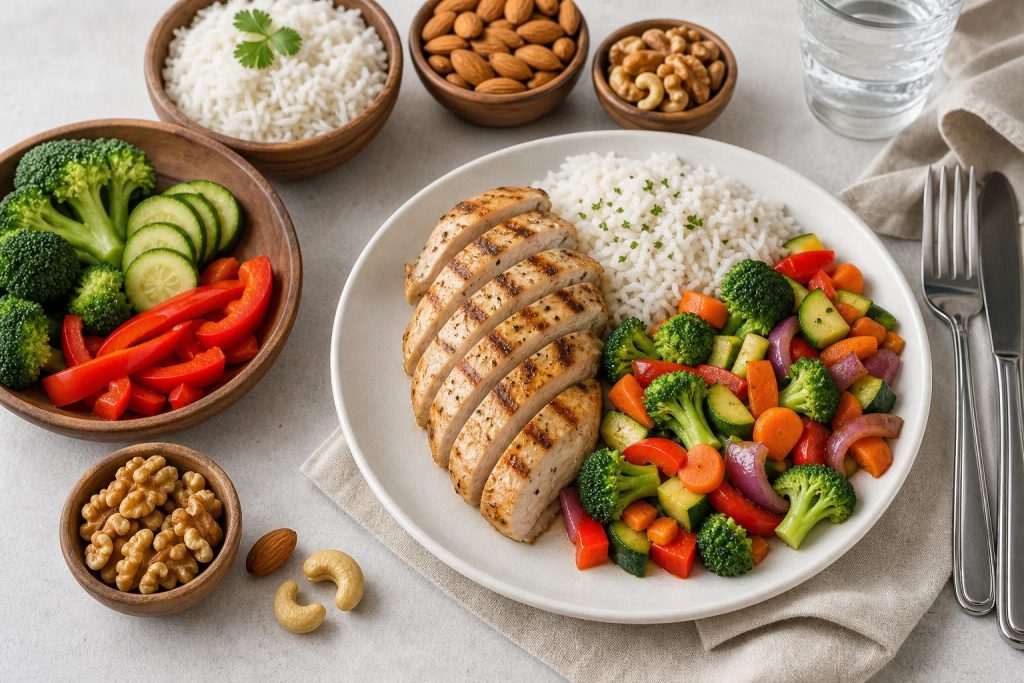
When clinical trials for semaglutide were published, the weight loss numbers were striking — participants lost an average of 14.9% of body weight over 68 weeks in the STEP 1 trial. But buried inside those results was a detail that doesn’t make the headlines: a meaningful portion of that weight loss comes from lean mass, not just fat. For any man who cares about staying strong, metabolically healthy, and physically capable, that distinction matters enormously. And the lever most within your control is protein intake.
Whether you’re on Ozempic or semaglutide for weight loss, managing type 2 diabetes, or simply trying to drop body fat through diet and training, the fundamentals of protein metabolism don’t change. What does change on a GLP-1 medication is how aggressively your appetite is suppressed — and that suppression, if left unmanaged, can quietly gut your protein intake without you ever noticing until the muscle is already gone.
What Ozempic Actually Does to Your Appetite and Food Intake
To understand why protein becomes so critical on semaglutide, it helps to understand exactly what the drug is doing to your brain and gut. Semaglutide is a glucagon-like peptide-1 receptor agonist (GLP-1 RA), meaning it mimics and amplifies the action of GLP-1, a hormone your gut releases in response to food. Research by Drucker (2022) in Molecular Metabolism outlines how GLP-1 receptor agonists work through multiple pathways: they augment glucose-dependent insulin release, suppress glucagon, slow gastric emptying, and critically — they inhibit food intake at the level of the central nervous system.
This isn’t just a mild appetite tweak. A 2017 randomized crossover trial by Blundell and colleagues found that 12 weeks of once-weekly subcutaneous semaglutide led to a 24% reduction in total daily energy intake across all ad libitum meals. Subjects ate significantly less at lunch, dinner, and snacks — driven by improved appetite suppression, reduced hunger, fewer food cravings, and a measurable shift away from high-fat, energy-dense foods. Mechanistic work in rodents published in JCI Insight (Gabery et al., 2020) confirmed that semaglutide lowers body weight primarily by reducing food intake through distributed neural pathways, interacting with GLP-1 receptors in the brainstem, hypothalamus, and circumventricular organs — not by meaningfully increasing energy expenditure.
Put plainly: Ozempic works by making you eat far less. And when you eat far less, without deliberate attention to protein quality and quantity, you will lose muscle alongside the fat. This is the central nutritional challenge for every man on a GLP-1 medication.
The Muscle Loss Problem — and Why Protein Is Your Primary Defense
Muscle tissue is metabolically expensive. Your body maintains it reluctantly, especially in a state of caloric deficit combined with reduced physical activity. The physiological signal required to preserve lean mass is twofold: adequate protein intake and mechanical loading (resistance training). Remove one, and muscle loss accelerates. Remove both, and you’re in serious trouble — not just aesthetically, but metabolically. Muscle is your primary site of glucose disposal, and losing it while on a medication designed to improve blood sugar control works against your long-term metabolic health in a meaningful way.
The evidence on GLP-1-induced body composition changes is a mixed picture. While the primary outcomes of trials like STEP 1 focus on total body weight, secondary analyses consistently show that lean mass does decline — though fat mass declines more. A secondary analysis published in Diabetes Care (Heise et al., 2023) comparing tirzepatide 15 mg, semaglutide 1 mg, and placebo found that both active agents significantly reduced fat mass compared to placebo, with tirzepatide producing greater fat loss. But total lean mass was also reduced across both treatment arms — a consistent finding across GLP-1 trials that is frequently underreported in mainstream coverage of these medications.
The practical implication is straightforward: if you’re eating 30–40% fewer calories because Ozempic has dramatically reduced your appetite, and you’re not eating with intention, you are almost certainly falling short on protein. Studies in general weight loss populations show that men in caloric deficits who consume less than 1.2 grams of protein per kilogram of body weight per day lose significantly more lean mass than those who hit higher protein targets. On a GLP-1 medication, that risk is amplified because the appetite suppression is so complete that many men simply stop feeling hungry for protein-dense foods — eggs, chicken, red meat — that require some effort to prepare and eat.
The current evidence-based consensus for men in an active fat-loss phase, with or without GLP-1 medications, supports a protein intake between 1.6 and 2.2 grams per kilogram of body weight per day. For a 200-pound (91 kg) man, that’s a target range of roughly 145 to 200 grams of protein daily. On Ozempic, hitting the higher end of that range — while eating significantly less overall — requires deliberate, strategic nutrition planning. It doesn’t happen by accident.
How to Hit Your Protein Targets When You’re Barely Hungry
This is where the real-world challenge lives. You’re on a medication that has dramatically reduced your appetite. The idea of eating a 200-gram protein target sounds manageable in theory — until you realize you feel genuinely full after six bites of scrambled eggs. The solution isn’t to force yourself to eat through nausea or discomfort. It’s to restructure how you eat, prioritizing protein ruthlessly within whatever eating window and caloric budget you actually have.
The most effective strategy is protein-first eating at every single meal. Before any carbohydrate or fat-rich food touches your plate, eat your protein source. Given that semaglutide slows gastric emptying — a mechanism well-documented in Nauck et al. (2021) in Molecular Metabolism — your stomach empties more slowly, meaning fullness sets in faster and lasts longer. If you lead with protein, you fill that limited stomach capacity with the macronutrient you actually need most. If you eat bread or rice first, you’ll be full before the chicken ever arrives.
Liquid and semi-liquid protein sources become genuinely valuable here, not because they’re superior to whole food, but because they’re easier to consume when appetite is suppressed. A high-quality whey or casein protein shake containing 30–40 grams of protein takes less than two minutes to consume and places minimal burden on a sluggish digestive system. Greek yogurt, cottage cheese, and protein-fortified smoothies serve the same function. These are not replacements for whole food — they’re strategic gap-fillers for the days when appetite is particularly suppressed or nausea is present.
Meal frequency also matters more on Ozempic than it does for men eating at full appetite. Rather than trying to hit a large protein target across two or three traditional meals, distributing 30–40 grams of protein across four to five smaller eating occasions makes the target far more achievable without requiring any single meal to be overwhelming. A protein shake mid-morning, a chicken and vegetable bowl at noon, Greek yogurt in the afternoon, and a smaller high-protein dinner at night can collectively deliver 150–170 grams of protein even on a day when your appetite is genuinely low.
Resistance training is the other non-negotiable. Protein intake alone does not preserve muscle — it provides the substrate, but the anabolic signal comes from mechanical tension on muscle tissue. Men on GLP-1 medications who lift two to four times per week consistently preserve more lean mass during weight loss than those who rely on the medication and caloric deficit alone. This is not speculative; it reflects the well-established dose-response relationship between resistance training volume and lean mass retention during energy restriction. If you’re not in a structured lifting program, this is the moment to start one.
On the food quality side, the protein sources you choose matter beyond their amino acid content. Blundell et al. (2017) observed that semaglutide shifted food preferences away from high-fat, energy-dense options. Practically, this often means men on Ozempic find themselves less drawn to fatty cuts of meat, processed foods, and calorie-dense snacks — which is metabolically favorable. Lean protein sources like chicken breast, turkey, white fish, egg whites, low-fat dairy, and legumes align naturally with where appetite tends to shift on these medications. Lean proteins are also easier on a stomach with slowed gastric emptying compared to high-fat, slow-digesting protein sources like a thick ribeye.
Monitoring is underrated. Most men don’t have a clear picture of how much protein they’re actually consuming until they track it — even briefly. Spending two to three weeks logging food intake in an app like Cronometer or MyFitnessPal will reveal exactly where protein gaps are occurring. This isn’t about obsessive tracking forever. It’s about calibrating your intake so you understand what hitting your target actually looks and feels like, then maintaining that pattern intuitively going forward.
The Takeaway
Ozempic and semaglutide are genuinely powerful tools for weight loss and metabolic health. The science supporting their mechanisms is robust, and the clinical outcomes for fat reduction are among the most significant seen in pharmaceutical weight management. But the medication does not distinguish between fat and muscle when it suppresses your appetite to a fraction of your previous intake. That distinction is your job.
Hitting a daily protein target of 1.6 to 2.2 grams per kilogram of body weight, eating protein first at every meal, using strategic protein-rich snacks and shakes to fill gaps, and maintaining a consistent resistance training program are not optional add-ons to GLP-1 therapy. They are the difference between emerging from a weight loss phase lean, strong, and metabolically resilient — or lighter on the scale but softer, weaker, and more metabolically fragile than when you started. The medication handles the appetite suppression. You handle the protein.
Scientific References
-
Drucker et al. (2022).
GLP-1 physiology informs the pharmacotherapy of obesity..
Molecular metabolism.
View on PubMed → -
Nauck, Quast, Wefers et al. (2021).
GLP-1 receptor agonists in the treatment of type 2 diabetes – state-of-the-art..
Molecular metabolism.
View on PubMed → -
Gabery, Salinas, Paulsen et al. (2020).
Semaglutide lowers body weight in rodents via distributed neural pathways..
JCI insight.
View on PubMed → -
Heise, DeVries, Urva et al. (2023).
Tirzepatide Reduces Appetite, Energy Intake, and Fat Mass in People With Type 2 Diabetes..
Diabetes care.
View on PubMed → -
Blundell, Finlayson, Axelsen et al. (2017).
Effects of once-weekly semaglutide on appetite, energy intake, control of eating, food preference and body weight in subjects with obesity..
Diabetes, obesity & metabolism.
View on PubMed →