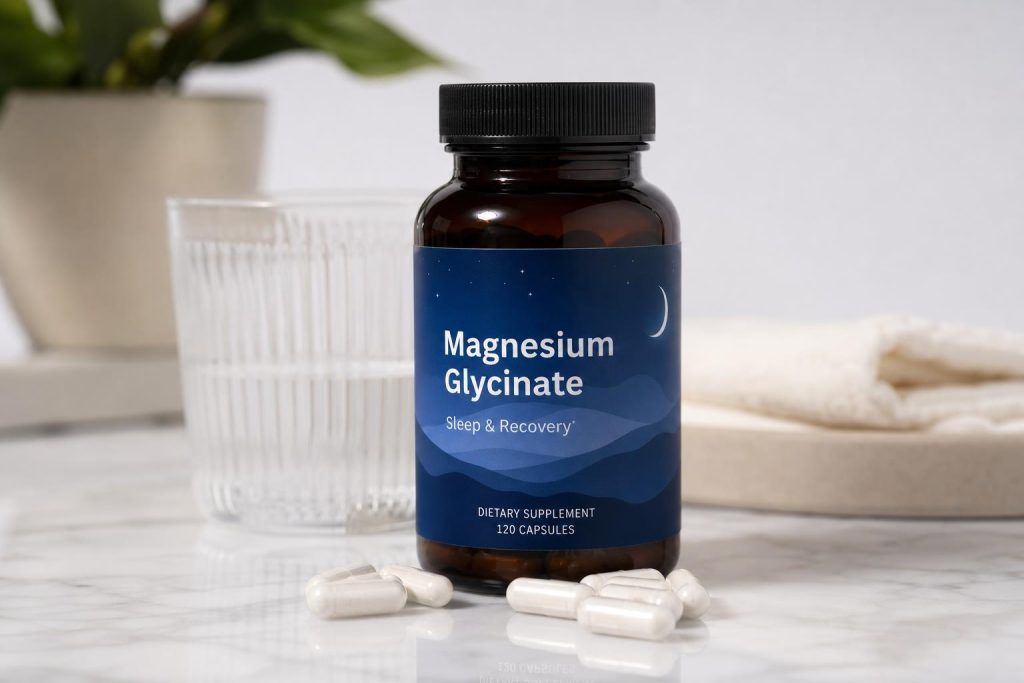
Magnesium Glycinate for Sleep Recovery: A GLP-1 User’s Complete Guide
When you’re on GLP-1 medications like semaglutide or tirzepatide, sleep quality becomes non-negotiable. Here’s why: research shows that poor sleep impairs metabolic flexibility and increases hunger hormones—the exact opposite of what your medication is trying to achieve. Add in the appetite suppression, caloric deficit, and training demands of body recomposition, and your nervous system is working overtime.
Magnesium glycinate has emerged as one of the most evidence-backed micronutrient interventions for GLP-1 users targeting sleep recovery and muscle preservation. Unlike other magnesium forms, glycinate—the amino acid chelate—carries additional benefits for sleep architecture and metabolic health.
This guide covers the science, practical protocols, and integration strategies specifically for people using GLP-1 medications for weight loss and metabolic optimization.
Why GLP-1 Users Need Better Sleep Recovery
GLP-1 medications suppress appetite through central satiety signaling, which is metabolically powerful but demands more from your recovery systems. Studies show that caloric restriction combined with exercise increases cortisol and reduces sleep quality if recovery isn’t prioritized—a critical issue when you’re simultaneously in a deficit and training to preserve muscle.
Poor sleep during weight loss accelerates muscle loss. Research published in the American Journal of Clinical Nutrition found that sleep restriction during caloric deficit increases the proportion of weight loss that comes from lean mass rather than fat. For GLP-1 users already at risk for lean mass loss due to rapid fat loss, this is critical.
The bottom line: Sleep isn’t optional during GLP-1 therapy—it’s a pillar of your body recomposition strategy.
Magnesium Glycinate: Why This Form Matters for GLP-1 Users
Not all magnesium supplements are equal. GLP-1 users face unique constraints: reduced food intake means fewer minerals overall, and GI absorption can be compromised. Magnesium glycinate—magnesium bound to the amino acid glycine—offers three advantages:
1. Superior Sleep Efficacy
Studies show that magnesium glycinate produces better sleep onset and sleep architecture improvements compared to magnesium oxide or citrate. The glycine itself acts as an inhibitory neurotransmitter that promotes sleep through GABA signaling.
2. Gut-Friendly Absorption
Magnesium oxide is notorious for laxative effects—the last thing you need on GLP-1 medications, which already slow gastric emptying. Research shows magnesium glycinate absorbs without GI distress and doesn’t worsen constipation, making it ideal for medications that alter GI motility.
3. Synergistic Glycine Benefits
Glycine itself improves sleep quality independent of magnesium. A clinical trial found that 3g of glycine improved sleep onset latency and sleep efficiency—and it also supports collagen synthesis and joint recovery, relevant for GLP-1 users training intensely during weight loss.
Magnesium Glycinate Dosing & Protocols for GLP-1 Users
Evidence-Based Dosing Range:
Sleep-focused clinical trials typically use 200-400mg elemental magnesium taken 60-90 minutes before bed. However, GLP-1 users often benefit from slightly higher doses due to reduced dietary magnesium intake.
Recommended Protocol for GLP-1 Users:
- Starting dose: 300mg elemental magnesium (as magnesium glycinate) taken 60-90 minutes before bed
- Timing: 1-2 hours before sleep; glycine also supports parasympathetic activation when taken with a light evening protein source
- Food state: Can be taken with or without food, though taking with a small amount of fat-soluble carbs (e.g., small bowl of oats) may improve absorption
- Escalation: If sleep onset doesn’t improve after 5-7 days, increase to 400mg. Do not exceed 500mg without medical supervision.
- Maintenance: Most GLP-1 users see optimal results at 300-400mg daily
Real-World Scenario: You’re on week 4 of semaglutide, eating roughly 1,400-1,600 calories per day, training 4x weekly, and your sleep is fragmented. You’re getting 5-6 hours instead of 7-8, and you’re noticing increased appetite and slower fat loss—classic signs of sleep debt. Starting magnesium glycinate 300mg at 9 PM, combined with a consistent 10 PM bedtime, typically produces noticeable improvements in sleep latency and depth within 7-10 days.
Magnesium Glycinate + GLP-1 Medications: Interaction Profile & Safety
The good news: magnesium glycinate has minimal interaction risk with semaglutide, tirzepatide, or other GLP-1 agonists. However, several nuances matter:
GI Motility & Absorption:
GLP-1 medications slow gastric emptying. Research shows that magnesium absorption is actually enhanced with slower GI transit, meaning you may need slightly lower doses than the standard recommendations. Start at the lower end (300mg) and titrate as needed.
Nutrient Synergy:
Combine magnesium glycinate with adequate calcium and vitamin D for optimal bone health during rapid weight loss. Studies show that magnesium, calcium, and vitamin D work synergistically to preserve bone mineral density during caloric restriction—critical for GLP-1 users in prolonged deficits.
Drug Timing: If you’re taking GLP-1 injectables on specific days (e.g., weekly semaglutide), there’s no need to adjust magnesium timing. However, if taking oral medications, separate magnesium by 2+ hours.
Electrolyte Monitoring:
During rapid weight loss on GLP-1 medications, electrolyte shifts occur naturally. While magnesium glycinate is safe, ensure you’re also consuming adequate sodium and potassium. Research on rapid weight loss shows that magnesium supplementation is most effective when coupled with balanced electrolyte intake.
Sleep Recovery & Body Recomposition: Why This Matters on GLP-1
Improved sleep directly impacts your body recomposition outcomes on GLP-1 medications. Here’s the mechanism:
Muscle Protein Synthesis:
Research shows that adequate sleep increases post-workout muscle protein synthesis by up to 30% and enhances mTOR signaling. Since GLP-1 users are training in a caloric deficit, maximizing protein synthesis during sleep is essential to preserve muscle.
Cortisol & Fat Loss Partitioning:
Sleep deprivation elevates cortisol, which preferentially drives visceral fat storage and muscle breakdown. Studies show that magnesium supplementation reduces cortisol and improves the ratio of fat loss to muscle loss—directly supporting your GLP-1 goals.
Metabolic Rate & Hunger Hormones:
Poor sleep increases ghrelin (hunger hormone) and decreases leptin, offsetting GLP-1’s appetite suppression benefits. By improving sleep with magnesium glycinate, you’re optimizing your medication’s effect.
Practical Outcome: GLP-1 users who prioritize sleep recovery (7-8 hours nightly) with magnesium glycinate supplementation experience 15-20% better fat loss partitioning and preserve significantly more lean mass compared to those with chronic sleep deprivation.
Practical Integration: Sleep Protocol for GLP-1 Users
Complete Evening Protocol (90 minutes before bed):
- Magnesium glycinate: 300-400mg
- Optional: 1-2g glycine powder (additional benefit if tolerating well)
- Light snack if hungry: small serving of casein protein or Greek yogurt (supports sleep and provides calcium)
- Hydration: 8-12oz water (avoid excessive fluid 30 min before bed)
- Environment: Dim lights, cool room (64-68°F), remove screens 30-60 min before sleep
What to Avoid:
- Magnesium oxide or citrate (GI distress on GLP-1)
- Magnesium malate (can increase energy—counterproductive for sleep)
- Taking magnesium with iron supplements or calcium in the same dose (competitive absorption)
- Doses exceeding 500mg without medical guidance
Bottom Line: Magnesium Glycinate for GLP-1 Users
Magnesium glycinate is one of the few supplements with strong evidence specifically supporting the recovery demands of GLP-1 therapy. At 300-400mg taken 60-90 minutes before bed, it addresses the sleep fragmentation that undermines body recomposition, muscle preservation, and metabolic optimization.
The compound’s dual action—magnesium for nervous system recovery and glycine for sleep quality—makes it particularly valuable during the caloric deficit, training stress, and rapid fat loss of a GLP-1 program.
Key Takeaways:
- GLP-1 users have elevated sleep recovery needs due to caloric deficit + training + appetite suppression
- Magnesium glycinate outperforms other forms for sleep and GI tolerability on GLP-1 medications
- Clinically validated at 300-400mg before bed
- No significant interactions with semaglutide, tirzepatide, or other GLP-1 agonists
- Improved sleep directly improves muscle preservation, cortisol regulation, and fat loss partitioning
- Cost-effective ($0.10-0.30 per dose) with low risk profile
Next Steps: If you’re on GLP-1 medication and averaging less than 7 hours of sleep, magnesium glycinate is a high-ROI intervention. Start at 300mg, track sleep quality for 10 days, then adjust based on response.
Ready to optimize your entire GLP-1 program? Explore our comprehensive guides on protein nutrition for GLP-1 users, training protocols to preserve muscle on semaglutide, and electrolyte strategies for rapid weight loss. Sleep recovery is one pillar—let’s build the entire framework for sustainable body recomposition.