Semaglutide has earned its reputation as one of the most clinically significant metabolic medications in decades — and not just because it helps people lose weight. Research published in Drugs in Context in 2026 demonstrates that GLP-1 receptor agonists like semaglutide work through multiple biological pathways simultaneously — reducing systemic inflammation, improving cardiac function, protecting kidney health, and directly targeting the toxic fat deposits that accumulate around organs. That’s a meaningful distinction. Semaglutide isn’t simply suppressing your appetite. It’s reshaping your metabolic environment. And what you put on your plate while taking it will determine whether you emerge from treatment leaner, stronger, and healthier — or lighter on the scale but weaker underneath.
This is the question most men don’t ask until they’re already several weeks into treatment, fighting nausea after a meal that used to feel routine: what am I actually supposed to be eating? The honest answer is more nuanced than the generic “eat less, move more” advice you’ve probably already heard. When appetite suppression is doing heavy lifting on your caloric intake, every bite you do take carries more metabolic weight than ever before. Getting your nutrition right on semaglutide isn’t just about tolerating the medication — it’s about maximizing everything it’s working to accomplish inside your body.
Protein Is Non-Negotiable — Here’s Why It Matters More Than Calories
The most critical nutritional priority for any man on semaglutide is protecting muscle mass. This sounds simple until you understand the mechanics of what’s happening: semaglutide-driven appetite suppression typically reduces total daily caloric intake by 20–30%, sometimes more. In a significant caloric deficit, your body doesn’t exclusively burn fat — it will cannibalize lean tissue if the diet doesn’t give it a reason not to. Muscle is metabolically expensive tissue, and without adequate protein intake and resistance training stimulus, your body treats it as expendable fuel during weight loss.
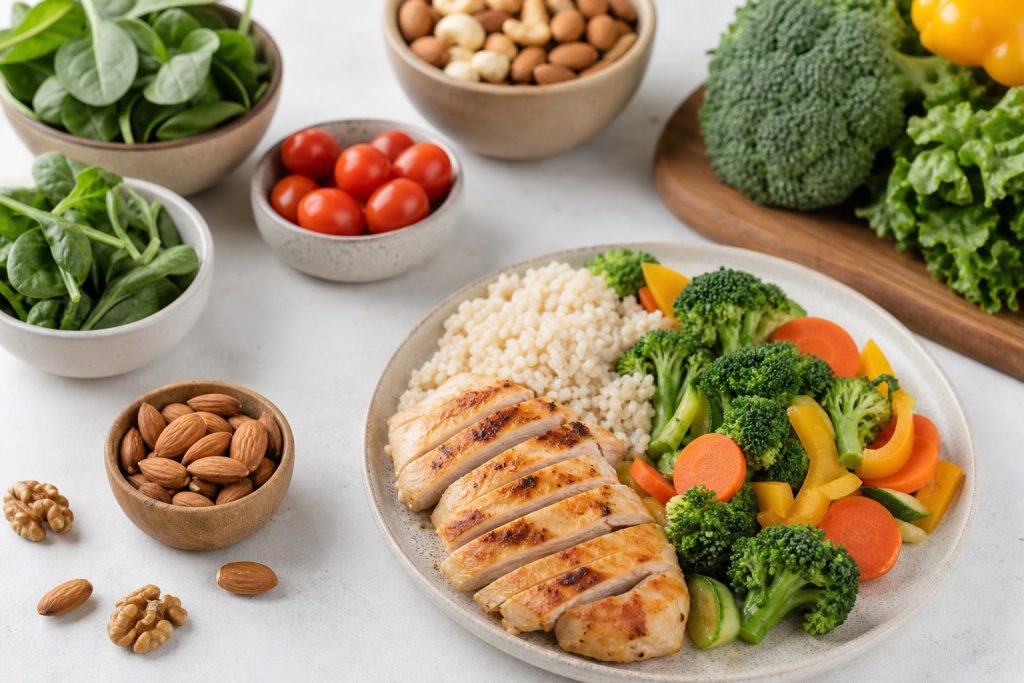
The research consensus for men in a caloric deficit who want to preserve muscle is clear: aim for a minimum of 0.7 to 1.0 grams of protein per pound of bodyweight daily, with many sports nutrition researchers arguing for the higher end of that range when overall caloric intake is suppressed. On semaglutide, where your appetite may be significantly blunted, hitting those numbers requires intentional planning rather than intuition. Prioritize protein at every meal — not as an afterthought, but as the centerpiece around which the rest of your plate is built. Eggs, Greek yogurt, chicken breast, lean beef, salmon, cottage cheese, and whey protein all belong in heavy rotation. If you’re finding it difficult to hit your target through whole foods alone due to appetite suppression, a high-quality protein shake becomes less of a supplement and more of a therapeutic nutrition tool.
The timing of your first meal also matters more than most people realize. A 2025 pilot study in Frontiers in Clinical Diabetes and Healthcare examining oral semaglutide outcomes in Japanese patients found that the duration between taking the medication and eating breakfast was a meaningful predictor of treatment effectiveness. While this study focused on oral semaglutide’s pharmacokinetics specifically — oral semaglutide must be taken fasting — the broader principle holds: the structure and timing of your meals interact directly with how the medication performs. Don’t treat eating as something that just happens around your injection schedule. Build a deliberate meal framework that supports both medication absorption and your metabolic goals.
What to Eat, What to Limit, and How to Structure Your Plate
Semaglutide slows gastric emptying — the rate at which food moves from your stomach into your small intestine. This is partly why it reduces appetite so effectively, but it also means certain foods that were previously well-tolerated can now trigger significant nausea, bloating, or discomfort. High-fat meals are among the worst offenders. Fat naturally slows digestion, and when combined with semaglutide’s already-reduced gastric motility, a greasy burger or a cream-heavy sauce can leave you feeling genuinely ill for hours. This doesn’t mean dietary fat is your enemy — quality fats from sources like avocado, olive oil, nuts, and fatty fish are essential for hormone production, joint health, and fat-soluble vitamin absorption — but the portion sizes and meal composition that worked before may need recalibration.
Refined carbohydrates and ultra-processed foods deserve special attention on semaglutide — and not only for the obvious reasons. When your total caloric budget is reduced, empty calories become a far more costly mistake. A bag of chips or a few slices of white bread might represent 300–400 calories that displace the protein and micronutrients your body genuinely needs. Beyond the macronutrient displacement issue, high-glycemic carbohydrates can drive blood sugar spikes and subsequent crashes that worsen the fatigue and brain fog some men experience in the early weeks of treatment. Build your carbohydrate intake around slow-digesting, fiber-rich sources: oats, sweet potatoes, legumes, brown rice, and a wide variety of vegetables. These foods support gut health, provide sustained energy, and are far less likely to exacerbate GI side effects than their refined counterparts.
Alcohol deserves a direct conversation here as well. The same 2025 study identified current alcohol consumption as one of the factors associated with reduced effectiveness in achieving glycemic targets on semaglutide. Alcohol is calorie-dense, suppresses anabolic signaling, disrupts sleep quality, lowers inhibitions around food choices, and directly interferes with liver metabolism — all mechanisms that work against everything semaglutide is trying to accomplish. This doesn’t mean one drink will derail your progress, but men who are serious about their results should treat alcohol as a genuine variable in the equation, not an afterthought.
Hydration tends to be underemphasized in semaglutide nutrition discussions, but it matters substantially. The medication’s effects on natriuresis — the kidneys’ increased excretion of sodium — are part of why it demonstrates cardiovascular benefits, as highlighted in recent cardiac research. But that same mechanism, combined with reduced food and fluid intake from appetite suppression, can contribute to dehydration if you’re not consciously staying ahead of it. Target at least 2.5 to 3 liters of water daily, more if you’re training hard. Electrolyte balance also matters — particularly sodium, potassium, and magnesium — and men on semaglutide who are also training regularly may benefit from electrolyte supplementation, especially during warmer months or high-intensity training blocks.
Fiber intake is another area where many men fall short without realizing it. Most Americans consume well under half the recommended daily fiber intake under normal circumstances, and appetite suppression only makes the problem worse when total food volume decreases. Adequate dietary fiber — targeting 25 to 35 grams per day from whole food sources — supports healthy gut motility, improves glycemic control, feeds beneficial gut bacteria, and helps manage the constipation that some men experience on semaglutide. Vegetables, legumes, berries, chia seeds, and oats are your most practical high-fiber tools. If you’re struggling to hit targets through food alone, a psyllium husk supplement is a well-researched and low-cost option worth considering.
The Bigger Picture: Eating for Metabolic Health, Not Just Weight Loss
There’s a risk that men on semaglutide start thinking of the medication as doing all the work while nutrition becomes secondary. This framing is both scientifically inaccurate and practically counterproductive. The cardiac research on GLP-1 receptor agonists makes clear that the most meaningful benefits — reduced inflammation, improved endothelial function, reduced epicardial fat — are amplified in the context of overall metabolic improvement, not isolated drug action. Semaglutide is a powerful tool for creating the metabolic conditions in which your body can heal and recompose. Your nutrition strategy determines how fully you capitalize on that window.
The men who get the most out of semaglutide — whether they’re using it for weight loss, metabolic health, or cardiovascular risk reduction — are the ones who treat it as a force multiplier for smart lifestyle choices, not a replacement for them. That means building meals around whole, minimally processed foods with protein at the foundation. It means timing carbohydrates strategically around training. It means managing alcohol honestly, staying consistently hydrated, and getting enough dietary fat from quality sources without overdoing it. None of these principles are revolutionary or semaglutide-specific. They’re the fundamentals of metabolic nutrition — and the medication simply makes the stakes higher and the opportunity greater.
It’s also worth noting that patient preferences around GLP-1 treatments are evolving. A 2026 discrete-choice study in Diabetes, Obesity & Metabolism found that among 800 individuals with overweight or obesity, weight-loss efficacy and cardiovascular risk reduction were the most important factors driving medication preference — underscoring that men taking these medications are increasingly sophisticated about what they want to achieve beyond the number on the scale. If that’s you, your nutrition strategy should match that ambition.
For men in the early weeks of treatment managing GI side effects, practical meal strategies can make a significant difference. Eating smaller meals more frequently — four to five smaller meals rather than two or three larger ones — reduces the gastric load at any given time and tends to minimize nausea. Eating slowly and chewing thoroughly matters more than it ever did before. Avoiding carbonated beverages, very spicy foods, and large portions of high-fat foods in the hours immediately after injection can reduce side effect severity considerably. These aren’t restrictions — they’re short-term adaptations that help the medication work while your body adjusts to the new normal.
The Takeaway
Semaglutide creates a metabolic opening that most men haven’t had before — reduced appetite, improved insulin sensitivity, lower systemic inflammation, and the physiological conditions for meaningful fat loss and cardiovascular improvement. But that opening only leads somewhere worthwhile if you walk through it with the right nutritional foundation. Prioritize protein relentlessly. Build your meals around whole, fiber-rich foods. Manage fat quality without eliminating it. Stay hydrated, limit alcohol, and time your eating with intention. The medication is doing significant work at the biological level — your job is to make sure everything you eat is working in the same direction. That alignment is where the real results live.
Scientific References
-
Roy, Parent, Ducharme et al. (2026).
GLP1 receptor agonists in heart failure with preserved ejection fraction (HFpEF) – beyond weight loss: a condensed scientific review..
Drugs in context.
View on PubMed → -
Hirotsu, Taniguchi, Nishimura et al. (2025).
Exploring factors predicting the effectiveness of oral semaglutide in Japanese individuals with type 2 diabetes switching from dipeptidyl peptidase 4 inhibitors: a pilot study..
Frontiers in clinical diabetes and healthcare.
View on PubMed → -
Almandoz, Tchang, Myers et al. (2026).
Preferences for Obesity Medications Among People With Overweight or Obesity in the United States: A Discrete-Choice Experiment (OPTIC)..
Diabetes, obesity & metabolism.
View on PubMed →