Here’s what the research keeps confirming: the drug alone isn’t enough. A 2026 randomized controlled trial published in Sports Medicine found that GLP-1 receptor agonist treatment by itself did not improve physical fitness or cardiorespiratory performance in adults with obesity — but when combined with structured exercise, participants saw meaningful gains in peak oxygen consumption and functional strength. If medication can’t carry the load on its own when it comes to fitness, it almost certainly can’t carry it when it comes to nutrition either. What you eat on GLP-1 therapy matters enormously — and this free meal plan framework is designed to help you get it right.
GLP-1 medications like semaglutide (Ozempic, Wegovy) and tirzepatide (Mounjaro, Zepbound) suppress appetite through gut hormone signaling, slowing gastric emptying and reducing hunger cues at the brain level. The result is that most men eat significantly less — sometimes 30 to 40 percent fewer calories without much effort. That sounds like a win, and in many ways it is. But there’s a trap buried inside that appetite suppression: when you’re eating dramatically less food, every bite needs to count far more than it ever did before. A smaller plate filled with the wrong foods is a faster route to muscle loss, micronutrient deficiency, and metabolic stagnation than most men realize going in.
The Foundation: Build Every Meal Around Protein First
The single most important shift you can make — whether you’re on a GLP-1 medication or not — is treating protein as the non-negotiable anchor of every meal you eat. For men on GLP-1 therapy, this becomes even more critical because reduced caloric intake creates a biological environment where muscle tissue is at risk of being broken down for energy. The general target that holds up well in practice is 0.7 to 1.0 grams of protein per pound of bodyweight daily, though men who are actively training or significantly overweight should aim toward the higher end.
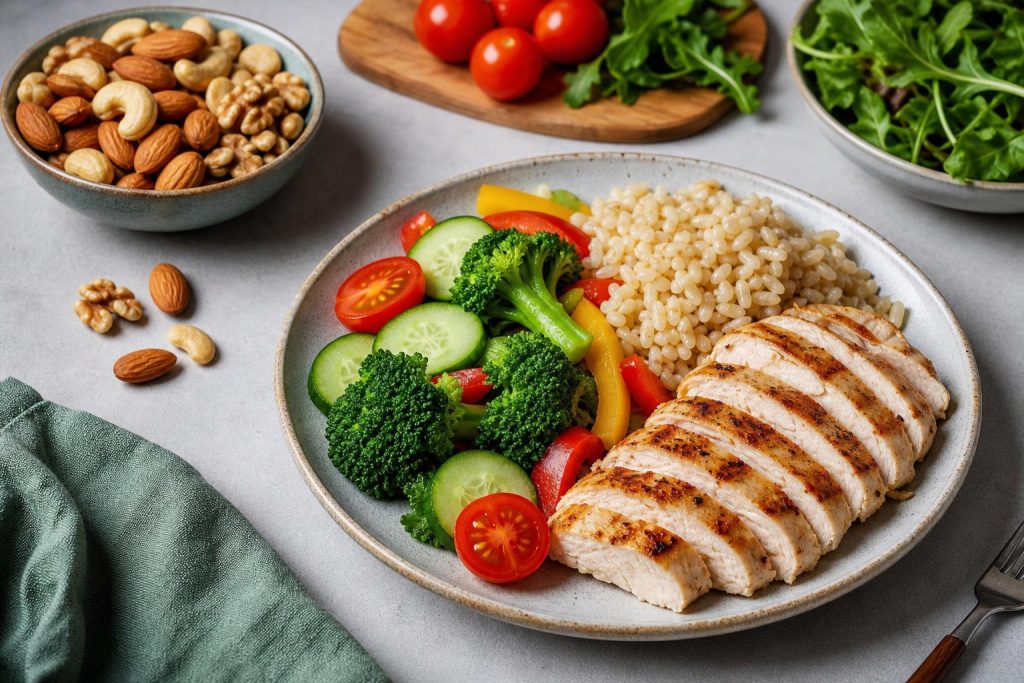
In practical terms, that means starting your day with eggs, Greek yogurt, or a protein shake rather than toast or cereal. Lunch should center on grilled chicken, canned salmon, cottage cheese, or legumes — not a salad with a few chickpeas tossed in as an afterthought. Dinner follows the same principle: a palm-sized serving of lean meat or fish paired with vegetables and a small portion of complex carbohydrates like sweet potato, quinoa, or lentils. The reason this structure works isn’t just about macros — it’s that high-protein meals are more satiating per calorie, which on a GLP-1 means you’ll hit your protein targets before your appetite disappears entirely after a few bites of filler food.
A free one-day sample to anchor the concept looks like this: breakfast is three scrambled eggs with spinach and a scoop of Greek yogurt; lunch is a large bowl of mixed greens topped with canned tuna, olive oil, and half an avocado; an afternoon snack is a protein shake or a handful of almonds with string cheese; dinner is 5 to 6 ounces of salmon with roasted broccoli and a small portion of brown rice. That single day delivers roughly 150 to 180 grams of protein, plenty of healthy fat, and enough fiber to support digestion — a common challenge on GLP-1 therapy given the slowed gastric motility these medications cause.
What to Avoid — and Why It’s Not Just About Calories
GLP-1 medications change your relationship with food in ways that make certain dietary patterns genuinely uncomfortable. High-fat, greasy foods tend to trigger nausea more intensely because delayed gastric emptying means that heavy meal sits in your stomach far longer than it used to. Carbonated drinks, alcohol, and heavily processed foods can amplify side effects and crowd out the nutritional real estate you have to work with on a reduced-calorie intake. This isn’t moral judgment about food — it’s mechanics. When your appetite is already compressed, a bag of chips or a fast food combo takes up caloric space that your body desperately needs to fill with protein, vitamins, and minerals.
Beyond the GLP-1-specific considerations, ultra-processed foods drive poor metabolic outcomes independent of calorie counts. They tend to be engineered to bypass satiety signals, which creates an interesting paradox on GLP-1 therapy — some men report that highly palatable junk food is the only thing they can eat when nausea is bad. That’s worth acknowledging honestly. On rough days, eating something is better than eating nothing. But as a baseline pattern, whole foods should dominate. Lean meats, fish, eggs, dairy, legumes, vegetables, fruits, and minimally processed whole grains form the core of what your meals should look like week in and week out.
Hydration also deserves more attention than it typically gets. GLP-1 users are at elevated risk of dehydration because reduced food intake means less water coming in through food, and nausea can further reduce the desire to drink. Aim for at least 80 to 100 ounces of water daily, and consider electrolyte supplementation — particularly sodium, potassium, and magnesium — if you’re experiencing fatigue or muscle cramps.
The Takeaway
GLP-1 medications are a powerful metabolic tool, but the 2026 Sports Medicine trial makes the larger point impossible to ignore: pharmacotherapy alone produced significantly inferior outcomes compared to the combination of medication and structured lifestyle intervention. Nutrition is that intervention on the dietary side. A free GLP-1 meal plan doesn’t need to be complicated — it needs to be protein-forward, built around whole foods, adequately hydrated, and consistent enough that your body has the raw materials it needs to preserve muscle and drive fat loss. The medication opens a window. What you eat determines whether you climb through it.
Scientific References
-
Jensen, Fiorenza, Juhl et al. (2026).
Physical Fitness with Exercise and GLP-1 Receptor Agonist Treatment Alone or Combined After Diet-Induced Weight Loss: A Secondary Analysis of a Randomized Controlled Trial in Adults with Obesity..
Sports medicine (Auckland, N.Z.).
View on PubMed →