Tirzepatide doesn’t just suppress appetite — it fundamentally changes how your body processes food. Clinical trial data from the SURMOUNT-1 study showed participants losing an average of 20.9% of body weight over 72 weeks, but the men who got the most out of the medication weren’t just eating less — they were eating strategically. What you put on your plate on shot day matters more than most people realize, and getting it right can mean the difference between tolerating the medication well and spending the afternoon miserable on the couch.
Tirzepatide works as a dual GIP and GLP-1 receptor agonist, which means it slows gastric emptying significantly. Research published in Diabetes Care confirmed that this delayed gastric emptying is a key mechanism behind both its appetite-suppressing effects and its most common side effects — nausea, bloating, and early satiety. That physiology is your roadmap for shot day eating.
Why Shot Day Nutrition Hits Different
Most men on tirzepatide inject once weekly, and the 24 to 48 hours following that injection tend to be when side effects peak. Your stomach is emptying more slowly than usual, your appetite signals are muted, and your digestive system is under more stress. Eating a heavy, high-fat, or large-volume meal during this window is like flooring the gas in a traffic jam — something’s going to give.
The goal on shot day isn’t to eat as little as possible. Under-eating, especially below adequate protein thresholds, accelerates muscle loss — a real concern with rapid weight loss. A 2023 analysis in Obesity found that GLP-1-based weight loss can result in lean mass losses comparable to or exceeding those seen with traditional caloric restriction, making dietary protein on every single day — including shot day — non-negotiable.
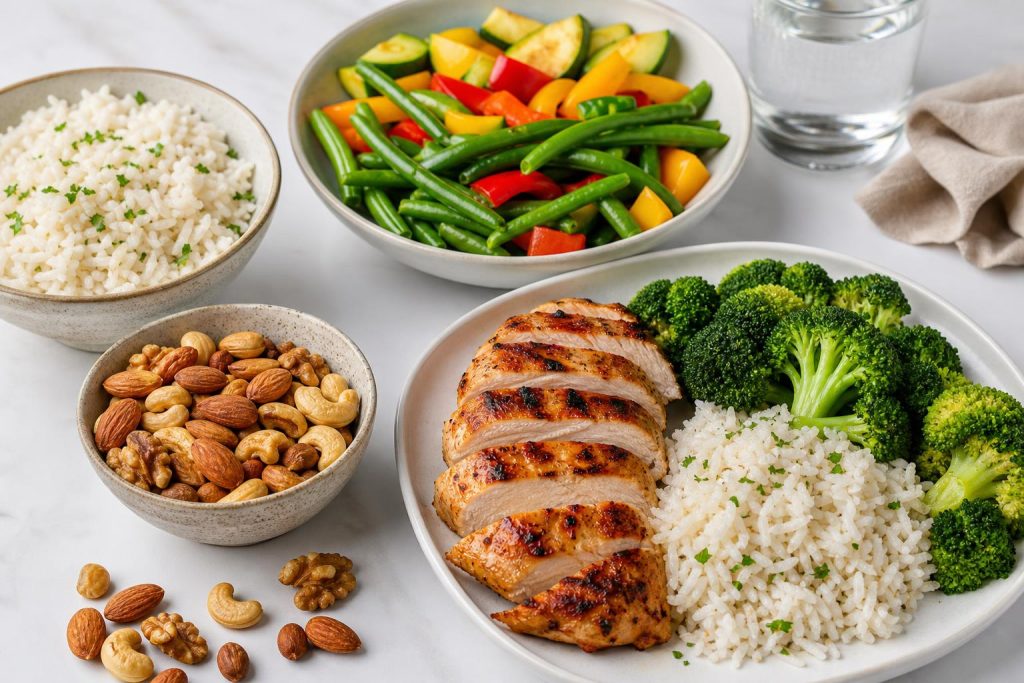
What you’re aiming for is smaller, more frequent meals built around easily digestible protein sources, modest carbohydrates, and limited high-fat foods. Think of it as precision eating rather than deprivation. A 4–6 ounce portion of grilled chicken breast or canned tuna with a half cup of white rice and some steamed zucchini is a near-perfect shot day meal — high protein, low residue, easy on the gut. Greek yogurt with a handful of berries works well for earlier in the day. Scrambled eggs with a slice of sourdough toast is another solid option that delivers protein without overwhelming a slower-moving digestive system.
What to avoid is equally important. High-fat foods — fried items, heavy cheese, fatty cuts of meat, rich sauces — dramatically slow gastric emptying on top of what tirzepatide is already doing. Studies on fat’s effect on gastric motility have long established that dietary fat is the most potent brake on stomach emptying of any macronutrient. Combine that with tirzepatide’s own mechanism and you’re compounding an already sluggish system, which is a reliable recipe for nausea. Carbonated drinks, alcohol, and highly spiced foods are similarly worth skipping on shot day — not forever, just on the days your gut needs support.
Protein Is Still the Priority — Even When You’re Not Hungry
This is where a lot of men on tirzepatide quietly go wrong. The appetite suppression feels like a gift, and it is — but treating it as permission to barely eat is a long-term mistake. Research consistently demonstrates that preserving lean mass during a caloric deficit requires daily protein intakes of at least 1.2 to 1.6 grams per kilogram of body weight, and the anabolic signaling window doesn’t take days off because you took a shot.
On shot day, practical protein targets still need to be hit. If appetite is low, lean on protein sources that require minimal volume — a whey protein shake mixed with water, Greek yogurt, cottage cheese, or egg whites. These deliver 20 to 30 grams of high-quality protein in a small serving size without stressing a stomach that’s already working in slow motion. Spreading intake across three to four smaller eating occasions rather than forcing two large meals tends to dramatically improve tolerance on the days side effects are most pronounced.
Hydration deserves a mention here too. Nausea associated with GLP-1 receptor agonists can discourage drinking, but dehydration compounds fatigue and can worsen the overall experience. Sipping cold water steadily throughout the day — rather than drinking large amounts at once — works well alongside small, structured meals. Electrolyte drinks without added sugar are a reasonable option if you’re particularly sensitive.
One pattern worth building: eating your largest protein-containing meal before your injection rather than after it. If you inject in the evening, make lunch your most substantial meal. If you inject in the morning, front-load protein at breakfast. This isn’t a hard rule, but it allows you to meet your nutritional targets before the medication’s peak effect sets in, reducing the friction of eating when appetite is suppressed most.
The Takeaway
Tirzepatide is a powerful metabolic tool, but it doesn’t think for you — it just changes the conditions you’re working within. Shot day nutrition is really just disciplined eating adapted to a specific physiological context: smaller portions, easily digested protein, low-fat meals, steady hydration. None of this is revolutionary, but it’s the difference between thriving on the medication and merely surviving it. The men who see the best outcomes — in body composition, in energy, in long-term adherence — are the ones who treat shot day as a nutritional discipline, not a free pass to skip meals. Eat smart, hit your protein, and let the medication do its job.