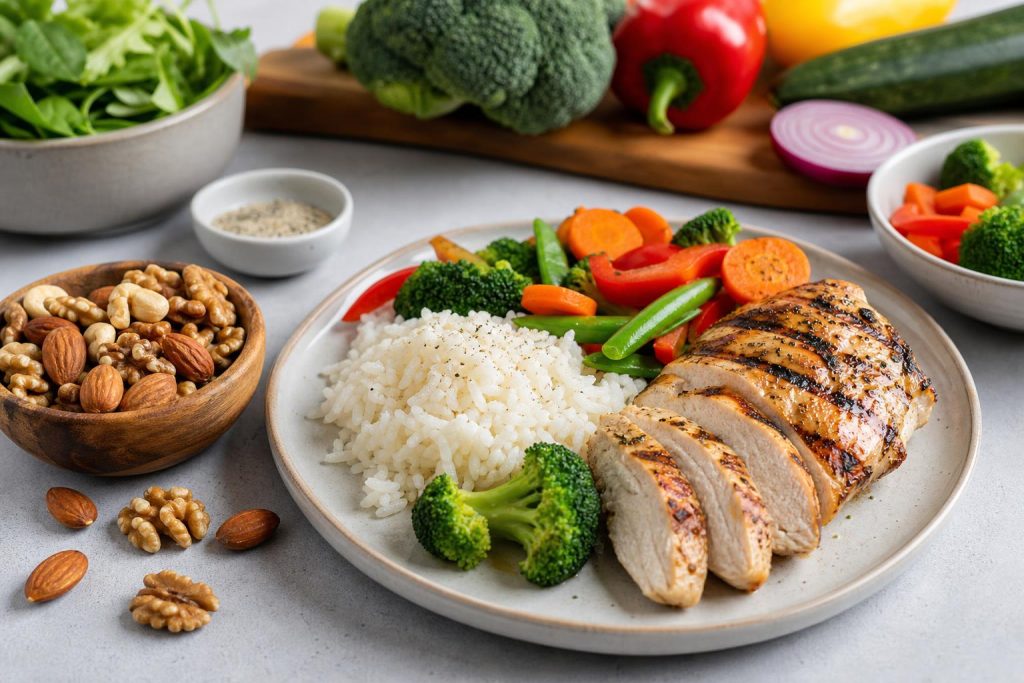
When researchers analyzed dietary intake in patients on semaglutide and tirzepatide, they found something that shouldn’t surprise anyone who understands nutrition math: dramatic reductions in caloric intake consistently produce significant micronutrient shortfalls — even when food quality is high. Eat 40% less food, and you get roughly 40% fewer vitamins and minerals. On GLP-1 medications, where appetite suppression can be profound and food volume drops sharply, that equation becomes a genuine clinical concern.
This isn’t a fringe issue. It’s the same problem that plagues any aggressive caloric restriction strategy — whether you’re on a GLP-1 receptor agonist, running an extended cut, or intermittent fasting down to one or two meals a day. The delivery mechanism changes; the underlying nutritional physics don’t. If you’re eating significantly less food than your body needs for full micronutrient coverage, and you’re not actively filling those gaps, your metabolism, muscle retention, energy, and long-term health will eventually reflect that deficit.
The Gaps That Matter Most
Of all the micronutrients at risk during caloric restriction, vitamin B12 deserves the first mention — not just because it’s commonly deficient in the general population, but because B12 deficiency impairs neurological function, energy metabolism, and red blood cell production in ways that can be slow to manifest and slow to reverse. Men who are eating fewer animal proteins — either by choice or because GLP-1 nausea has killed their appetite for meat — are particularly exposed. A methylcobalamin supplement of 500–1000 mcg daily is a reasonable and inexpensive hedge.
Vitamin D is the other non-negotiable. Research consistently links vitamin D insufficiency to reduced testosterone, impaired immune function, and poor muscle protein synthesis — three outcomes no man in active pursuit of better health can afford to ignore. Because vitamin D is fat-soluble and stored in adipose tissue, there’s some evidence that rapid fat loss can transiently affect circulating levels, though dietary insufficiency remains the primary driver. A daily dose of 2,000–5,000 IU of vitamin D3, ideally taken with K2 to support proper calcium metabolism, covers most men’s needs.
Magnesium rounds out the critical three. An estimated 45% of Americans don’t meet the recommended dietary intake for magnesium, and that number climbs when food volume is restricted. Magnesium is involved in over 300 enzymatic reactions, including glucose metabolism, muscle contraction, and sleep regulation — areas where men on caloric deficits often report the most noticeable decline. Magnesium glycinate or malate at 200–400 mg daily, taken in the evening, addresses both the gap and supports sleep quality simultaneously.
Beyond these three, zinc and iron deserve attention in men who have significantly reduced red meat intake. Zinc supports testosterone synthesis and immune competence, while iron deficiency — even subclinical — produces fatigue and reduced exercise capacity that’s easy to misattribute to the diet itself. Neither should be supplemented blindly; a basic blood panel every six months gives you the data to make informed decisions rather than guessing.
Protein-adjacent micronutrients also matter. When total food intake drops, leucine — the amino acid most responsible for triggering muscle protein synthesis — often falls below the threshold needed to stimulate anabolic signaling. Studies suggest a minimum of 2–3 grams of leucine per meal is required to maximally stimulate muscle protein synthesis, a target that becomes genuinely difficult to hit when appetite is suppressed and meal volume is small. A high-quality whey protein supplement isn’t just about macros here — it’s a practical vehicle for maintaining leucine thresholds when whole food intake is compromised.
Building a Supplement Floor, Not a Stack
The goal here isn’t to construct an elaborate supplement protocol — it’s to build a nutritional floor that ensures your body has what it needs to preserve muscle, maintain metabolic function, and sustain energy through whatever approach you’re using to improve your health. A high-quality multivitamin, vitamin D3/K2, magnesium glycinate, and a reliable protein source cover the majority of the gap for most men. If you’re on a GLP-1 medication, add B12 explicitly. If you’ve reduced red meat substantially, consider periodic zinc and iron monitoring.
The supplement industry thrives on complexity, but the reality is simpler: protect the basics first, verify your status with bloodwork, and adjust from there. Every other optimization in your training and nutrition compounds better when the micronutrient foundation is solid.
The Takeaway
Micronutrient gaps are not a GLP-1 problem — they’re a caloric restriction problem that becomes more pronounced the more aggressively you cut. Whether you’re on medication, running a strict diet, or simply prioritizing training over eating, the gaps are real and the consequences are measurable. Address them proactively, confirm them with bloodwork, and your body will have the raw materials it needs to respond to everything else you’re doing right.