When clinical trials showed that semaglutide 2.4 mg produced an average body weight reduction of nearly 10% over 68 weeks, the headlines celebrated the numbers. What the headlines glossed over was the composition of that weight loss — and why protein intake may be the single most important lever you control while taking Wegovy.
Weight loss, regardless of how it’s achieved, is never purely fat. The body doesn’t discriminate cleanly. Without deliberate nutritional strategy, a meaningful portion of the mass you shed can come from lean tissue — muscle, bone density, organ mass. For men specifically, that represents a real problem. Muscle is metabolically expensive to build and metabolically protective to keep. Losing it during a caloric deficit accelerates the return of fat after weight loss ends, weakens the structural foundation your body depends on, and quietly undermines the long-term results you’re working toward.
Wegovy changes the game on appetite — research published in Diabetes, Obesity & Metabolism found that semaglutide reduced total ad libitum energy intake by 24% across a full day, driven by less hunger, fewer food cravings, and a measurably lower preference for high-fat, energy-dense foods. That appetite suppression is the mechanism behind the medication’s effectiveness. But when you’re eating substantially less food, every bite becomes more nutritionally consequential. Getting your protein right isn’t just good practice — it becomes essential infrastructure for a successful outcome.
Why Muscle Loss Is the Hidden Risk on Wegovy
The appetite suppression from semaglutide works broadly. It doesn’t selectively eliminate your desire for junk food while leaving your drive to eat chicken and eggs intact. Many men on Wegovy report eating 1,000 to 1,500 calories per day — sometimes less — often without conscious restriction. At those intake levels, hitting adequate protein requires active, structured effort. Left to default eating patterns, most people will fall short.
The consequences of under-eating protein during aggressive caloric restriction are well-documented. Skeletal muscle breakdown accelerates when the body lacks sufficient dietary amino acids to meet its maintenance demands. Muscle protein synthesis requires a consistent supply of essential amino acids, particularly leucine, as a signaling trigger. When total food intake drops sharply — as it commonly does on Wegovy — and that intake isn’t protein-anchored, the body draws from its own lean mass to meet metabolic needs.
The STEP clinical trial program, which provided the evidence base for Wegovy’s FDA approval, demonstrated compelling weight loss efficacy across thousands of patients. What those trials weren’t designed to measure in detail was the ratio of fat mass to lean mass lost — a critical distinction for men optimizing body composition, not just scale weight. Preserving muscle during the weight loss phase is what separates a transformation from a temporary result.
The current evidence-based recommendation for men in a caloric deficit, particularly one as significant as what Wegovy produces, is a protein intake of 1.6 to 2.2 grams per kilogram of body weight per day — with the higher end of that range being more protective when calories are severely restricted. For a 220-pound man, that translates to roughly 160 to 220 grams of protein daily. On a 1,200-calorie eating day, that’s a serious commitment that requires intentional food choices at every meal.
What Adequate Protein Actually Does on Semaglutide
Protein’s role during weight loss on Wegovy goes beyond muscle preservation. It works on multiple levels simultaneously, several of which directly complement the medication’s mechanism of action.
Protein is the most satiating macronutrient by a wide margin. When appetite is already being modulated by semaglutide’s action on GLP-1 receptors in the brain and gut, high protein intake reinforces that satiety signal. Men on Wegovy who center their meals around protein sources — lean meats, eggs, fish, Greek yogurt, cottage cheese — tend to find it easier to stay within their caloric targets without feeling deprived, because protein prolongs the feeling of fullness more effectively than carbohydrates or fat at equivalent calories.
Protein also has the highest thermic effect of any macronutrient. Roughly 20 to 30 percent of the calories from protein are expended during digestion and metabolism itself. In a reduced-calorie environment, this thermogenic effect helps maintain a metabolic rate that might otherwise decline as the body adapts to lower energy intake. The same appetite study noted that resting metabolic rate, adjusted for lean body mass, did not differ significantly between semaglutide and placebo groups — suggesting that the drug itself doesn’t meaningfully suppress metabolism, which means your dietary choices carry real weight in determining whether your metabolism stays resilient during the process.
Perhaps most importantly for men, protein combined with resistance training is the primary driver of muscle protein synthesis. Wegovy doesn’t come with instructions to lift weights, but the science is unambiguous: men who pair semaglutide with a structured resistance training program and adequate protein intake lose more fat and preserve substantially more muscle than those who rely on the medication alone. The drug creates the caloric conditions for weight loss. Protein and training determine what kind of weight you lose.
The broader health benefits of this approach extend beyond aesthetics. A 2025 analysis published in JAMA found that semaglutide was associated with more than 40% risk reduction in hospitalization for heart failure or all-cause mortality in patients with cardiometabolic conditions — outcomes driven partly by improvements in body composition, inflammation, and metabolic function. Muscle mass is independently associated with cardiovascular resilience and metabolic health. Protecting it while losing weight isn’t just about looking better — it’s about making the weight loss medically durable.
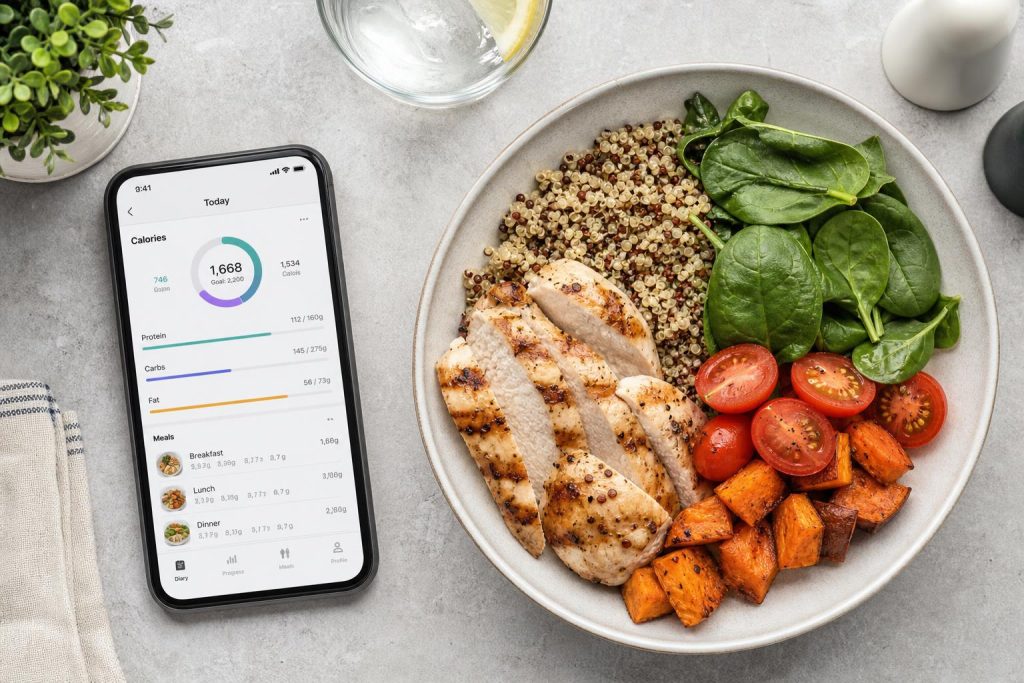
Practically, the most reliable way to hit high protein targets on a suppressed appetite is to prioritize protein at the start of every meal. Eat your chicken, fish, or eggs before you eat anything else. By the time semaglutide’s appetite suppression cuts your meal short, you will have already consumed the most important macronutrient. Supplementing with a high-quality whey or casein protein shake can close gaps on days when whole food intake falls short — a single scoop typically delivers 25 grams of protein with minimal volume, making it ideal for low-appetite days.
Food quality matters significantly here. Not all protein sources are equal in their leucine content or digestibility. Animal proteins — meat, fish, dairy, eggs — consistently outperform plant proteins in stimulating muscle protein synthesis on a gram-for-gram basis, partly due to their complete amino acid profiles and higher leucine concentrations. Men who rely heavily on plant-based proteins should aim for the upper end of the intake range and consider leucine supplementation or protein blending strategies to compensate.
The Takeaway
Wegovy is a powerful tool for weight loss — the clinical evidence is clear and the cardiovascular outcomes data emerging from real-world studies make a compelling case for its long-term value. But the medication operates on caloric intake and appetite. It does not manage what that reduced intake is made of. That part is entirely up to you.
Men who approach semaglutide as a passive process — take the shot, eat less, lose weight — often find themselves lighter but metabolically weaker, with a higher body fat percentage relative to their lean mass than when they started. Men who treat protein as non-negotiable, structure their meals around it, lift weights consistently, and use the appetite suppression as a tool to reduce calories without reducing nutritional quality — those are the men who transform their body composition, not just their scale weight.
The medication does its part. Make sure your protein is doing its part too.
Scientific References
-
Krüger, Schneeweiss, Fuse et al. (2025).
Semaglutide and Tirzepatide in Patients With Heart Failure With Preserved Ejection Fraction..
JAMA.
View on PubMed → -
Blundell, Finlayson, Axelsen et al. (2017).
Effects of once-weekly semaglutide on appetite, energy intake, control of eating, food preference and body weight in subjects with obesity..
Diabetes, obesity & metabolism.
View on PubMed → -
Singh, Krauthamer, Bjalme-Evans et al. (2022).
Wegovy (semaglutide): a new weight loss drug for chronic weight management..
Journal of investigative medicine : the official publication of the American Federation for Clinical Research.
View on PubMed → -
Patel, Blaney, Nassar et al. (2025).
GLP-1 receptor agonists and alcohol use disorder: a systematic review..
Alcohol and alcoholism (Oxford, Oxfordshire).
View on PubMed → -
Davies, Færch, Jeppesen et al. (2021).
Semaglutide 2·4 mg once a week in adults with overweight or obesity, and type 2 diabetes (STEP 2): a randomised, double-blind, double-dummy, placebo-controlled, phase 3 trial..
Lancet (London, England).
View on PubMed →