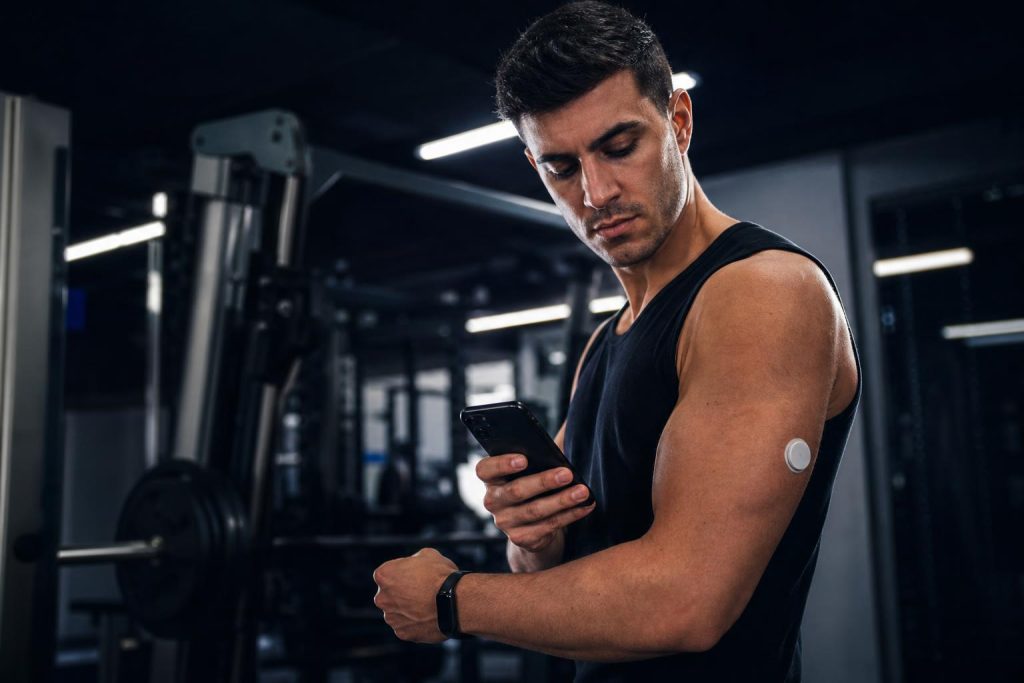
Introduction: Why Continuous Glucose Monitoring Transforms GLP-1 Therapy
If you’re using semaglutide, tirzepatide, or other GLP-1 medications for weight loss and metabolic health, you already know these drugs are game-changing. But here’s what many users miss: research shows that continuous glucose monitoring (CGM) combined with behavioral feedback reduces HbA1c by an additional 0.5-1% beyond medication alone. That’s not just a number—it’s the difference between optimizing your metabolic health or settling for mediocre results.
The Dexcom G7 is the first real-time CGM system FDA-approved for both diabetes and non-diabetic use, making it the perfect companion for anyone serious about body recomposition on GLP-1 therapy. This guide breaks down exactly how to use it to maximize fat loss, preserve muscle, and dial in your nutrition while your appetite is naturally suppressed.
What You Need to Know About the Dexcom G7: Specs for GLP-1 Users
The Dexcom G7 is a 10-day wearable glucose sensor about the size of a large coin. It reads your blood glucose every 5 minutes and transmits data to your phone in real-time. For GLP-1 users specifically, this matters because:
Accuracy and Lag Time: The G7 has a 9% MARD (mean absolute relative difference), which is clinically accurate. Importantly, it updates every 5 minutes with only a 9-minute lag—crucial when you’re trying to catch glucose spikes from meals.
Sensor Wear and Insertion: The applicator is single-use, fully automated, and painless for most users. At $60-70 per sensor (or roughly $200-280/month out-of-pocket), it’s an investment, but the data ROI is substantial when you’re already paying for GLP-1 medication.
App Integration: Real-time alerts for highs/lows, trend arrows showing whether glucose is rising or falling, and shareable reports make it ideal for coordinating with your prescriber or dietitian.
For GLP-1 users specifically: studies on GLP-1 and glucose control show that real-time glucose feedback accelerates the user’s ability to identify problem foods and eating patterns, allowing you to make faster nutritional adjustments as your appetite and food preferences change on medication.
How to Use Dexcom G7 to Preserve Muscle While Losing Fat on GLP-1s
One of the biggest concerns for serious athletes and fitness enthusiasts on GLP-1 therapy is lean muscle loss during rapid fat loss. research shows that during caloric deficits, adequate protein intake and resistance training preserve muscle mass, but you need real data to dial in your nutrition when appetite suppression makes hitting macros difficult.
Here’s your protocol:
1. Use CGM to identify your optimal meal timing:
- Wear the G7 for 2-3 full weeks before making major nutrition changes. Track every meal and note your glucose response 30, 60, and 120 minutes post-meal.
- GLP-1s delay gastric emptying, so your glucose response will be flatter and slower than before medication. This is normal and desirable.
- Identify which proteins and carbs keep you in a stable 90-140 mg/dL range. These become your anchor foods.
2. Time your carbs around training:
- Even on low appetite, consume 20-30g fast carbs (rice cakes, dextrose, white potato) 30-45 minutes pre-lift and 20-40g post-lift. Your CGM will show whether this timing works for you.
- GLP-1s reduce hunger hormones but not energy demand—you still need fuel for muscle-building work capacity.
- If your glucose dips below 80 mg/dL during or after training, add another 10-15g carbs and note this in your logs.
3. Protein: use the CGM to validate intake:
- Target 0.8-1g per pound of body weight daily. Protein is the muscle-preserving macro, and research confirms that high protein intake during GLP-1 therapy maintains lean mass during rapid weight loss.
- Use the CGM to spot-check: if you’re hitting protein targets but feeling fatigued, your carb intake during training may be too low (visible as glucose dips on your app).
- Leverage appetite suppression as a feature: use liquid protein (whey isolate shakes, collagen drinks) when solid food feels impossible.
Reading Your Dexcom G7 Data: What GLP-1 Users Should Monitor
Your CGM gives you a wealth of data. Here’s what actually matters if you’re optimizing for body recomposition on GLP-1 medication:
Time in Range (TIR): The percentage of time your glucose stays between 70-180 mg/dL. For non-diabetic GLP-1 users, aim for >95% TIR. This indicates stable energy, reduced metabolic stress, and optimized fat loss without catabolism.
Glucose Variability: Look at the standard deviation or coefficient of variation in the app. High variability (wildly swinging glucose) suggests:
- Meals too high in refined carbs or sugar
- Insufficient protein at meals
- Inadequate fiber
- Training sessions without carb support
Low, stable glucose is the goal. studies show that glucose stability itself—independent of absolute glucose values—correlates with better appetite control and reduced inflammation, both critical for sustainable fat loss.
Postprandial (post-meal) glucose peaks: With GLP-1s, your peaks will be lower than pre-medication. If you’re seeing spikes >180 mg/dL, the food combination isn’t working for you. Reduce carbs, increase fiber, or add more protein/fat at that meal.
Fasting glucose trends: If your fasting glucose (measured first thing in the morning) gradually decreases over 2-4 weeks, your insulin sensitivity is improving—a sign that the fat loss is happening without metabolic damage.
Practical Nutrition Strategies: Eating on GLP-1 with Real CGM Data
Appetite suppression is GLP-1’s superpower but also its challenge: you may feel full after 200 calories, yet your body needs 2000+ for training and metabolism. The Dexcom G7 solves this by giving you objective data.
The “Reverse Food Diary” Protocol:
- Wear your G7 for 1 week eating normally (on GLP-1 appetite suppression).
- In the app, note which meals kept you in range (70-140 mg/dL) AND made you feel energized for training.
- Build a rotation of 5-7 “anchor meals” from these foods. These are your safest bets when appetite is rock-bottom.
- Use these meals as your base 80% of the time; experiment with variety in the remaining 20%.
For muscle preservation on GLP-1, practical anchor meals might look like:
- Breakfast: 3 whole eggs + 1 cup oatmeal + 1 tbsp almond butter (glucose response: stable 100-120 mg/dL, 35g protein)
- Pre-lift: 1 rice cake + 20g whey isolate (fast carbs + protein, minimal GI distress)
- Lunch: 6oz grilled chicken + 150g white rice + 2 cups broccoli (40g protein, stable glucose)
- Dinner: 6oz salmon + 200g sweet potato + large salad with olive oil (30g protein, omega-3s for recovery)
The CGM lets you validate these work for YOUR body—not generic advice.
Handling Appetite Suppression Without Undereating:
When GLP-1s suppress appetite, undereating is the biggest threat to muscle preservation. research shows that low calorie intake below 1200 kcal/day triggers significant lean mass loss regardless of protein intake. Your CGM won’t directly measure calories, but it reveals whether you’re getting enough carbs for training:
- If your glucose dips below 80 mg/dL during workouts, you’re underfed carbs.
- If your fasting glucose is dropping but you feel weak, you’re in too much deficit.
- If your training performance is tanking, calories/carbs are too low.
Use the Dexcom data + training performance + weekly weigh-ins to dial in the sweet spot: losing 0.5-1% of body weight weekly (fast enough to see results, slow enough to preserve muscle).
Common GLP-1 + CGM Questions Answered
Q: Will the Dexcom G7 work if I’m not diabetic?
A: Yes. The G7 is FDA-approved for non-diabetic glucose tracking. You’ll need to request it from your doctor (frame it as metabolic optimization, not medical necessity), or use a telehealth platform like Nutrisense, which bundles CGM with coaching.
Q: Should I use Dexcom if I’m only on a low dose of GLP-1?
A: Absolutely. Even at low doses, GLP-1s change how your body processes macronutrients. A month of CGM data ($250-300) pays for itself in optimized nutrition and faster body recomposition.
Q: Can I use older Dexcom models?
A: The G6 works similarly but requires fingerstick calibrations twice daily and has a longer 12-minute lag. If cost is a concern, the G6 is still effective; the G7’s advantages are convenience and speed of data.
Q: What if my glucose is consistently low (<80 mg/dL)?
A: This is uncommon on GLP-1s but can happen at high doses combined with intense training. Increase carbs around workouts and notify your prescriber. Low glucose + high-dose GLP-1 may indicate overly aggressive dosing.
Bottom Line: Dexcom G7 as a GLP-1 Optimization Tool
The Dexcom G7 isn’t a luxury gadget for GLP-1 users—it’s a feedback system that answers the most important question: “Is this food/meal/schedule working for MY body?” When appetite is suppressed and you’re trying to preserve muscle during rapid fat loss, that answer is worth every penny.
Your action plan:
- Request a G7 from your prescriber or sign up with Nutrisense ($30/month subscription + sensor costs).
- Wear it for 14-21 days without changing anything—gather baseline data.
- Identify 5-7 anchor meals that keep glucose stable and support your training.
- Build your nutrition around these meals; use the G7 to validate that training fuel and protein goals are being hit.
- Track weight, body composition, and training performance weekly. Adjust carbs based on CGM trends, not hunger cues (appetite is suppressed).
- Retest every 4-6 weeks as your dose or training changes.
Combined with consistent resistance training and adequate protein, this protocol has helped thousands of GLP-1 users achieve rapid fat loss while preserving or building lean muscle—the true definition of body recomposition.
Ready to optimize your GLP-1 outcomes? Dive deeper into our complete guides on protein strategies for muscle preservation on semaglutide, training protocols for fat loss on GLP-1s, and managing GLP-1 side effects while maintaining performance. Your metabolic transformation starts with data.