When the SURMOUNT-1 trial results landed in the New England Journal of Medicine in 2022, the numbers were hard to ignore. Participants on tirzepatide lost up to 22.5% of their body weight over 72 weeks — a figure that outpaced virtually every pharmaceutical intervention that had come before it. But buried in the fine print of that same study was something the headlines missed: the participants were also following a 500-calorie-per-day deficit diet and 150 minutes of weekly physical activity. The medication was the catalyst. The nutrition was the engine. That distinction matters enormously — because whether you’re on tirzepatide, eating clean on your own terms, or somewhere in between, the same metabolic principles apply to every man who wants to lose fat, preserve muscle, and actually feel good doing it.
The surge in searches for a “tirzepatide meal plan PDF” reflects something real: men starting this medication — or any serious fat loss protocol — want structure. They want something concrete they can follow, print out, and put on the refrigerator. That instinct is correct. Research consistently shows that dietary adherence, not the specific dietary pattern itself, is the strongest predictor of long-term weight loss success. A landmark JAMA Internal Medicine study comparing multiple diet strategies found that adherence explained more outcome variance than the macronutrient composition itself. The best meal plan is one you’ll actually follow — but it still needs to be built on solid science.
What Tirzepatide Actually Does to Your Appetite — and Why Your Meal Plan Has to Respect It
Tirzepatide is a dual GIP and GLP-1 receptor agonist, meaning it works on two separate hormonal pathways simultaneously — a mechanism that distinguishes it from earlier GLP-1 medications like semaglutide. The dual agonism appears to produce superior weight loss outcomes compared to GLP-1 monotherapy, but the relevant point for meal planning is what this drug actually does at the table: it dramatically slows gastric emptying, blunts appetite signals from the hypothalamus, and reduces the reward response to food. The clinical translation is simple — you will feel full faster, stay full longer, and have significantly less interest in eating than you did before.
This creates a problem that most online “tirzepatide meal plan PDFs” completely ignore. When appetite is pharmacologically suppressed to this degree, many men default to eating far too little — sometimes fewer than 800 calories per day — without even trying. In the short term, the scale moves impressively. Over months, the body adapts in ways that undermine the entire goal. Research on aggressive caloric restriction shows disproportionate losses of lean muscle mass, a reduction in resting metabolic rate, and hormonal disruptions including suppressed testosterone — outcomes no man pursuing long-term health should accept. The meal plan built around tirzepatide, or any serious fat loss phase, must be structured to prevent muscle catabolism first and optimize fat loss second.
Protein is the non-negotiable anchor of that structure. A systematic review in the American Journal of Clinical Nutrition confirmed that higher protein intakes — in the range of 1.2 to 1.6 grams per kilogram of body weight — preserve lean mass during caloric restriction more effectively than standard protein targets. For a 200-pound man, that translates to roughly 110 to 145 grams of protein per day, every day, regardless of whether appetite makes hitting that number feel easy or miserable. Chicken breast, Greek yogurt, eggs, cottage cheese, lean beef, and whey protein are not optional additions to this plan — they are the structural foundation everything else is built around.
Building the Actual Meal Plan: Macros, Meal Timing, and What to Eat When You’re Not Hungry
The practical architecture of a tirzepatide-compatible meal plan looks different from a standard bodybuilding cut or a keto protocol, but it borrows intelligently from both. Total calories should sit in a moderate deficit — typically 500 to 750 calories below maintenance — not the aggressive restriction that suppressed appetite might otherwise produce. For most men in the 180 to 220-pound range, this places daily intake somewhere between 1,600 and 2,200 calories depending on activity level, age, and starting metabolic rate. Eating less than 1,400 calories per day for an extended period on tirzepatide is a path toward muscle loss, micronutrient deficiency, and rebound weight gain.
Meal frequency matters more on GLP-1 therapy than it does during typical dieting. Because gastric emptying is slowed and appetite is blunted, many men find that two or three structured meals per day feels more manageable than the traditional six small meals approach. This aligns well with research on time-restricted eating: a 2022 study in the New England Journal of Medicine found that time-restricted eating combined with caloric restriction produced significant improvements in metabolic markers, including insulin sensitivity and triglycerides, in overweight adults. Whether you eat in a compressed window or spread meals across the day matters less than consistently hitting your protein target and staying within your calorie ceiling.
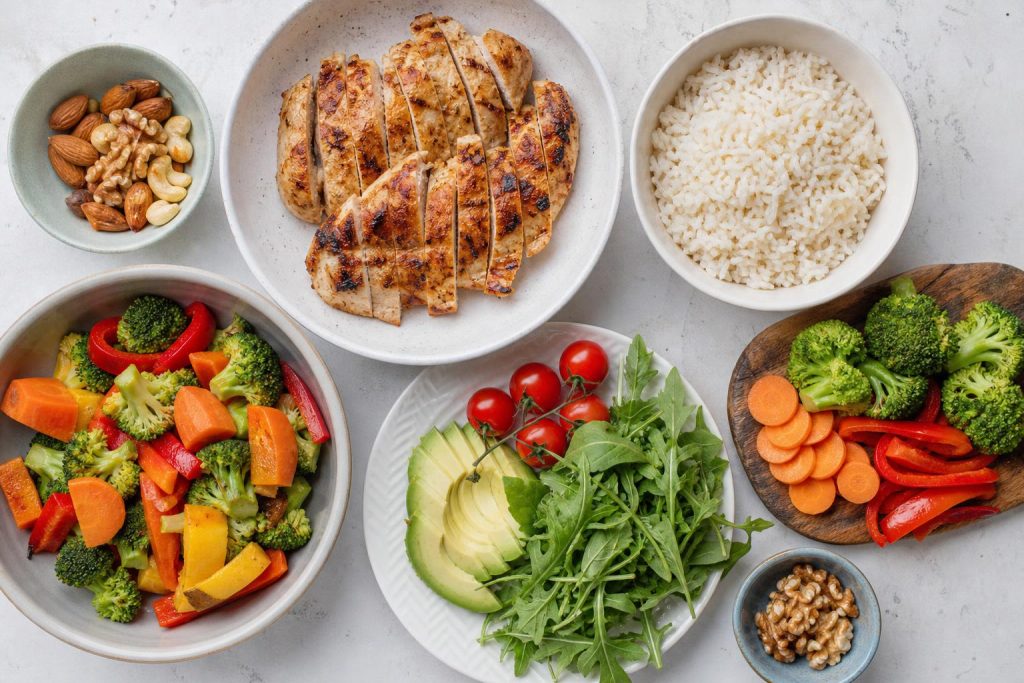
A practical day of eating on this framework might look something like this: a morning meal built around four to five whole eggs with a side of smoked salmon or lean turkey, providing roughly 40 grams of protein and healthy fats without overwhelming a stomach that empties slowly. A midday meal centered on 6 to 8 ounces of grilled chicken or 90% lean ground beef with a large portion of non-starchy vegetables — think roasted broccoli, zucchini, spinach, or bell peppers — delivers another 45 to 55 grams of protein with high micronutrient density and minimal caloric density. An evening meal that includes a moderate serving of complex carbohydrates — sweet potato, quinoa, or legumes — alongside another protein source helps replenish muscle glycogen, particularly on training days. If a third full meal feels like too much, a protein shake using whey or casein is a legitimate and effective tool for closing the protein gap without digestive burden.
Carbohydrate tolerance varies significantly among men on tirzepatide, partly because improved insulin sensitivity — one of the medication’s well-documented metabolic effects — changes how the body partitions glucose. Clinical data from the SURPASS trial series showed meaningful reductions in HbA1c and fasting glucose even in participants without diabetes, suggesting that carbohydrate metabolism improves meaningfully during tirzepatide therapy. This is not a mandate to eat refined carbohydrates freely — fiber-rich, low-glycemic sources remain the smart choice — but it does mean that the reflexive instinct to go full ketogenic on GLP-1 therapy is not necessarily supported by the physiology. Men who train with weights specifically benefit from having adequate carbohydrates available to fuel performance and recovery.
The Nutrients Most Men Miss — and Why Micronutrient Density Matters More Than Ever
Eating less means absorbing less. It’s a mathematical reality that gets overlooked in the excitement around dramatic weight loss numbers. When caloric intake drops substantially — as it does for most men on tirzepatide — micronutrient intake falls with it unless the meal plan is deliberately built around nutrient-dense whole foods. Research has documented widespread micronutrient deficiencies following bariatric surgery, a procedure that shares the appetite-suppression mechanism with GLP-1 therapies, with iron, vitamin B12, vitamin D, zinc, and magnesium being the most commonly depleted. These are not cosmetic concerns. Zinc and magnesium play direct roles in testosterone production. B12 deficiency impairs neurological function and energy metabolism. Vitamin D insufficiency — already epidemic among men — worsens insulin resistance and undermines immune function.
The practical response is prioritizing what researchers call micronutrient-dense proteins and vegetables over calorically efficient but nutritionally thin options. Dark leafy greens, liver and organ meats consumed once or twice per week, shellfish, eggs including the yolks, and colorful vegetables should dominate the non-protein portions of every meal. A high-quality multivitamin designed for men provides reasonable insurance, but it is not a substitute for food quality. Magnesium glycinate supplemented at 300 to 400 milligrams before bed is a reasonable addition for most men, given its role in sleep quality, muscle recovery, and insulin sensitivity — benefits that compound with the metabolic improvements tirzepatide initiates.
Hydration deserves more attention than it typically receives in meal plan discussions. Tirzepatide users commonly report nausea, particularly in the first several weeks and after dose escalations. Nausea was the most frequently reported adverse event in SURMOUNT-1, affecting the majority of participants at some point during the trial. Adequate hydration — a minimum of 2.5 to 3.5 liters of water daily depending on body size and training volume — reduces nausea severity, supports kidney function during periods of rapid fat metabolism, and helps maintain electrolyte balance when food intake is lower than normal. Sodium, potassium, and magnesium should all be consciously maintained through food and supplementation, particularly for men who exercise regularly.
The Takeaway
Searching for a tirzepatide meal plan PDF is the right instinct — structure works, and the science supports using one. But the plan you build or follow needs to respect the physiology at play: moderate deficit, high protein, micronutrient-dense whole foods, adequate hydration, and enough carbohydrates to fuel the training that will determine whether you lose fat and keep muscle or lose both and end up metabolically worse than when you started. Tirzepatide is a powerful tool. The meal plan is what makes it work in your favor for the long term. Whether you’re six weeks into your first injection or simply looking to tighten up your nutrition without any medication involved, the principles here are the same — because the human metabolism responds to the same inputs regardless of what else is in the protocol.