When researchers published the SURMOUNT-1 trial in the New England Journal of Medicine, the numbers were striking: participants on tirzepatide lost up to 22.5% of their body weight over 72 weeks. But buried inside that headline stat is a detail most people gloss over — every participant also followed a reduced-calorie diet and increased physical activity. The medication was doing something powerful, yes, but the food choices still mattered enormously. They always do.
If you’re using tirzepatide, you’re working with a dual GIP and GLP-1 receptor agonist that slows gastric emptying, reduces appetite, and improves insulin sensitivity in ways that older weight-loss drugs couldn’t match. But here’s what the clinical data makes clear: the men who get the best results — who lose fat, preserve muscle, and actually feel good doing it — aren’t just letting the medication do the heavy lifting. They’re pairing it with a nutrition strategy built around protein density, micronutrient quality, and metabolic support. That’s what this guide is about.
And while this article is written specifically for tirzepatide users, the meal planning principles here apply to anyone chasing serious fat loss or metabolic improvement. If you’re dieting hard, training consistently, or both, these fundamentals are relevant regardless of what’s in your medicine cabinet.
Why Your Macros Matter More Than You Think on Tirzepatide
Tirzepatide suppresses appetite significantly — sometimes dramatically. That’s the point. But this creates a metabolic trap that many users fall into without realizing it: eating too little, and eating the wrong things when they do eat. When your overall caloric intake drops sharply, the body doesn’t just burn fat. It starts cannibalizing lean muscle tissue for energy, particularly if dietary protein is insufficient. Research consistently shows that higher protein intake during caloric restriction preserves lean mass, which is critical not just for aesthetics but for long-term metabolic health and resting energy expenditure.
The general target for men on a fat-loss protocol — tirzepatide or not — is somewhere between 0.7 and 1.0 grams of protein per pound of body weight daily. For a 200-pound man, that’s 140 to 200 grams of protein. On tirzepatide, hitting that target becomes harder because your appetite is reduced, which means you have to be intentional and strategic about every meal. Low-volume, high-protein foods become your best allies. Think Greek yogurt, cottage cheese, eggs, canned tuna, chicken breast, and lean ground beef — all foods that pack 20 to 40 grams of protein without requiring a large plate or a full stomach.
Carbohydrates aren’t the enemy here, but the type and timing matter. Tirzepatide improves insulin sensitivity, which means your body handles carbohydrates more efficiently than it did before. The SURMOUNT-1 data showed significant reductions in fasting insulin and HbA1c, suggesting improved glucose metabolism. That’s an opportunity to use carbohydrates strategically — prioritizing complex, fiber-rich sources like oats, sweet potatoes, lentils, and quinoa that digest slowly and keep blood sugar stable. Fiber also becomes more important because the slowed gastric motility caused by tirzepatide can contribute to constipation in some users. Prioritizing fiber from vegetables, legumes, and whole grains addresses this directly while also feeding a healthy gut microbiome.
Fat doesn’t need to be avoided, but high-fat meals can amplify nausea in some tirzepatide users, especially early in treatment. Studies on GLP-1 receptor agonists have documented that fatty meals slow gastric emptying further, which can compound the GI side effects the medication already produces. Moderate fat intake from quality sources — avocado, olive oil, fatty fish, nuts — is smart. Greasy, heavy meals are where many users run into problems, and learning this early can prevent a lot of unnecessary discomfort.
What a Strong Tirzepatide Meal Plan Actually Looks Like
A practical meal structure for most tirzepatide users starts with two to three smaller meals rather than three large ones. Because appetite suppression is real and persistent, trying to force three traditional-sized meals often leads to nausea and food aversion that makes nutrition even harder to manage. Instead, the goal is nutrient density in a compact format — meals that are relatively small in volume but high in protein, fiber, and micronutrients.
Breakfast might look like two to three scrambled eggs with a half cup of cottage cheese and a handful of spinach sautéed in olive oil, followed by a piece of fruit or a small portion of oats if hunger allows. That’s roughly 40 grams of protein in a meal that doesn’t require a huge stomach. Alternatively, a Greek yogurt parfait — full-fat plain Greek yogurt layered with berries, a tablespoon of ground flaxseed, and a small handful of walnuts — delivers protein, fiber, omega-3 fatty acids, and antioxidants in a format most tirzepatide users can tolerate even on days when appetite is low.
Lunch should anchor around a lean protein source with vegetables and a moderate portion of complex carbohydrates. A grilled salmon bowl over a small portion of brown rice or farro, with roasted asparagus, cucumber, and a drizzle of tahini, hits protein, healthy fats, fiber, and micronutrients simultaneously. Another strong option is a turkey and avocado wrap in a low-carb tortilla with shredded cabbage and hummus — portable, nutrient-dense, and easy to eat slowly, which matters because tirzepatide users who eat too quickly are far more likely to experience nausea and early satiety cues they miss entirely.
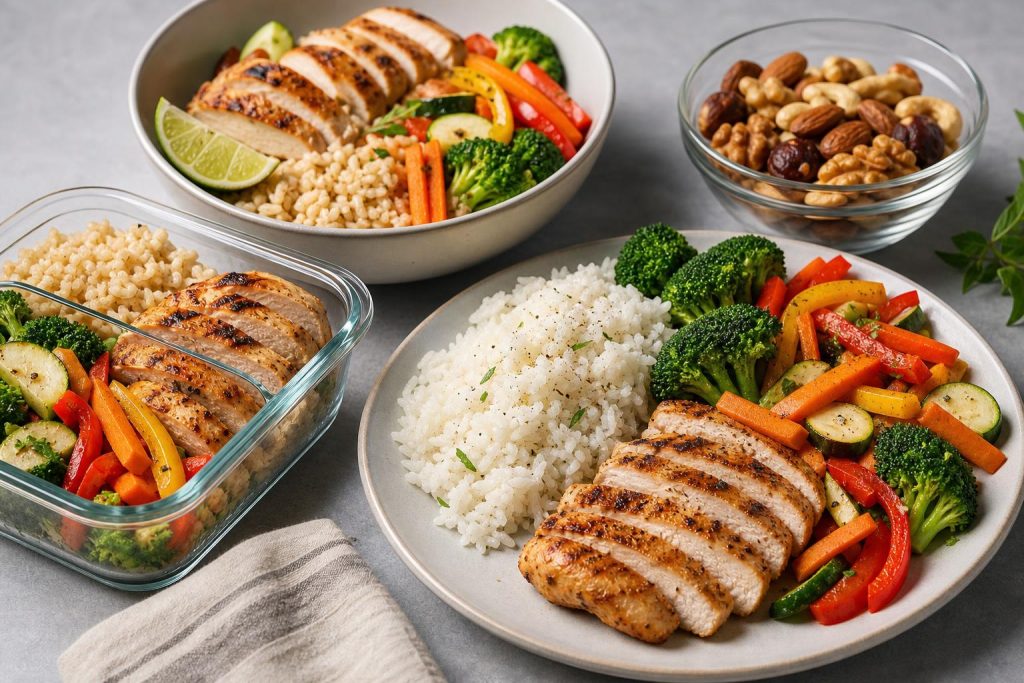
Dinner is where many men on tirzepatide struggle most, because social eating is in the evening and portion sizes in restaurants and home cooking tend to be large. The fix is simple: lead with protein, fill half the plate with vegetables, and keep starchy sides modest. A lean steak or chicken thigh with roasted broccoli and a small sweet potato checks every box. Ground turkey chili with kidney beans, diced tomatoes, and a heavy hand of chili spices is another excellent option — high in protein and fiber, deeply satisfying, and easy to portion. If appetite is genuinely suppressed at dinner, a high-protein smoothie with protein powder, frozen spinach, a banana, almond milk, and nut butter can deliver 40 grams of protein in liquid form without the friction of a full meal.
Snacks should be used strategically, not habitually. If you’re hitting your protein targets across two or three meals, snacking isn’t necessary. But if there’s a gap — particularly on high-training days — a hard-boiled egg with a piece of fruit, a small handful of almonds with string cheese, or a protein shake with minimal added sugar works well. The key distinction is that snacking on tirzepatide should serve a nutritional purpose, not boredom or habit.
Hydration deserves specific mention here. Tirzepatide users often undereat and underdrink simultaneously because both hunger and thirst signals can be blunted. Even mild dehydration impairs cognitive function and physical performance, and it also contributes to fatigue and constipation — two complaints that are common in the early phases of tirzepatide use. A reasonable minimum is three liters of water daily, increasing on training days. Electrolytes matter too, especially sodium, potassium, and magnesium, since reduced food intake means reduced electrolyte intake. Adding an electrolyte supplement or ensuring adequate dietary sodium from whole food sources can make a meaningful difference in how you feel.
Micronutrients, Muscle, and What Most Meal Plans Miss
Most meal plan guides stop at macros. That’s where they fall short. When you’re eating less food overall — which is inevitable on tirzepatide — micronutrient gaps open up quickly. Research on caloric restriction has documented deficiencies in zinc, magnesium, vitamin D, and B vitamins as common consequences of eating less without deliberate nutritional planning. These deficiencies don’t just show up in blood work. They show up as fatigue, reduced exercise performance, poor sleep, and impaired recovery — all of which undermine the results you’re trying to get.
Iron-rich foods like lean red meat, spinach, and legumes are important for men who train regularly. Zinc and magnesium, found in pumpkin seeds, oysters, dark chocolate, and leafy greens, support testosterone production and muscle recovery. Vitamin D — which research links to improved insulin sensitivity and muscle function — is nearly impossible to get from diet alone for most men, making supplementation worth considering regardless of whether you’re on tirzepatide. B12 is another one to monitor, particularly if dairy and meat intake decreases.
Resistance training should be running alongside this nutrition strategy. This isn’t optional, especially on tirzepatide. A 2023 analysis of GLP-1 receptor agonist users found that a significant proportion of weight lost included lean mass, reinforcing that medication alone — without a protein-forward diet and strength training — leads to a less favorable body composition outcome. Lifting three to four times per week sends the anabolic signal your body needs to hold onto muscle while fat burns away. Combined with adequate protein and a smart meal structure, this is how you come out of a tirzepatide cycle looking and functioning better — not just lighter.
The Takeaway
Tirzepatide changes your appetite. It doesn’t change the fundamentals of what your body needs to thrive. The men who get the best results from this medication — and from any serious fat-loss effort — are the ones who treat nutrition as the non-negotiable foundation rather than an afterthought. That means hitting protein targets even when you’re not hungry, choosing fiber-rich whole foods over processed options, staying hydrated deliberately, and pairing all of it with consistent resistance training.
The meal plan ideas here aren’t complicated. They’re built around foods that work — foods that are nutrient-dense, satiating in small portions, easy on digestion, and designed to support the lean, metabolically healthy body you’re working toward. Build your meals around those principles and the medication has something powerful to work with. Skip them, and you’re leaving results on the table.