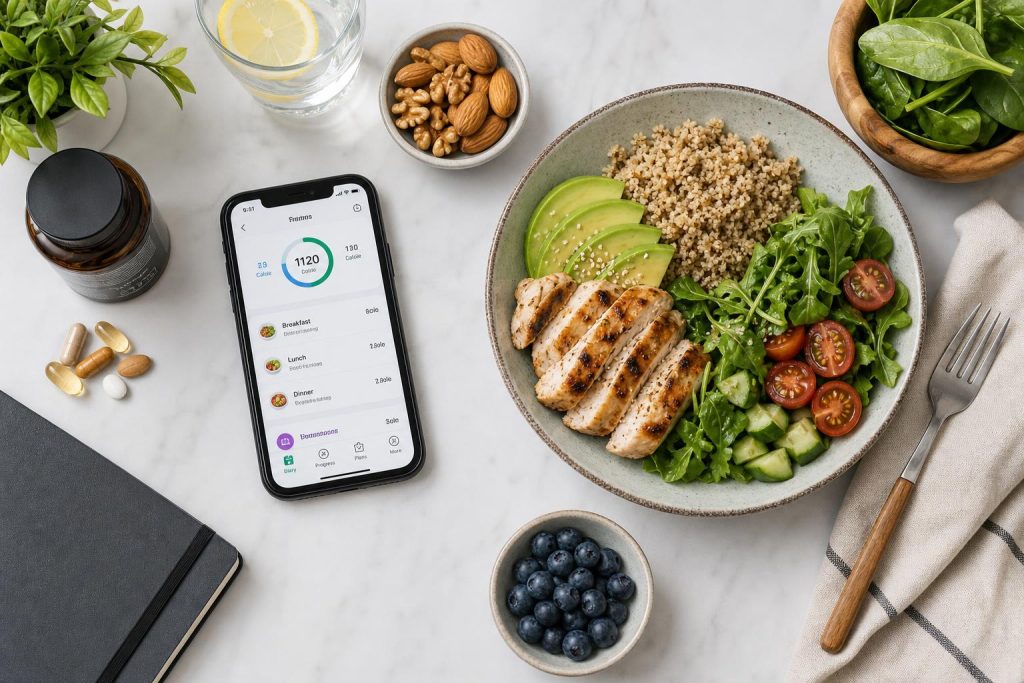
Semaglutide works — the clinical data on that is hard to argue with. But there’s a less-discussed reality hiding in the research: losing weight on a GLP-1 medication without a deliberate nutritional strategy can leave you depleted, weaker, and more likely to regain everything you lost. A 2025 HEOR analysis by Guth et al. tracking a GLP-1 user through a four-week compounded tirzepatide protocol found that even with daily exercise and a nutrient-dense diet, the investigator still required deliberate supplementation with vitamins, minerals, and electrolytes to maintain strength and performance throughout treatment — and regained lost weight within two weeks of stopping the drug. The medication suppresses appetite. It doesn’t replace nutrients. That distinction matters enormously.
When you eat significantly less food, you absorb significantly fewer micronutrients. On semaglutide, most men are operating on 1,200 to 1,800 calories a day — sometimes less. At that intake, hitting adequate levels of protein, B vitamins, magnesium, zinc, and essential fatty acids through food alone becomes genuinely difficult. Supplements aren’t a workaround here; they’re a safeguard. The goal is to protect your muscle mass, support metabolic function, and make sure the weight you’re losing is fat — not the lean tissue you’ve spent years building.
The Core Stack: What Your Body Actually Needs
Protein is the single most important nutritional priority for any man on semaglutide. GLP-1 medications reduce total caloric intake, but they don’t discriminate between fat loss and muscle loss — your body will cannibalize lean tissue if protein intake is insufficient. Research consistently points to 1.6 to 2.2 grams of protein per kilogram of bodyweight as the target range for muscle preservation during a caloric deficit. For most men, hitting that number through food alone while appetite is blunted is nearly impossible. A high-quality whey or casein protein powder — or a plant-based blend if that’s your preference — closes that gap efficiently. One to two scoops per day, prioritized around training, makes a measurable difference in what you hold onto during the cut.
Magnesium deserves serious attention. It’s involved in over 300 enzymatic reactions, including muscle contraction, insulin sensitivity, and sleep quality — all of which are directly relevant to men trying to lose fat and preserve performance. Magnesium depletion is common even in healthy men eating full diets; on a reduced-calorie protocol, the shortfall is almost guaranteed. Magnesium glycinate or malate at 300 to 400 mg nightly is well-tolerated and tends to support sleep quality as a bonus. Zinc follows similar logic — it’s critical for testosterone production, immune function, and protein synthesis, and it’s frequently low in men eating calorie-restricted diets. Fifteen to thirty milligrams of zinc with food is a reasonable daily target.
Vitamin D and omega-3 fatty acids round out what most clinicians would consider a non-negotiable baseline. Vitamin D deficiency is staggeringly common in men and correlates with impaired metabolic function, lower testosterone, and poor immune response. Two thousand to five thousand IU daily with a fat-containing meal is a practical starting point. Omega-3s — specifically EPA and DHA from fish oil — support cardiovascular health, reduce systemic inflammation, and appear to help preserve lean mass during weight loss. Two to three grams of combined EPA and DHA daily is a well-supported dose.
Electrolytes are often overlooked but become critical when appetite suppression reduces overall food volume. Sodium, potassium, and phosphorus intake can all drop sharply. If you’re experiencing fatigue, brain fog, muscle cramps, or sluggish workouts on semaglutide, electrolyte depletion is a logical culprit before anything else. A daily electrolyte supplement — or even just ensuring adequate sodium and potassium through food — can resolve these symptoms quickly.
Finally, a comprehensive multivitamin fills gaps that targeted supplements miss. It’s not glamorous, but the evidence supporting multivitamin use as nutritional insurance during caloric restriction is consistent. Look for one with methylated B vitamins (methylfolate and methylcobalamin) for better bioavailability, particularly relevant since B12 absorption can be affected in some GLP-1 users over time.
What This Means For You
Semaglutide is a tool, not a complete strategy. The Guth analysis makes this plain: even a motivated, health-conscious user exercising daily and eating well still needed supplementation to maintain performance — and still lost the weight once the drug stopped. The men who get the best long-term results from GLP-1 therapy are the ones who treat the medication as a window of opportunity to build better habits, protect their muscle, and shore up their nutritional foundation. Protein, magnesium, zinc, vitamin D, omega-3s, electrolytes, and a quality multivitamin aren’t optional extras on this journey. They’re the infrastructure that determines whether the weight you lose stays lost — and whether you come out the other side stronger than when you started.
Scientific References
-
Guth et al. (2025).
Compounded Tirzepatide Therapy for Weight Loss: A Health Economics & Outcomes Research (HEOR) Analysis..
International journal of pharmaceutical compounding.
View on PubMed →