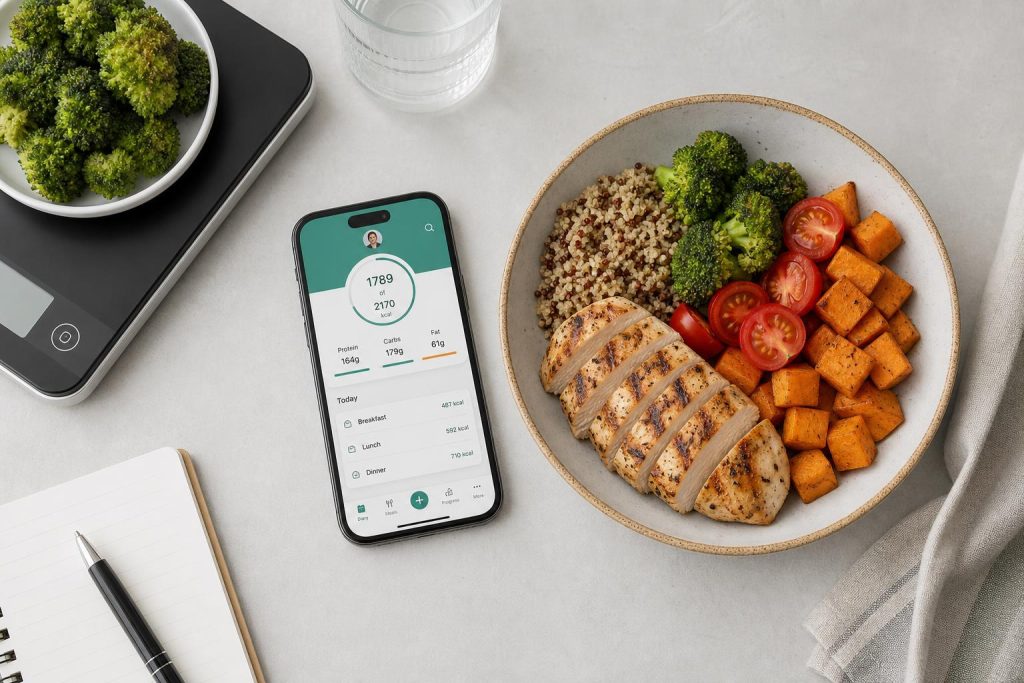
Muscle doesn’t disappear overnight — but it does disappear quietly. Research on spaceflight physiology offers one of the most striking windows into how fast it can happen: a 2023 review in Ageing Research Reviews found that astronauts in microgravity experience muscle atrophy and sarcopenia that closely mirrors accelerated aging on a molecular level, driven by oxidative stress, mitochondrial dysfunction, and systemic inflammation. The lesson isn’t just for astronauts. Any man sitting too long, eating too little protein, or training inconsistently is running the same experiment — just more slowly.
The good news is that the mechanisms behind muscle loss are well understood, and the countermeasures are accessible to anyone. Whether you’re cutting calories to lose fat, recovering from an injury, navigating a health condition, or simply trying to hold onto what you’ve built over decades, the fundamentals that protect muscle are the same. Protein, resistance training, and managing inflammation aren’t just bodybuilding concepts — they are foundational to long-term metabolic health.
Why Muscle Loss Happens — and Why It Accelerates
Muscle tissue exists in a constant state of flux. Protein synthesis builds it up; protein breakdown tears it down. When breakdown chronically outpaces synthesis — due to inadequate protein intake, caloric restriction, inactivity, hormonal shifts, or systemic inflammation — net muscle loss follows. The spaceflight research cited above is particularly instructive because it isolates the variables: remove mechanical loading and you lose muscle rapidly, regardless of nutrition. Add chronic inflammatory signaling, and the process accelerates further.
Inflammation is a central player in muscle wasting that often gets overlooked by men focused purely on macros. The same inflammatory cascade that drives accelerated aging in astronauts — activated through oxidative stress and immune dysregulation — also operates in men who are sedentary, overfat, or under-recovered. This isn’t abstract biology. It’s the reason that two men eating the same amount of protein can have dramatically different rates of muscle retention depending on their training status, sleep quality, and metabolic health.
Caloric restriction makes things more complicated. Any time you’re in a significant deficit — whether from intentional dieting, GLP-1 medication use, illness, or life stress — your body’s instinct is to cannibalize lean tissue for fuel alongside fat. This is especially pronounced when protein intake is insufficient and resistance training is absent. The goal of any smart fat loss strategy is to tilt that equation aggressively in favor of muscle preservation.
The Protein Strategy That Actually Works
Protein is the single most important nutritional lever for fighting muscle loss, and most men are either not eating enough of it or distributing it poorly throughout the day. A 2023 position stand in the Journal of the International Society of Sports Nutrition reinforces the importance of consuming high-quality protein as close to the beginning and end of exercise as possible to reduce amino acid oxidative losses and initiate muscle protein remodeling — recommending doses in the range of 0.32–0.38 g per kilogram of bodyweight per meal around training. For a 200-pound man, that translates to roughly 29–35 grams of quality protein per training meal.
But timing alone isn’t enough. Total daily intake matters enormously. Most research supports a target of 1.6 to 2.2 grams of protein per kilogram of bodyweight per day during periods of caloric restriction — and some evidence suggests going higher when cuts are aggressive. That means a 200-pound man should be targeting somewhere between 145 and 200 grams of protein daily, spread across three to five meals. Leucine-rich sources — animal proteins like beef, eggs, chicken, fish, and dairy — are superior for triggering muscle protein synthesis compared to most plant proteins at equivalent doses. If you’re using protein supplements, whey isolate remains one of the most efficient tools available for hitting targets around training.
Carbohydrate timing also plays a role that men often underestimate. The ISSN position stand notes that carbohydrates support training performance and recovery in ways that directly influence how much muscle you preserve under stress. Chronic low-carbohydrate approaches can impair high-intensity training output over time, which matters because the training stimulus itself is what tells your body to hold onto muscle. This doesn’t mean carbohydrates are mandatory — a 2019 review in Nutrients confirms that ketogenic diets can support weight management and are a legitimate tool for some men — but it does mean that if your training intensity or volume is suffering, your carbohydrate intake may be part of the problem.
Training: The Signal Your Body Can’t Ignore
No nutritional strategy fully compensates for the absence of a resistance training stimulus. Muscle is metabolically expensive, and your body will only maintain it if you consistently give it a reason to. Progressive resistance training — lifting with enough volume, intensity, and frequency to create mechanical tension on muscle fibers — is the most powerful signal for preserving lean tissue during caloric restriction and counteracting the inflammatory and hormonal headwinds that drive age-related muscle loss.
The minimum effective dose for muscle preservation is generally two to three full-body or split resistance sessions per week, with compound movements — squats, deadlifts, rows, presses — forming the backbone of each session. Compound lifts recruit the most motor units, generate the greatest anabolic hormone response, and are the most time-efficient path to the stimulus your muscles need. Progressive overload — gradually increasing weight, volume, or difficulty over time — is what separates a training program from just going through the motions.
There’s also emerging evidence that exercise does more for the body than most men realize. A 2024 study in Cell Communication and Signaling found that moderate long-term exercise generated carnosine from skeletal muscle that protected hematopoietic stem cells against radiation-induced injury — a finding that underscores how exercise-induced adaptations extend far beyond aesthetics or performance. Active muscle tissue is biochemically productive tissue, releasing compounds that protect other systems in the body. This is one more reason that preserving and building muscle is a longevity strategy, not just a vanity project.
Recovery deserves equal emphasis. Sleep is when the anabolic work of the day gets consolidated. Men who consistently sleep fewer than seven hours show measurable reductions in testosterone and growth hormone, both of which are critical for muscle protein synthesis. Chronic sleep debt effectively turns off your anabolic machinery even when training and nutrition are on point. Managing stress, limiting alcohol, and prioritizing sleep hygiene are not optional accessories to a muscle preservation plan — they’re structural components of it.
The Takeaway
Fighting muscle loss isn’t complicated, but it does require deliberate effort across several fronts simultaneously. Eat enough protein — enough total, enough per meal, and close enough to your training. Train with resistance consistently and with progressive intent. Manage inflammation through quality sleep, stress control, and a diet built around whole foods. These aren’t revolutionary ideas, but executed consistently, they produce results that no single supplement or shortcut can replicate. Muscle is one of the most valuable metabolic assets a man can have. Protect it accordingly.
Scientific References
-
Sims, Kerksick, Smith-Ryan et al. (2023).
International society of sports nutrition position stand: nutritional concerns of the female athlete..
Journal of the International Society of Sports Nutrition.
View on PubMed → -
Little, Llorián-Salvador, Tang et al. (2020).
Macrophage to myofibroblast transition contributes to subretinal fibrosis secondary to neovascular age-related macular degeneration..
Journal of neuroinflammation.
View on PubMed → -
Capri, Conte, Ciurca et al. (2023).
Long-term human spaceflight and inflammaging: Does it promote aging?.
Ageing research reviews.
View on PubMed → -
Harvey, Holcomb, Kolwicz et al. (2019).
Ketogenic Diets and Exercise Performance..
Nutrients.
View on PubMed → -
Zeng, Chen, Chen et al. (2024).
Exercise alleviates hematopoietic stem cell injury following radiation via the carnosine/Slc15a2-p53 axis..
Cell communication and signaling : CCS.
View on PubMed →