Most men don’t think much about electrolytes until something goes wrong — a brutal muscle cramp mid-squat, a headache that won’t quit on a caloric deficit, or that wired-but-exhausted feeling that sets in after a hard training week. The truth is, electrolyte balance is not a minor detail. Research published in Nutrients confirms that sodium, potassium, and magnesium play critical roles in neuromuscular function, cardiovascular regulation, and cellular hydration — the exact systems under stress when you’re dieting hard, training intensely, or using appetite-suppressing medications that reduce your overall food intake.
Into this space, two brands have dominated the conversation: LMNT (pronounced “element”) and Liquid IV. Both are sold as premium hydration solutions. Both have earned loyal followings. But they are not the same product, and for men focused on fat loss, muscle preservation, or metabolic optimization, the differences matter more than most product reviews acknowledge.
What’s Actually In These Products — And Why It Matters
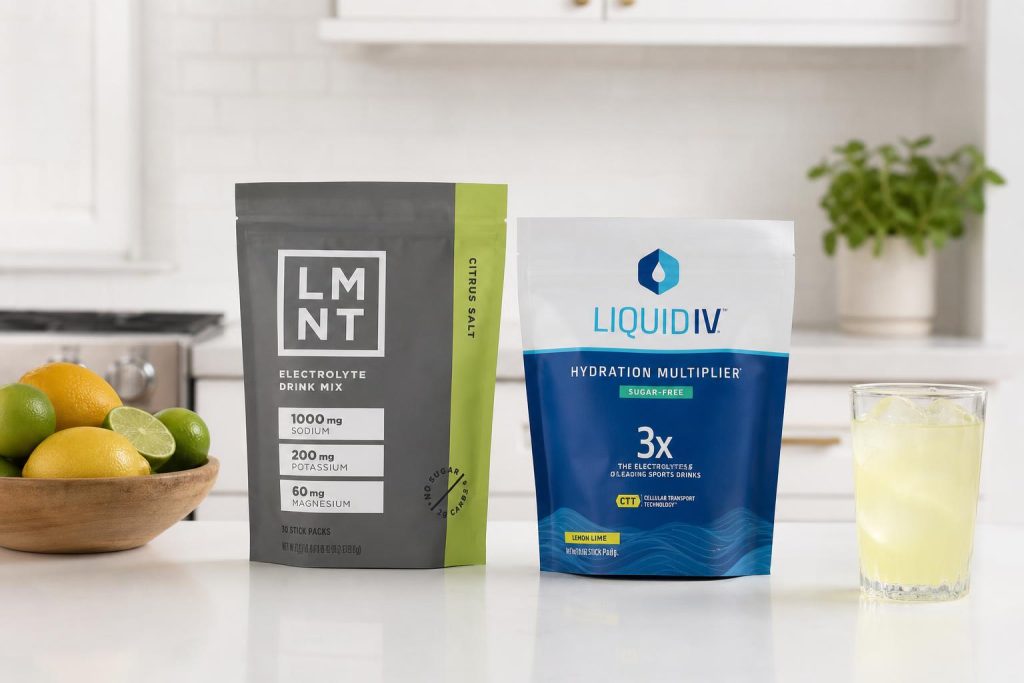
LMNT is built around a high-sodium framework: each packet delivers 1,000 mg of sodium, 200 mg of potassium, and 60 mg of magnesium — with zero sugar and essentially zero carbohydrates. Liquid IV takes a different approach. Its flagship Hydration Multiplier leans on a Cellular Transport Technology formula inspired by the World Health Organization’s oral rehydration solution, using a specific ratio of glucose and sodium to accelerate water absorption through sodium-glucose cotransport. One stick of Liquid IV contains 500 mg of sodium, 380 mg of potassium, and 11 grams of sugar, along with a B-vitamin blend.
The sodium-glucose cotransport mechanism Liquid IV relies on is real science. Studies have demonstrated that glucose co-administration with sodium significantly enhances intestinal water absorption compared to plain water — which is why oral rehydration solutions were a landmark in treating dehydration during illness. The question is whether that mechanism is necessary or optimal for a generally healthy man trying to stay hydrated during training or while maintaining a caloric deficit. If you’re not severely dehydrated and you don’t need the glucose hit, you’re essentially adding 45 calories of sugar to your drink with no additional performance benefit.
LMNT’s higher sodium content is intentional and scientifically grounded for active individuals. A review in The Journal of the International Society of Sports Nutrition found that sodium losses through sweat during moderate-to-intense exercise can range from 460 to over 1,700 mg per hour depending on the individual and environment. Replacing only a fraction of that loss with a low-sodium drink can still leave you functionally depleted, especially across multiple training sessions per week. LMNT’s formulation is designed with the sweating, active male in mind — not the sedentary dieter nursing a hangover.
Magnesium is where many electrolyte products fall short, and LMNT’s 60 mg per packet, while modest, at least acknowledges this mineral’s role. Research in Nutrients has linked magnesium deficiency to impaired glucose metabolism, increased muscle cramping, and disrupted sleep — all concerns for men pushing hard in the gym or managing body composition. Liquid IV’s standard formula contains no magnesium. If that’s your only electrolyte source, you’re leaving a significant gap.
The GLP-1 Angle — And What It Actually Changes
For men using GLP-1 receptor agonists like semaglutide or tirzepatide, the electrolyte conversation gets more specific. These medications suppress appetite significantly — sometimes to the point where total food intake drops dramatically in the early weeks. Less food means less dietary sodium, potassium, and magnesium coming in through meals. Combined with increased urination that often accompanies rapid fat loss, electrolyte imbalances become a clinically relevant concern — not a theoretical one.
In this context, LMNT’s sugar-free, high-sodium, magnesium-inclusive formula has a clear practical advantage. When nausea is a side effect and caloric intake is restricted, the last thing you want is 11 grams of sugar in your electrolyte drink. You want clean mineral replacement without additional metabolic burden. That said, GLP-1 users aren’t a separate species — they’re men managing caloric restriction, and the same logic applies to anyone on an aggressive cut, a ketogenic protocol, or a prolonged fasted training period.
Liquid IV does offer a sugar-free “Hydration Multiplier” variant that removes the glucose load while retaining its sodium and potassium profile. It’s a better option for the sugar-conscious consumer, but the sodium content still sits at roughly half of LMNT’s, and the magnesium gap remains. If your primary goal is maximum mineral replacement with minimum caloric overhead, LMNT is the more purpose-built tool.
Taste, Usability, and the Practical Reality of Daily Use
Electrolytes only work if you actually consume them consistently — and both brands have invested heavily in palatability. LMNT’s flavor lineup includes citrus salt, watermelon salt, raspberry salt, and mango chili, among others. The saltiness is upfront and unmistakable, which some men appreciate for its no-nonsense profile and others find too intense. Diluting with more water is the standard workaround, and LMNT even sells unflavored raw packets for those who want to add electrolytes to coffee or food without altering taste.
Liquid IV is generally considered the more approachable flavor experience — sweeter, lighter, and closer to a sports drink. That palatability is a genuine asset if compliance is your weak point. A perfectly formulated electrolyte drink that collects dust in your cabinet is worth nothing. Some men rotate between the two products: Liquid IV on lighter days when they want something refreshing and low-effort, LMNT on hard training days or during periods of strict caloric restriction when sodium replenishment is the actual goal.
On cost, both products are premium-priced relative to generic options. LMNT runs approximately $1.50 per packet at standard retail, while Liquid IV sits in a similar range. If budget is a consideration and your electrolyte needs are modest, a basic sodium-potassium-magnesium powder from a reputable supplement brand can cover the essentials for a fraction of the cost — but neither product offers the convenience-to-quality ratio these two brands have built.
The Takeaway
For men serious about training performance, fat loss, and daily hydration, LMNT wins on formulation. Its high-sodium, zero-sugar, magnesium-inclusive profile aligns more precisely with what research tells us active men actually need — especially during caloric restriction, high-sweat training blocks, or while using appetite-suppressing medications. Liquid IV earns its place as the more approachable, beginner-friendly option and genuinely shines in recovery from acute dehydration where its glucose-sodium transport mechanism has real physiological backing. The ideal answer for most men isn’t a single product for every situation — it’s understanding what each delivers and matching the tool to the context. Know your electrolytes, read the labels, and stop leaving this piece of your performance on the table.