When semaglutide (Wegovy) cuts your appetite by nearly 24%, the math changes fast. That figure comes directly from a randomized, double-blind trial published in Diabetes, Obesity & Metabolism, where once-weekly semaglutide reduced total daily energy intake by over 3,000 kilojoules compared to placebo — a staggering drop that reshaped hunger, food cravings, and even fat-food preference in men with obesity. For weight loss, that’s exactly what the drug is designed to do. But here’s the problem most men on Wegovy don’t fully appreciate until it’s too late: when you eat dramatically less, protein almost always takes the biggest hit — and losing protein means losing muscle.
This isn’t a minor cosmetic concern. Muscle mass is your metabolic engine. It determines how many calories you burn at rest, how well your body handles blood sugar, how strong you feel in the gym, and whether the weight you lose stays off. Protecting it while on a GLP-1 medication like Wegovy requires intentional, strategic protein intake — not just eating whatever you can stomach when your appetite has been suppressed to near-zero. This guide breaks down the science of how much protein you actually need on Wegovy, why it matters, and how to get it done practically.
What Wegovy Does to Your Appetite — and Why Protein Suffers
To understand the protein problem, you first need to understand the mechanism. Wegovy works by mimicking glucagon-like peptide-1, a gut hormone that signals satiety to the brain. As Drucker’s comprehensive 2022 review in Molecular Metabolism explains, GLP-1 receptor agonists reduce food intake through multiple overlapping pathways — decelerating gastric emptying, suppressing appetite signals in the central nervous system, and lowering the reward value of calorie-dense foods. The result is a sustained, physiological reduction in hunger that goes far beyond simple willpower.
For most men, this appetite suppression is a welcome relief after years of battling cravings. But it comes with a hidden cost. When you’re only capable of eating one small meal or a few bites throughout the day, you’re unlikely to be prioritizing a grilled chicken breast. You’re more likely reaching for whatever is easiest, most palatable, or least nauseating — which typically means carbohydrate-heavy, low-protein snack foods. The end result is a calorie deficit that runs deep into lean mass territory.
A 2026 narrative review published in Clinical Obesity — one of the most comprehensive nutritional analyses of GLP-1 therapy to date, covering nearly half a million adults — found that protein and calcium insufficiency contributed meaningfully to lean mass loss in GLP-1 receptor agonist users. The same review found that more than 60% of GLP-1 users consumed below estimated requirements for calcium and iron, and vitamin D intake averaged just 20% of recommendations. The nutritional picture across the board is concerning, but protein inadequacy stands out as the variable most directly tied to the quality of your weight loss — specifically, how much of what you lose is fat versus muscle.
How Much Protein Do You Actually Need on Wegovy?
The standard recommended dietary allowance for protein sits at 0.8 grams per kilogram of body weight — a number that was never designed for men in a significant calorie deficit trying to preserve lean mass. For men on Wegovy, that baseline is almost certainly insufficient. The current evidence base for men in active weight loss phases, particularly when combined with resistance training, points consistently toward a target of 1.6 to 2.2 grams of protein per kilogram of body weight per day. Some researchers advocate going even higher — up to 2.4 to 3.1 grams per kilogram — during aggressive calorie restriction to provide maximal muscle protection.
Let’s put that in practical terms. If you weigh 220 pounds (approximately 100 kilograms), you’re looking at a daily protein target somewhere between 160 and 220 grams. That’s a substantial amount under any circumstances — and it becomes a logistical challenge when Wegovy has suppressed your appetite to the point where eating feels like a chore. The key is not to lower your protein target to match your reduced appetite. Instead, you restructure your diet so that the limited food you do eat is disproportionately protein-dense.
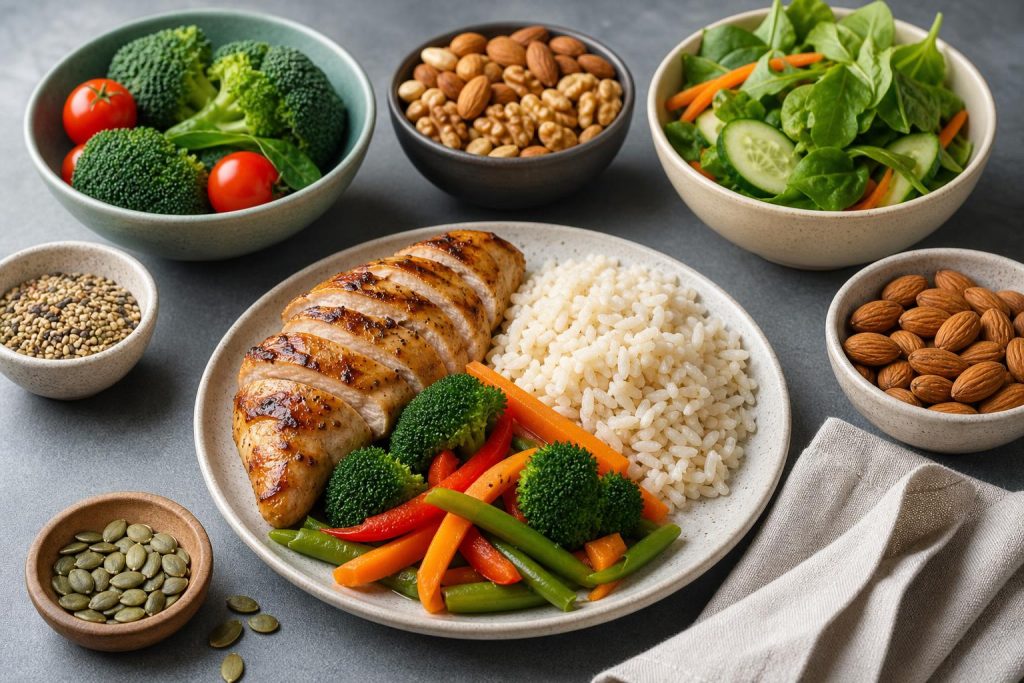
This is a fundamentally different mindset than how most men approach eating on Wegovy. The default instinct is to simply eat less of everything. The evidence-based approach is to eat strategically — prioritizing protein at every meal, front-loading it earlier in the day when you may have more capacity, and using high-quality protein sources that deliver a large amino acid payload in a small volume of food. Greek yogurt, cottage cheese, eggs, lean beef, chicken thighs, canned fish, and whey protein are all high-leverage options when eating volume is limited.
Spreading your protein intake across multiple smaller feedings also matters mechanistically. Muscle protein synthesis — the process your body uses to build and repair muscle tissue — is maximally stimulated by doses of roughly 25 to 40 grams of high-quality protein per meal. Beyond that threshold at a single sitting, additional protein doesn’t proportionally increase muscle building. This means that if Wegovy has you eating only once or twice a day, you may be losing the anabolic stimulus that comes from distributed protein feeding, even if your total daily intake looks adequate on paper. Aim for three to four protein-containing meals or snacks throughout the day, even if portions are small.
Resistance Training Is the Other Half of the Equation
Protein alone is not enough. The amino acids in your diet are the raw materials for muscle, but resistance training is the signal that tells your body to use those materials to build and maintain lean tissue rather than burning them for fuel. Without a consistent training stimulus, even a high-protein diet during calorie restriction cannot fully prevent muscle loss — the deficit will eventually cannibalize lean mass regardless of how much protein you’re eating.
This is especially relevant for men on Wegovy because the drug’s appetite suppression is so effective that some users make the mistake of cutting calories so aggressively that they essentially stop fueling any meaningful training. If you’re eating 800 calories a day and struggling to get off the couch, you are not in a position to preserve muscle regardless of your protein intake. A more sustainable approach is a moderate calorie deficit — typically 500 to 700 calories below maintenance — with adequate protein and at least three resistance training sessions per week targeting all major muscle groups. Wegovy can help you stay in that deficit effortlessly. Resistance training and protein ensure that the deficit costs you fat, not muscle.
The Blundell 2017 trial mentioned earlier confirmed that resting metabolic rate, adjusted for lean body mass, did not significantly differ between semaglutide and placebo groups — which means Wegovy doesn’t appear to suppress metabolism beyond what you’d expect from losing weight. But that resting metabolic rate protection is contingent on maintaining lean mass, which circles back to the training and protein equation. Lose muscle, and your metabolism drops. Keep your muscle, and your metabolism stays proportionally intact — making long-term weight maintenance dramatically more achievable.
The nutritional challenges on GLP-1 therapy extend beyond protein. That same 2026 review in Clinical Obesity found that vitamin D deficiency occurred in 7.5% of GLP-1 users at six months and climbed to 13.6% by twelve months, while iron depletion was also markedly elevated — GLP-1 users showed ferritin levels 26 to 30% lower than SGLT2 inhibitor comparators. Thiamine and cobalamin deficits also increased over time. The mechanism is multifactorial: reduced food intake, altered gastric emptying, and changes in nutrient absorption all play a role. This is why men on Wegovy should not rely solely on hitting protein targets. A comprehensive multivitamin, vitamin D3 with K2, and periodic lab work to assess iron and B-vitamin status are worth discussing with your prescribing physician.
It’s also worth noting a secondary effect of GLP-1 therapy that has emerged in recent research: a reduction in alcohol consumption. A 2025 systematic review in Alcohol and Alcoholism found that semaglutide reduced alcohol use across multiple randomized controlled trials. For men working on their metabolic health, this is a meaningful ancillary benefit — alcohol suppresses muscle protein synthesis, disrupts sleep, and adds empty calories that crowd out nutrient-dense food. If Wegovy incidentally helps you drink less, that’s another mechanism through which it may support better body composition outcomes.
The Takeaway
Wegovy is a powerful tool. In the right hands, with the right nutritional strategy, it can facilitate meaningful, sustained fat loss while preserving the metabolic health and physical capability that actually make that weight loss worthwhile. But the drug does not automatically protect your muscle. It suppresses appetite indiscriminately — and if you let that suppression dictate what and how much you eat without deliberate planning, you will lose lean mass along with fat, which undermines both your results and your long-term metabolism.
The non-negotiables are simple: hit your protein target every single day (aim for a minimum of 1.6 grams per kilogram of body weight, and push toward 2.2 grams if you’re actively training), distribute that protein across at least three meals or eating occasions, and lift weights consistently. Support your micronutrient intake — vitamin D, iron, and B vitamins deserve particular attention given what the current evidence shows about GLP-1 therapy and nutritional depletion. And treat Wegovy as one lever in a larger system rather than the entire strategy. The men who get the best results from this medication are the ones who pair its appetite-regulating effects with smart nutrition and structured training — not the ones who simply eat less and hope for the best.
Scientific References
-
Patel, Blaney, Nassar et al. (2025).
GLP-1 receptor agonists and alcohol use disorder: a systematic review..
Alcohol and alcoholism (Oxford, Oxfordshire).
View on PubMed → -
Urbina, Salinas-Ruiz, Valenciano et al. (2026).
Micronutrient and Nutritional Deficiencies Associated With GLP-1 Receptor Agonist Therapy: A Narrative Review..
Clinical obesity.
View on PubMed → -
Drucker et al. (2022).
GLP-1 physiology informs the pharmacotherapy of obesity..
Molecular metabolism.
View on PubMed → -
Nauck, Quast, Wefers et al. (2021).
GLP-1 receptor agonists in the treatment of type 2 diabetes – state-of-the-art..
Molecular metabolism.
View on PubMed → -
Blundell, Finlayson, Axelsen et al. (2017).
Effects of once-weekly semaglutide on appetite, energy intake, control of eating, food preference and body weight in subjects with obesity..
Diabetes, obesity & metabolism.
View on PubMed →