Ozempic doesn’t work in a vacuum. Semaglutide — the active compound behind Ozempic and Wegovy — is one of the most clinically significant metabolic drugs developed in decades, with recent randomized controlled trials demonstrating meaningful improvements in cardiovascular outcomes, inflammatory biomarkers, and functional capacity that go far beyond simple appetite suppression. But here’s what the prescription pad won’t tell you: the food choices you make while on this medication can either amplify its benefits or quietly undermine them. If you’re injecting semaglutide weekly and still eating the same way you did before, you’re leaving a significant amount of its potential on the table.
GLP-1 receptor agonists work by slowing gastric emptying, blunting appetite signals, and improving insulin sensitivity. The result is that most men eat substantially less — which sounds like a win, and largely is. But dramatically reduced caloric intake without a deliberate nutritional strategy creates its own set of problems: muscle loss, micronutrient deficiencies, fatigue, and a metabolic slowdown that can make long-term weight maintenance harder than it needs to be. The medication handles appetite. You still have to handle nutrition.
Protein Is Non-Negotiable — Here’s Why
The single most important dietary priority for any man on Ozempic is protein intake, and it needs to be higher than you’d probably guess. When you’re eating significantly fewer calories — which is almost universal among GLP-1 users — your body is at genuine risk of catabolizing lean muscle tissue for energy. This isn’t a minor cosmetic concern. Muscle mass is your primary metabolic engine. Lose it during weight loss and you make future fat gain more likely while also compromising strength, energy, and long-term health.
The research on protein during caloric restriction is consistent: aim for a minimum of 1.2 to 1.6 grams of protein per kilogram of bodyweight daily, with many sports nutrition researchers pushing closer to 2 grams per kilogram for active men. On a practical level, if you weigh 200 pounds (roughly 90 kg), you’re looking at 110 to 180 grams of protein per day — even on days when your appetite is suppressed and eating feels like a chore. Prioritize high-quality complete proteins at every meal: eggs, Greek yogurt, cottage cheese, chicken breast, lean beef, fish, and whey protein shakes when solid food isn’t appealing. Because Ozempic slows digestion, smaller, more protein-dense meals tend to be better tolerated than large, heavy ones.
One timing note worth considering: research on oral semaglutide in Japanese patients with type 2 diabetes found that the interval between medication administration and the first meal was a meaningful predictor of treatment effectiveness. While this study focused on the oral formulation, it underscores a broader principle — how and when you eat around your medication matters, not just what you eat.
Build Your Plate Around Foods That Work With the Medication
Ozempic slows gastric emptying, which means certain foods that are already hard to digest can become genuinely uncomfortable. High-fat, ultra-processed meals — fried foods, heavy cream sauces, fast food — are the most common triggers for the nausea, bloating, and GI distress that lead men to either abandon the medication or suffer through side effects that are largely avoidable. This isn’t about being restrictive for the sake of it. It’s about understanding that your gut is operating differently now and choosing foods that cooperate with that physiology.
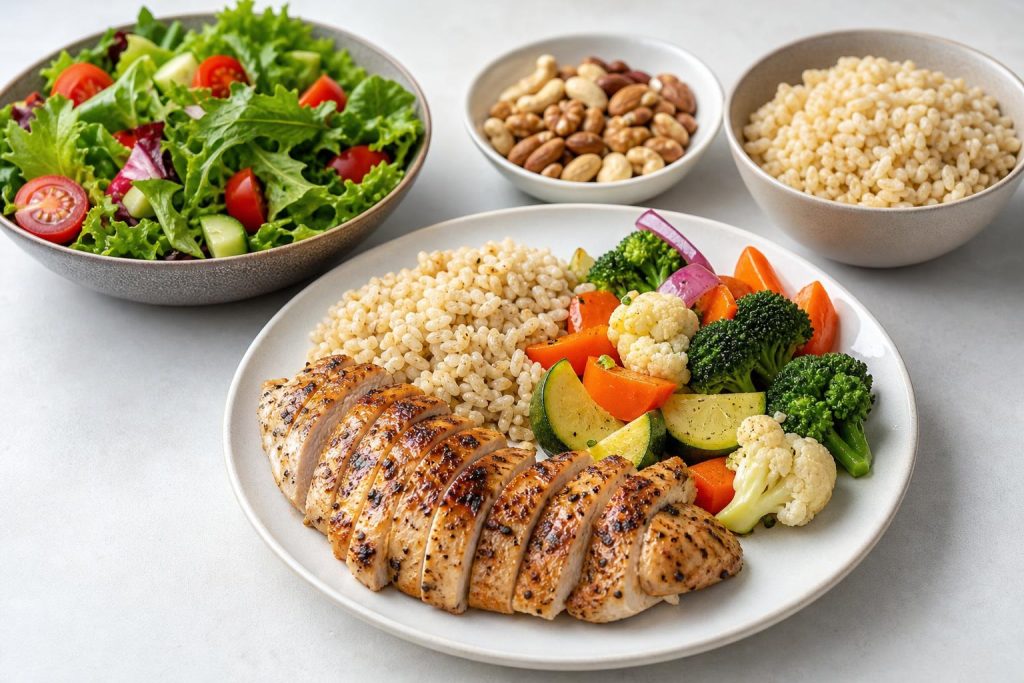
Lean proteins paired with non-starchy vegetables form the backbone of an Ozempic-friendly diet. Roasted chicken with broccoli, salmon with asparagus, ground turkey in a lettuce wrap — these meals deliver nutrients without overwhelming a slower digestive system. Whole food carbohydrates — oats, sweet potatoes, lentils, quinoa, fruit — are well-tolerated by most men and provide the fiber necessary to support gut health and blood sugar stability. Fiber is particularly important here because GLP-1 medications work in part through metabolic and anti-inflammatory pathways, and the cardiovascular and anti-inflammatory benefits of semaglutide documented in clinical trials are best supported by a dietary pattern that doesn’t add to systemic inflammation.
Alcohol deserves specific mention. Beyond the obvious caloric density, current alcohol drinking status was identified as a significant factor predicting reduced treatment effectiveness in semaglutide users in a prospective clinical study. Whether through interference with metabolic pathways, disruption of sleep and recovery, or the dietary choices that tend to accompany drinking, alcohol appears to blunt what this medication can do. If you’re serious about your results, this is the category to minimize or eliminate, not just moderate.
Hydration is underrated in this context. Reduced appetite often means reduced fluid intake as well, and dehydration exacerbates many of the side effects men report on GLP-1 therapy. Aim for at least two to three liters of water daily, more if you’re training. Electrolyte balance matters too — sodium, potassium, and magnesium can all shift with reduced food volume and increased urination, particularly if you’re also managing blood pressure or taking diuretics alongside your metabolic treatment.
There’s also a psychological dimension that doesn’t get enough attention. A nationally representative U.S. study found that individuals who screened positive for eating disorders were more likely to pursue GLP-1 medications for weight loss, often through telehealth channels without direct physician oversight. This matters because appetite suppression can interact in complex ways with pre-existing disordered eating patterns — restriction, fear of eating, or the opposite, using the medication as a reason to eat less than is physiologically appropriate. If eating feels anxiety-provoking rather than simply less urgent, that’s worth discussing with a healthcare provider.
Micronutrients, Supplements, and the Gaps You Need to Cover
Eating less means absorbing less — it’s a straightforward equation with real consequences. Men on Ozempic who are eating 1,400 to 1,800 calories daily are unlikely to hit all their micronutrient targets through food alone, particularly for nutrients that already tend to be low in the average male diet. Vitamin D, magnesium, zinc, B12, and iron are the most common gaps. A comprehensive daily multivitamin designed for men covers the baseline, but specific deficiencies may warrant targeted supplementation — something worth discussing with your prescribing physician or a registered dietitian who understands GLP-1 therapy.
Omega-3 fatty acids from fish oil are worth adding for most men on this protocol. The anti-inflammatory mechanisms of semaglutide — documented across cardiac, renal, and metabolic tissue — are complemented by the well-established anti-inflammatory profile of EPA and DHA. Creatine monohydrate is another supplement that earns its place here, primarily for its role in preserving and building lean muscle during periods of caloric restriction. If you’re not strength training while on Ozempic, you should be — resistance exercise is the most effective tool available for preventing the muscle loss that accompanies significant weight reduction.
The Takeaway
Ozempic changes the game, but it doesn’t change the rules. Protein still builds and preserves muscle. Whole foods still support metabolic health better than processed ones. Alcohol still works against you. Micronutrients still matter. What the medication does is create a window of reduced appetite and improved insulin sensitivity that makes it significantly easier to execute a quality nutrition strategy — if you know what that strategy looks like. Use the suppressed appetite to your advantage by making every calorie count: prioritize protein first, fill the rest of your plate with vegetables and whole food carbohydrates, minimize the dietary triggers that worsen GI side effects, stay hydrated, and supplement the gaps that reduced food volume inevitably creates. The medication is the tool. The eating plan is what you build with it.
Scientific References
-
Roy, Parent, Ducharme et al. (2026).
GLP1 receptor agonists in heart failure with preserved ejection fraction (HFpEF) – beyond weight loss: a condensed scientific review..
Drugs in context.
View on PubMed → -
Hirotsu, Taniguchi, Nishimura et al. (2025).
Exploring factors predicting the effectiveness of oral semaglutide in Japanese individuals with type 2 diabetes switching from dipeptidyl peptidase 4 inhibitors: a pilot study..
Frontiers in clinical diabetes and healthcare.
View on PubMed → -
Siegel, Mumford, Kresovich et al. (2026).
Eating Disorder Screen Results and GLP-1 Awareness, Interest, and Use in a Nationally Representative Sample of Adults in U.S. Households..
The International journal of eating disorders.
View on PubMed →