When semaglutide hit the mainstream, researchers expected it to curb appetite. What they didn’t fully anticipate was how profoundly it would reshape the conversation around what we actually eat. A 2021 trial published in The New England Journal of Medicine showed that semaglutide users lost an average of 14.9% of body weight over 68 weeks — but buried in that data was a sobering detail: a significant portion of that weight came from lean mass, not just fat. Research shows that without strategic nutrition, GLP-1 users risk losing the muscle they’ll need to stay metabolically healthy long-term. That’s the real story — and it’s why meal planning on a GLP-1 isn’t just about eating less. It’s about eating smarter.
Whether you’re on semaglutide, tirzepatide, or simply using diet and discipline to drive fat loss, the nutritional principles here apply universally. Reduced appetite — drug-induced or otherwise — creates the same fundamental risk: you eat less overall, and if you’re not deliberate about what fills those smaller meals, you shortchange your protein, micronutrients, and muscle-sparing capacity. The men who get the best results, regardless of their method, are the ones who treat every meal as an opportunity to load up on the inputs that matter most.
The Nutritional Foundation: Protein First, Every Time
The single most important rule when appetite is suppressed — whether chemically or through caloric discipline — is to anchor every meal around protein. A landmark review in the American Journal of Clinical Nutrition confirmed that higher protein intake during caloric restriction preserves lean mass more effectively than standard protein targets, with researchers pointing to a range of 1.2 to 1.6 grams per kilogram of body weight as the optimal zone for men in a deficit. For a 200-pound man, that’s roughly 110 to 145 grams of protein daily — a number that becomes difficult to hit when you’re only eating two small meals and a snack.
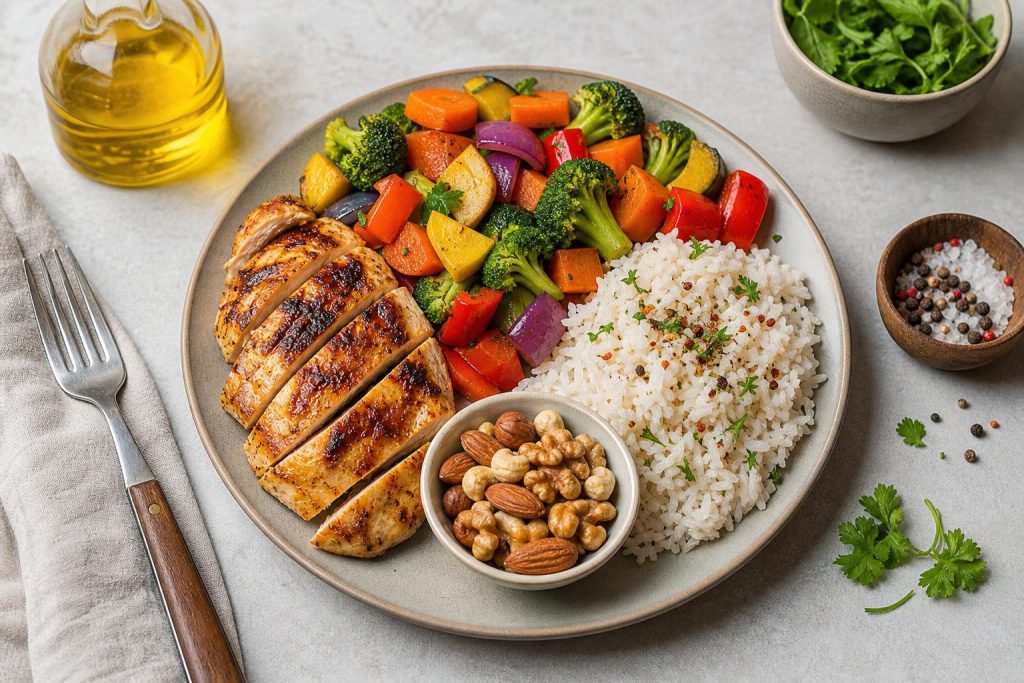
Practical meal ideas that make this work: a breakfast built around four to five eggs scrambled with smoked salmon and wilted spinach delivers close to 45 grams of protein in a compact, easy-to-digest format. Lunch might be a grilled chicken bowl with cauliflower rice, roasted cherry tomatoes, cucumber, and a tahini drizzle — visually satisfying, nutrient-dense, and protein-forward without being heavy. For dinner, a six-ounce grass-fed beef sirloin alongside roasted asparagus and a small portion of white rice or sweet potato gives you the protein hit plus the carbohydrates needed to support training and hormonal health. Greek yogurt with berries and a tablespoon of almond butter makes an easy, high-protein snack that doesn’t overwhelm a reduced appetite.
The key structural move here is protein sequencing — eating your protein source first at each meal before anything else. Research has demonstrated that consuming protein before carbohydrates in the same meal improves postprandial glucose control and increases satiety signaling, which is doubly relevant for GLP-1 users whose appetite is already compressed. You’re essentially stacking two satiety mechanisms on top of each other, which protects against the low-protein, low-volume eating pattern that quietly erodes muscle over months.
Smart Carbohydrates, Healthy Fats, and Building Meals That Work
Carbohydrates get a complicated reputation in fat-loss circles, but the evidence consistently shows that the type and timing matter far more than the total gram count. Studies on dietary fiber intake show that higher fiber consumption is independently associated with lower body weight, improved insulin sensitivity, and reduced visceral fat — which makes fiber-rich carbohydrate sources the obvious choice for men trying to lose fat without obliterating their quality of life. Think lentils, black beans, quinoa, oats, and root vegetables like parsnips and sweet potatoes. These are carbohydrates that work with your metabolism, not against it.
A well-structured GLP-1 meal plan might look like this across a day: breakfast is that egg and salmon scramble mentioned earlier, eaten within 30 to 60 minutes of waking. Mid-morning, if hunger appears, a small bowl of full-fat cottage cheese with sliced strawberries covers protein and micronutrients without triggering the nausea that some users experience from heavier foods early in the day. Lunch is the chicken and cauliflower rice bowl, ideally eaten before noon or early afternoon to support natural circadian metabolic rhythms. Dinner is the lean protein with a moderate portion of complex carbohydrates and a serving of healthy fat — olive oil, avocado, or a handful of walnuts — to support testosterone production and fat-soluble vitamin absorption. Research has linked dietary fat intake, particularly from monounsaturated and saturated sources, to maintenance of healthy testosterone levels in men, which becomes especially important during extended caloric restriction.
One practical note for GLP-1 users specifically: high-fat, high-sugar, or heavily processed meals tend to amplify gastrointestinal side effects — nausea, bloating, and delayed gastric emptying. Keeping meals simple, minimally processed, and moderate in fat content during the first few months on medication isn’t just about comfort. It’s a strategy that makes adherence dramatically easier. Grilled over fried, baked over sautéed in butter, steamed vegetables over creamy sauces — these small shifts add up to a much smoother experience without sacrificing nutrition quality.
Hydration is also non-negotiable, and it’s frequently overlooked when appetite is down. Men on GLP-1 medications often under-drink because thirst signals can be blunted alongside hunger signals. Aiming for at least two to three liters of water daily, supplemented with electrolytes if you’re training, prevents the fatigue, cramping, and cognitive fog that can masquerade as medication side effects but are often simply dehydration. Adding a pinch of sea salt to your water bottle or choosing an electrolyte supplement without added sugar is a simple, underrated fix.
The Takeaway
A GLP-1 meal plan isn’t a restriction plan — it’s a precision plan. The goal is to take a smaller eating window and smaller meal volumes and make every calorie count harder. Protein anchors every meal. Fiber-rich carbohydrates keep insulin stable and digestion running. Healthy fats protect hormonal health. Whole foods minimize side effects and maximize micronutrient density. These principles apply whether you’re on medication, running a caloric deficit through sheer discipline, or somewhere in between. The men who build this foundation consistently — regardless of their chosen tool — are the ones who lose fat, keep muscle, and actually feel good doing it. That’s the goal worth building toward.