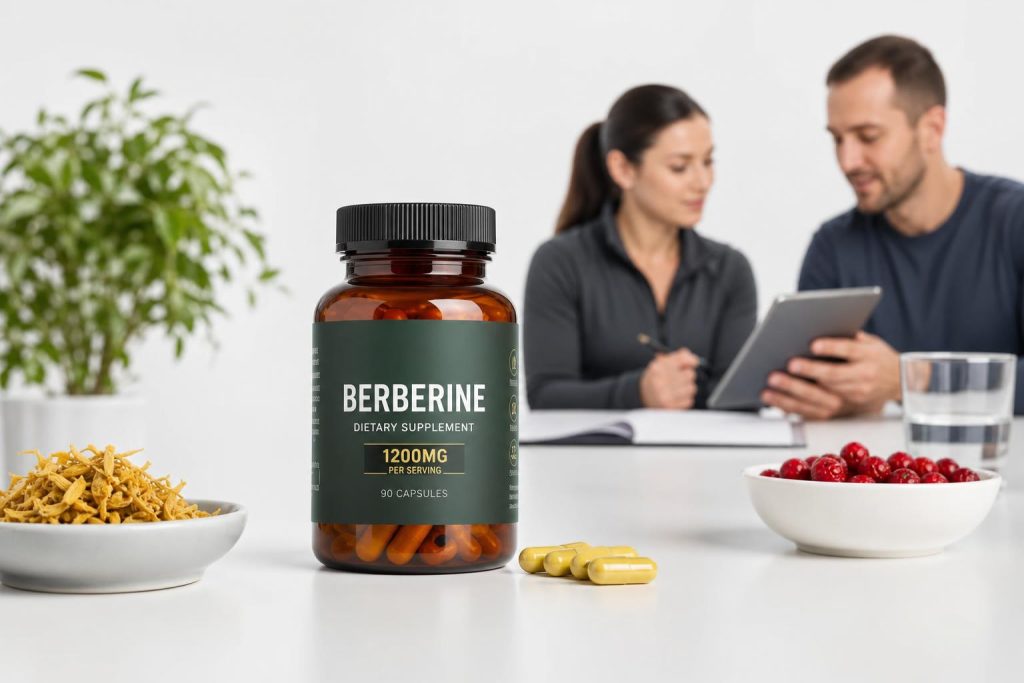
In 2023, a meta-analysis published in Frontiers in Pharmacology analyzed 46 randomized controlled trials and concluded that berberine produced clinically meaningful reductions in fasting blood glucose, HbA1c, and triglycerides — results that, on paper, rival those of metformin. That finding lit up every supplement forum on the internet. Suddenly, berberine was being called “nature’s Ozempic” and “the poor man’s metformin,” and sales of the compound — a bitter yellow alkaloid derived from plants like barberries and goldenseal — exploded. But the hype and the science are two different things, and if you’re a man trying to optimize your metabolic health, you deserve a clear-eyed breakdown of what berberine can actually do, how it stacks up against pharmaceutical options, and where it fits in a serious health strategy.
Let’s start with the mechanism, because it matters. Berberine activates an enzyme called AMP-activated protein kinase, or AMPK — a cellular energy sensor that regulates glucose uptake, fat oxidation, and insulin sensitivity. This is the same pathway targeted by metformin, which is why the comparison is not entirely unfair. Research published in Nature Medicine confirmed that berberine’s primary glucose-lowering mechanism is indeed AMPK activation, similar in action though not identical in pharmacology to the biguanide drug. Berberine also inhibits an intestinal enzyme called alpha-glucosidase, slowing carbohydrate digestion and blunting post-meal glucose spikes — an effect that overlaps with the diabetes drug acarbose. In short, it works through multiple complementary pathways, which partly explains why its metabolic effects show up consistently in clinical data.
The landmark human trial that earned berberine its metformin comparison was a 2008 study in Metabolism by Zhang et al., which randomized 116 patients with type 2 diabetes to either berberine 500 mg three times daily or metformin 500 mg three times daily for three months. Both groups achieved nearly identical reductions in HbA1c (from roughly 9.5% to 7.5%), fasting glucose, and post-meal glucose. Berberine also outperformed metformin on triglyceride reduction. These are genuinely impressive numbers, and they’ve been replicated in smaller studies. But before you throw out your prescription and stock up on capsules, there are important caveats — population differences, dose standardization issues, and the reality that most berberine trials have been conducted in Chinese populations with recently diagnosed diabetes, not in the diverse, generally healthy male population reading this article.
How Berberine Compares to GLP-1 Receptor Agonists
GLP-1 medications like semaglutide and tirzepatide operate on an entirely different physiological level. Where berberine and metformin primarily address insulin resistance and glucose metabolism, GLP-1 agonists work centrally — suppressing appetite through hypothalamic signaling, slowing gastric emptying, and producing the kind of dramatic caloric restriction that leads to 15–20% body weight loss in clinical trials. The SURMOUNT-1 trial published in NEJM showed tirzepatide producing an average weight loss of 22.5% over 72 weeks — numbers no supplement comes close to matching. Comparing berberine to a GLP-1 medication for weight loss is a bit like comparing a stationary bike to a sports car. They both move, but not in the same universe.
That said, berberine does have modest but real fat loss effects. A 2012 study in Phytomedicine showed that berberine supplementation (500 mg three times daily for 12 weeks) reduced BMI by 1.8 points and abdominal fat mass in obese subjects, independent of major dietary changes. The mechanism here involves both improved insulin sensitivity and berberine’s inhibitory effect on fat cell differentiation through AMPK. It’s not transformative weight loss, but for a man already eating well and training consistently, a meaningful reduction in visceral fat and improved glucose disposal is genuinely useful — particularly if you’re dealing with insulin resistance, prediabetes, or metabolic syndrome without yet needing pharmaceutical intervention.
Men on GLP-1 medications might also find berberine interesting as a complementary tool, particularly for glucose management during periods of dose adjustment or when tapering off medication. However, this is a conversation to have with your prescribing physician, as combining glucose-lowering agents without monitoring can push blood sugar lower than intended. The combination isn’t inherently dangerous for otherwise healthy men, but it requires awareness.
Dosing, Bioavailability, and the Practical Reality
One of berberine’s persistent challenges is bioavailability. The compound is poorly absorbed in the gut, which is part of why most effective protocols use split dosing — typically 500 mg taken two to three times daily with meals rather than a single large dose. Pharmacokinetic studies confirm that berberine reaches peak plasma concentration within one to two hours but has a short half-life, making consistent dosing important for sustained effect. Newer formulations — dihydroberberine and berberine phytosome — have emerged with claims of significantly improved absorption, and early data suggests dihydroberberine in particular may produce equivalent metabolic effects at lower doses with less gastrointestinal irritation. Traditional berberine is well-researched but causes GI distress — bloating, cramping, loose stools — in a meaningful percentage of users, particularly at higher doses. Starting at 500 mg once daily with food and titrating up over two to three weeks is the most practical approach for minimizing this side effect.
Quality control is also a legitimate concern in the supplement industry. Unlike metformin, berberine is not a regulated pharmaceutical, meaning potency and purity vary widely across brands. When selecting a product, look for third-party testing verification — NSF Certified for Sport or USP verification — and avoid proprietary blends that obscure actual berberine content. Reputable brands will list berberine HCl content explicitly and provide certificates of analysis. This matters not just for efficacy but for safety: berberine has real pharmacological activity and real drug interactions, including with cyclosporine and certain antibiotics, so treating it as casually as a multivitamin is a mistake.
It’s also worth acknowledging what berberine does not do well. It does not preserve or build muscle mass. It has no meaningful effect on testosterone. It does not replace the anabolic and cardiovascular benefits of resistance training. For the man who is already lean, strength training regularly, and eating adequate protein, berberine’s marginal metabolic benefits may not be worth the GI side effects and cost. Where it genuinely shines is in the man who is overweight, insulin resistant, dealing with elevated fasting glucose or triglycerides, and not yet at the point where medication is warranted — or who is looking for a lifestyle-compatible tool to enhance metabolic function alongside diet and exercise changes.
The Takeaway
Berberine is not magic, and it is not metformin — though the mechanisms overlap more than most people expect. The clinical data, when read carefully, supports its use as a meaningful metabolic supplement for men dealing with insulin resistance, elevated blood glucose, or high triglycerides, particularly when paired with a structured nutrition and training protocol. It is not a substitute for GLP-1 medications in men who need significant weight loss intervention, and it is not a replacement for the foundational work of eating well and lifting heavy. But positioned correctly — as a secondary tool in a well-built health strategy — berberine earns its place. Start low, dose consistently with meals, prioritize quality, and measure your results. That’s how you use any tool effectively.