When researchers at Novo Nordisk published the landmark STEP 1 trial, they found that semaglutide users lost an average of 14.9% of their body weight over 68 weeks — but the participants who preserved the most lean mass and reported the fewest side effects were those who paid close attention to what they ate, not just how much. That research, published in the New England Journal of Medicine, quietly underscored something the headlines missed: Ozempic is a tool, not a meal plan. What you put on your plate still determines whether you come out of this leaner and stronger — or lighter but metabolically worse off.
Semaglutide works by mimicking GLP-1, a gut hormone that slows gastric emptying, suppresses appetite, and blunts post-meal glucose spikes. The result is that you feel full faster and stay full longer. That sounds like a straightforward win, but there’s a catch. Eating less without eating smarter can accelerate muscle loss, drive nutritional deficiencies, and leave you fatigued, constipated, and miserable. The medication does its job. Your diet has to do the rest.
Build Every Meal Around Protein — More Than You Think You Need
The most important nutritional priority on Ozempic is protein, and most men don’t get nearly enough of it even when their appetite is normal. When semaglutide cuts your overall intake by 20 to 30 percent, the risk of falling short becomes even more acute. Research published in the American Journal of Clinical Nutrition has consistently shown that higher protein intakes — in the range of 1.2 to 1.6 grams per kilogram of body weight — are necessary to preserve lean mass during a caloric deficit. On a GLP-1 medication, that deficit is almost guaranteed, which makes hitting your protein target non-negotiable.
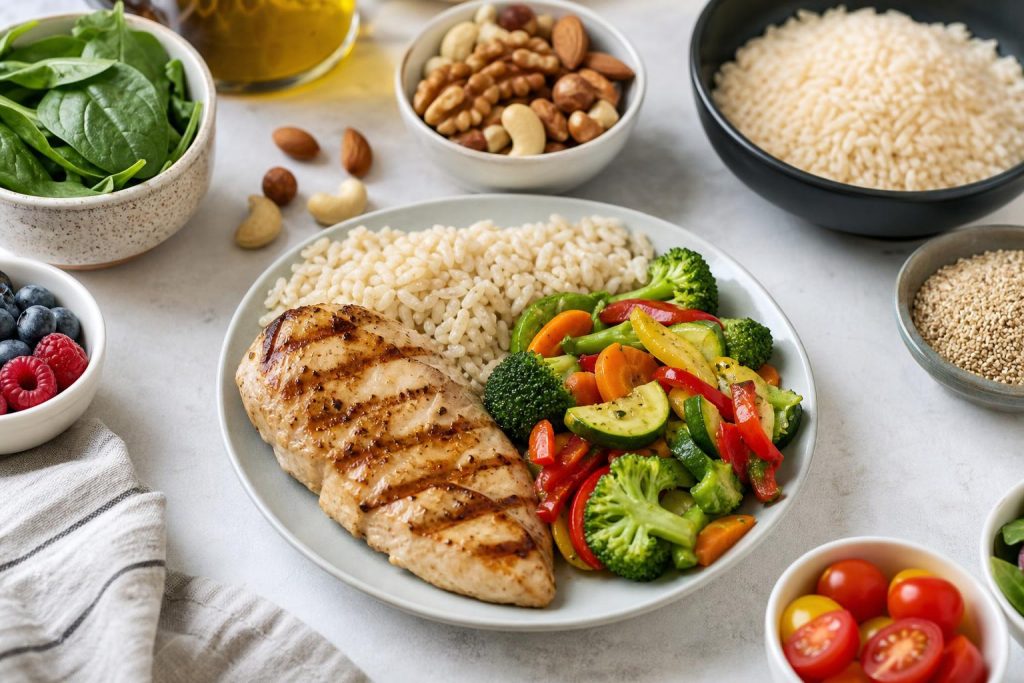
In practical terms, this means building every meal around a dense protein source first, then filling in around it. Eggs, Greek yogurt, cottage cheese, chicken breast, lean beef, salmon, tuna, and whey protein are all excellent choices. A 200-pound man aiming for 1.4 grams per kilogram needs roughly 127 grams of protein daily. When your appetite is suppressed, that won’t happen by accident — it requires intentional planning. Eat your protein before anything else on the plate. If your stomach fills quickly, you want the most critical macronutrient in before the rest of the meal crowds it out.
Protein also supports satiety independently of the medication’s effects. Studies show that high-protein diets increase peptide YY and GLP-1 secretion while suppressing ghrelin — meaning a protein-forward eating pattern amplifies the appetite-regulating effects you’re already getting from semaglutide, rather than working against them.
The Foods That Work With Ozempic — and the Ones That Don’t
Because semaglutide slows gastric emptying, certain foods that might normally be fine can become genuinely uncomfortable on the medication. High-fat meals — particularly those heavy in fried foods, greasy fast food, or excessive added oils — tend to sit in the stomach for extended periods and dramatically increase nausea and bloating. This isn’t just anecdotal. Research on gastric motility confirms that dietary fat is the primary macronutrient responsible for delayed gastric emptying, which is already occurring at an elevated rate on semaglutide. Doubling down with fatty meals compounds that effect.
Refined carbohydrates and sugary foods present a different problem. While they empty quickly from the stomach — which might seem preferable — they produce rapid glucose spikes followed by crashes, which can trigger nausea and energy dips. Ultra-processed foods like chips, crackers, pastries, and sweetened beverages offer almost no nutritional return for the caloric investment, and when your total intake is already suppressed, you cannot afford to waste calories on foods with no functional value.
What works well, by contrast, is a diet built around whole, minimally processed foods with moderate fiber, lean protein, and relatively controlled fat content per meal. Non-starchy vegetables like spinach, zucchini, broccoli, and peppers are well-tolerated and provide micronutrients and fiber without the gastric load of denser foods. Cooked vegetables are generally easier to digest than raw. Whole grains like oats, quinoa, and brown rice provide sustained energy and gut-supporting fiber. Healthy fats from sources like avocado, olive oil, and nuts are valuable, but portion-controlled — a tablespoon of olive oil or a quarter of an avocado per meal is plenty when gastric motility is slower than usual.
Hydration deserves specific attention here. Many men on semaglutide underestimate how much fluid they’re losing through reduced food intake and, at times, nausea. Constipation is among the most commonly reported side effects, and inadequate fluid intake makes it significantly worse. Research has shown that adequate hydration is directly linked to bowel transit time and stool consistency. Aim for at least two to three liters of water daily, spacing it between meals rather than drinking large amounts with food, which can accelerate feelings of fullness and displace the protein and nutrients your body needs.
Alcohol is worth flagging separately. Semaglutide appears to reduce alcohol cravings in some users — possibly through overlapping dopamine pathways — but alcohol remains a hepatotoxic, calorically empty substance that disrupts sleep, blunts testosterone, and impairs muscle protein synthesis. The medication may lower your desire for it. Take that as a gift and act accordingly.
The Takeaway
Ozempic doesn’t care what’s on your plate — but your body absolutely does. The men who get the most out of semaglutide are those who treat the reduced appetite not as permission to eat carelessly, but as an opportunity to eat with precision. Anchor every meal to protein, choose whole foods that digest cleanly, stay well-hydrated, and avoid the high-fat and high-sugar combinations that amplify side effects. The medication creates the caloric environment for fat loss. Your food choices determine whether you emerge from that process lean and metabolically strong — or just smaller. Those are very different outcomes, and the fork in the road starts at your next meal.