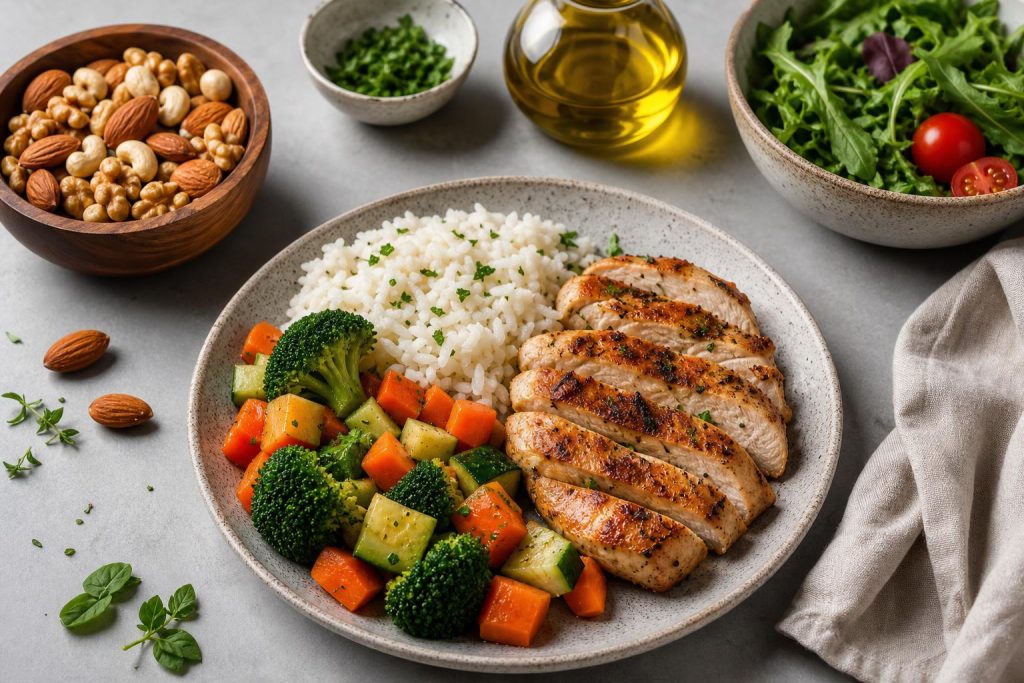
There’s a particular kind of frustration that comes with succeeding at appetite suppression and failing at eating well. You asked for less hunger. You got it. Now you’re staring at a kitchen full of food with absolutely zero interest in any of it — and the irony is, this is exactly when nutrition matters most. Research published in Nature Medicine on tirzepatide’s mechanisms shows the drug works through dual GIP and GLP-1 receptor agonism to dramatically reduce appetite and slow gastric emptying — which means your body is physically signaling fullness even when it hasn’t been fed. The result isn’t laziness or lack of will. It’s pharmacology doing exactly what it was designed to do.
But here’s what that same research doesn’t advertise: when calories drop too low and protein intake collapses along with your appetite, the weight you lose isn’t just fat. A 2023 analysis in Diabetes Care noted that significant lean mass loss accompanies rapid weight reduction in GLP-1 and GIP/GLP-1 agonist users who don’t deliberately prioritize protein. For men specifically — where muscle mass is tied to testosterone production, insulin sensitivity, resting metabolic rate, and long-term metabolic health — losing muscle while losing weight is a costly trade-off that compounds over time. Eating well when nothing sounds good isn’t optional. It’s the difference between transforming your body and just shrinking it.
Why Food Aversion on Tirzepatide Is Different From Normal Loss of Appetite
Most men who’ve dealt with appetite loss before — whether from stress, illness, or intense training — are familiar with the experience of not being hungry but still being able to eat when they choose to. Tirzepatide produces something more physiologically specific. By slowing gastric emptying and activating satiety signals in the hypothalamus, it can make eating feel genuinely uncomfortable rather than simply unnecessary. Foods that were previously appealing — a thick steak, a protein shake, even something light like eggs — can trigger nausea or a hard stop sensation after just a few bites.
Clinical trial data from the SURMOUNT-1 study reported that nausea affected roughly 30% of tirzepatide participants at higher doses, with gastrointestinal side effects being the most common reason for dose reduction or discontinuation. This isn’t a small subset of unlucky users — it’s a predictable pharmacological response that requires a deliberate nutritional strategy rather than just willpower. The goal isn’t to force yourself to eat more. It’s to make every calorie you can tolerate count as much as possible.
Understanding this distinction matters because it changes the tactical approach entirely. When appetite suppression is mild, you can simply eat smaller portions of the foods you’d normally eat. When it reaches the level that tirzepatide often produces — especially in the first weeks of a new dose — you need foods that are calorie-dense in a small volume, easy to digest, gentle on a sensitized gut, and disproportionately high in protein relative to their total calorie load. That’s a specific nutritional brief, and most standard eating advice doesn’t address it.
The Nutritional Strategy That Actually Works When Appetite Disappears
Start with protein, and start small. If you can only eat 200 to 300 calories in a sitting before the fullness signal shuts you down, those calories need to be doing serious work. Greek yogurt — particularly the full-fat or 2% versions — delivers somewhere around 15 to 20 grams of protein in a half-cup serving, is soft, cool, and easy on the stomach, and doesn’t require any preparation or smell that might trigger nausea. Research consistently shows that dietary protein is the most satiating macronutrient, but in this context that property is less relevant — what matters is its muscle-sparing effect. Hitting even 100 grams of protein daily during a low-appetite phase preserves the lean mass that keeps your metabolism running efficiently when food intake returns to normal.
Cottage cheese, soft-scrambled eggs, ricotta, and blended protein shakes made with water or milk are similarly effective. The texture matters more than many men expect. Hard, chewy, or heavily seasoned foods often become intolerable on tirzepatide even when they were previously favorites. This isn’t psychological — gastric motility changes affect how food feels as it sits in the stomach, and foods that require more digestion time can amplify discomfort. Opting for softer textures and mild flavors isn’t giving in to weakness; it’s working with your biology.
Liquid nutrition deserves particular attention during low-appetite phases because it bypasses much of the sensory resistance that solid food can trigger. A well-constructed protein shake — ideally with 30 or more grams of whey or casein protein, a small amount of healthy fat from nut butter or whole milk, and no added sugar — can deliver a meaningful nutritional payload without the volume or effort that solid meals require. Studies examining whey protein supplementation in calorie-restricted conditions show it is particularly effective at preserving fat-free mass compared to carbohydrate-matched controls — a meaningful consideration when total intake is suppressed. Sipping a shake slowly over 20 to 30 minutes is often more tolerable than attempting to drink it quickly, and it keeps protein delivery continuous rather than front-loaded into a single uncomfortable meal.
On the carbohydrate side, the advice is more nuanced. Some men on tirzepatide find that high-fat foods — which slow digestion further — compound the fullness and nausea they’re already experiencing. Others find that simple carbohydrates like white rice, plain crackers, applesauce, or banana move through the stomach more quickly and feel genuinely neutral when everything else feels wrong. This isn’t a license to eat only crackers, but it is a useful tool: a small serving of easily digestible carbohydrate paired with a protein source can sometimes allow total intake to be meaningfully higher than protein alone, simply because the combination is tolerable in a way that pure protein might not be in a difficult stretch.
Electrolytes are underappreciated during this phase. When food intake drops significantly, sodium, potassium, and magnesium intake often drop with it — and the resulting deficiencies can masquerade as medication side effects, producing fatigue, headaches, muscle cramps, and general malaise that make eating feel even less appealing. Research on very low calorie diets and electrolyte balance has long documented this pattern. Adding a quality electrolyte supplement to water — one without excessive sugar — or simply salting food more generously than usual can meaningfully improve how you feel on days when appetite has all but vanished.
Timing also shifts when appetite disappears. The conventional framework of three structured meals a day often becomes unworkable. Instead, many men find that eating small amounts every two to three hours — essentially grazing on protein-dense foods — allows them to accumulate reasonable daily intake without triggering the discomfort that comes with a single large meal. A few ounces of deli turkey mid-morning, half a cup of Greek yogurt before noon, a protein shake in the early afternoon, and a small but protein-rich dinner can get a man to 100 to 120 grams of protein and 1,400 calories even on a day when nothing sounds remotely appealing. It isn’t elegant, but it is effective.
What This Phase Actually Reveals About Long-Term Nutrition
There’s something instructive about the forced simplicity that comes with low appetite. When you can only eat a small amount and you have to choose what that amount will be, you quickly learn which foods actually serve your goals and which ones were habits or comfort rather than strategy. The men who navigate this phase best are typically those who have already built a nutritional foundation around protein as the anchor of every meal — because when appetite is suppressed, that habit continues even in reduced form.
A 2022 review in Obesity Reviews examining dietary strategies during GLP-1-based weight loss therapies concluded that protein intakes of at least 1.2 grams per kilogram of body weight were associated with significantly better preservation of lean mass compared to ad libitum eating without protein targets — even when total calorie intake was identical. That’s a number worth knowing and tracking, at least loosely, during the weeks when tirzepatide’s appetite suppression is at its strongest. You don’t need to be obsessive. But you do need to be intentional.
It’s also worth acknowledging what doesn’t need to happen during this phase. You do not need to force yourself to eat to some arbitrary calorie target if your body is genuinely signaling fullness. The appetite suppression that tirzepatide produces is a feature, not a bug — the goal of the medication is a calorie deficit, and the drug is doing that work. What you’re managing is quality within that deficit, not the deficit itself. Focus on getting protein in wherever you can, keep electrolytes supported, stay hydrated, and don’t panic if some days are lower calorie than others. The problem only becomes serious when low-appetite days string together into low-appetite weeks with no protein strategy behind them.
The Takeaway
When tirzepatide removes your appetite, it removes a problem — and creates a smaller, more specific one in its place. The solution isn’t to force yourself through meals you can’t tolerate or to ignore nutrition until your appetite returns. It’s to work with a shorter list of foods that are dense in protein, gentle in texture, easy to digest, and mild enough in flavor that your sensitized gut will accept them. Greek yogurt, soft eggs, cottage cheese, protein shakes, and simple carbohydrates as a vehicle for palatability — these aren’t compromises. They’re the practical toolkit for a phase that is temporary but consequential. Protect your muscle, support your electrolytes, and trust that the appetite suppression will moderate as your dose stabilizes. The window of low intake is also the window where your nutritional choices carry the most weight.