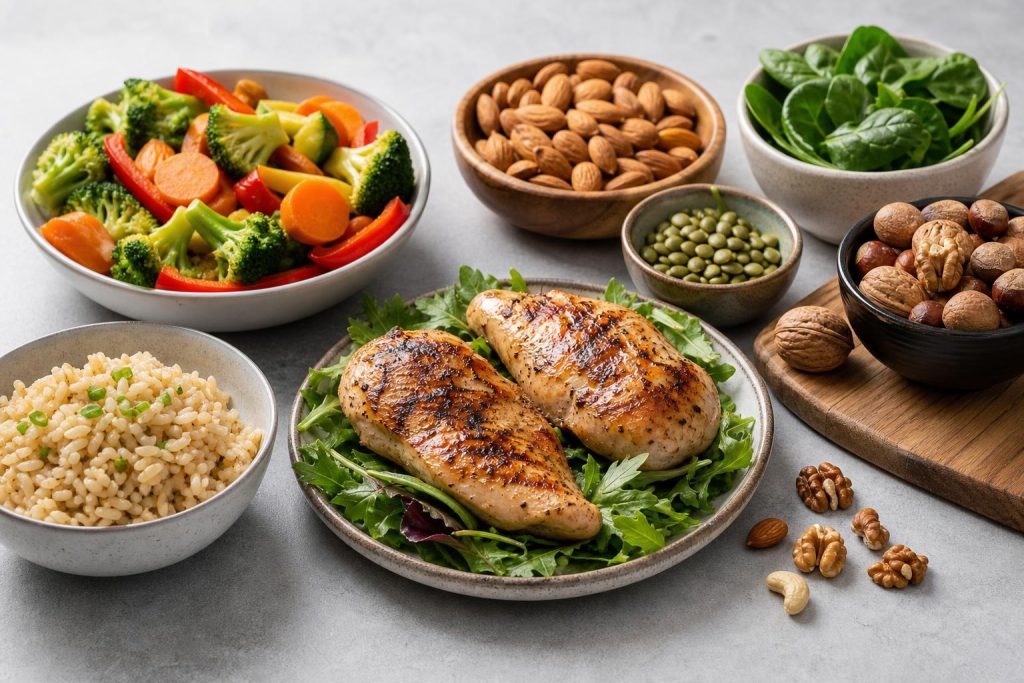
Here’s a problem nobody warns you about before starting semaglutide: the drug works almost too well. Appetite drops dramatically, food becomes an afterthought, and suddenly the chicken breast you used to eat without thinking feels like a mountain you can’t climb. For men trying to preserve or build muscle while losing fat, this creates a real physiological problem — one that goes beyond willpower or meal planning.
Research published in Obesity found that participants in the STEP 1 trial lost an average of 14.9% of body weight on semaglutide — but a significant portion of that weight was lean mass. That’s the muscle you’ve worked for, the tissue that drives your metabolism, and the structural foundation of long-term health. When total caloric intake collapses without a deliberate strategy to prioritize protein, the body doesn’t just burn fat. It cannibalizes muscle too. Understanding why that happens — and what to do about it — is what separates men who transform their body composition on semaglutide from those who just get smaller.
Why Protein Becomes the Critical Variable When Appetite Drops
Semaglutide works by mimicking GLP-1, a gut hormone that signals satiety to the brain and slows gastric emptying. The result is that you feel full faster, stay full longer, and lose interest in eating between meals. That’s the mechanism you want for fat loss. The problem is that this suppression is indiscriminate — it doesn’t tell your body to avoid protein, it just makes all food feel unnecessary.
Protein, however, is non-negotiable when you’re in a caloric deficit. A landmark meta-analysis in the American Journal of Clinical Nutrition demonstrated that higher protein intakes during caloric restriction significantly preserve lean body mass, with intakes around 1.2 to 1.6 grams per kilogram of body weight producing the best outcomes. For a 200-pound man, that’s roughly 109 to 145 grams of protein per day — a target that becomes brutally difficult when three bites of food feels like Thanksgiving dinner.
The challenge compounds because protein is the most satiating macronutrient. When you do manage to eat something small, choosing high-protein foods means you’re filling the limited stomach capacity with the nutrient that matters most. But when appetite is suppressed, even protein-rich foods feel unappealing. This is where strategy has to override instinct.
One of the most effective approaches is treating protein as a pharmaceutical intervention — something you take deliberately at scheduled times, independent of hunger. Rather than waiting to feel hungry and then trying to eat enough protein, structure your day around two or three protein-anchored eating windows. A high-protein Greek yogurt or cottage cheese in the morning, a protein shake mid-afternoon, and a lean protein source at dinner creates a framework that doesn’t depend on appetite to execute. You’re not eating when you’re hungry; you’re eating because the clock says it’s time to protect your muscle.
The Most Practical High-Protein Foods for Low-Appetite Eating
When total food volume has to stay low, protein density per bite becomes everything. Not all protein sources are created equal in this context. You want foods that deliver a high protein-to-calorie ratio and are easy to consume even when appetite is minimal — ideally without requiring much preparation or creating the kind of food fatigue that makes eating feel like a chore.
Cottage cheese is genuinely underrated here. A single cup of low-fat cottage cheese provides roughly 28 grams of protein at around 180 calories. It’s soft, requires no cooking, and can be eaten cold with minimal effort. Greek yogurt in the plain, full-fat variety offers similar density and the added benefit of probiotics that support gut health — relevant because semaglutide’s effect on gastric motility can occasionally cause digestive disruption. Eggs are another staple: two whole eggs plus two egg whites scrambled together delivers about 22 grams of protein in a small volume that most men on semaglutide can manage even on difficult appetite days.
Protein shakes occupy a specific and important role when appetite suppression is severe. Research in the Journal of the International Society of Sports Nutrition confirmed that whey protein supplementation supports muscle protein synthesis effectively when dietary protein from whole foods is insufficient. A well-formulated whey isolate or casein shake can deliver 25 to 30 grams of protein in liquid form, which most men can consume even when solid food sounds unappealing. The key is choosing a product with minimal fillers, no unnecessary sugar, and a leucine content high enough to trigger muscle protein synthesis — generally requiring at least 2.5 to 3 grams of leucine per serving.
Canned fish — tuna, salmon, sardines — deserves a mention for its simplicity. A single can of chunk light tuna provides around 25 grams of protein, costs less than two dollars, and requires zero preparation. For men whose appetite suppression makes cooking feel overwhelming, having several cans in the cabinet creates a reliable protein source that requires nothing more than opening a pull-tab.
Timing matters as much as selection. A study in the Journal of Nutrition found that distributing protein intake evenly across meals — rather than concentrating it in one large meal — maximized muscle protein synthesis over 24 hours. This is physiologically significant: hitting 120 grams of protein in a single meal doesn’t produce the same anabolic signal as spreading it across three to four eating occasions. Even on low-appetite days, structuring two to three protein-forward eating events produces better muscle-preservation outcomes than cramming protein into one meal when you finally get hungry.
Resistance Training — The Variable That Changes Everything
Protein intake and resistance training operate synergistically, and this relationship becomes even more important during medically-assisted weight loss. A 2022 review in Nutrients confirmed that resistance exercise combined with higher protein intake is the most effective strategy for preserving lean mass during caloric restriction. Semaglutide creates the caloric deficit; resistance training and adequate protein determine how much of what you lose is fat versus muscle.
The practical implication is that training hard three to four days per week sends a continuous anabolic signal to your muscle tissue that essentially tells your body: this mass is being used, keep it. Without that signal, the body has no biological incentive to maintain expensive tissue during a period of energy restriction. You don’t need to be a competitive powerlifter. Compound movements — squats, deadlifts, rows, presses — performed with progressive resistance and consistent effort are sufficient to preserve muscle through even aggressive weight loss phases.
The combination of timed protein intake and consistent resistance training also helps address one of the downstream risks of rapid weight loss on GLP-1 medications: the metabolic adaptation that can occur when lean mass is lost. Muscle is metabolically active tissue. Losing it slows your resting metabolic rate and makes long-term weight maintenance harder. Protecting it now is an investment in your metabolism’s future capacity.
The Takeaway
Semaglutide is a powerful tool for creating the caloric deficit that drives fat loss, but it doesn’t protect your muscle in the process — that’s your job. The strategy is straightforward even if the execution requires discipline: aim for 1.2 to 1.6 grams of protein per kilogram of bodyweight daily, treat protein intake as a scheduled event rather than a hunger-driven choice, prioritize high-density sources like cottage cheese, Greek yogurt, eggs, and whey protein, distribute that intake across at least two to three eating windows, and keep lifting weights. The appetite suppression that makes semaglutide effective is also the reason this deliberate approach is non-negotiable. Work with the drug’s mechanism, not against it — and you’ll come out the other side leaner, stronger, and metabolically better off than when you started.