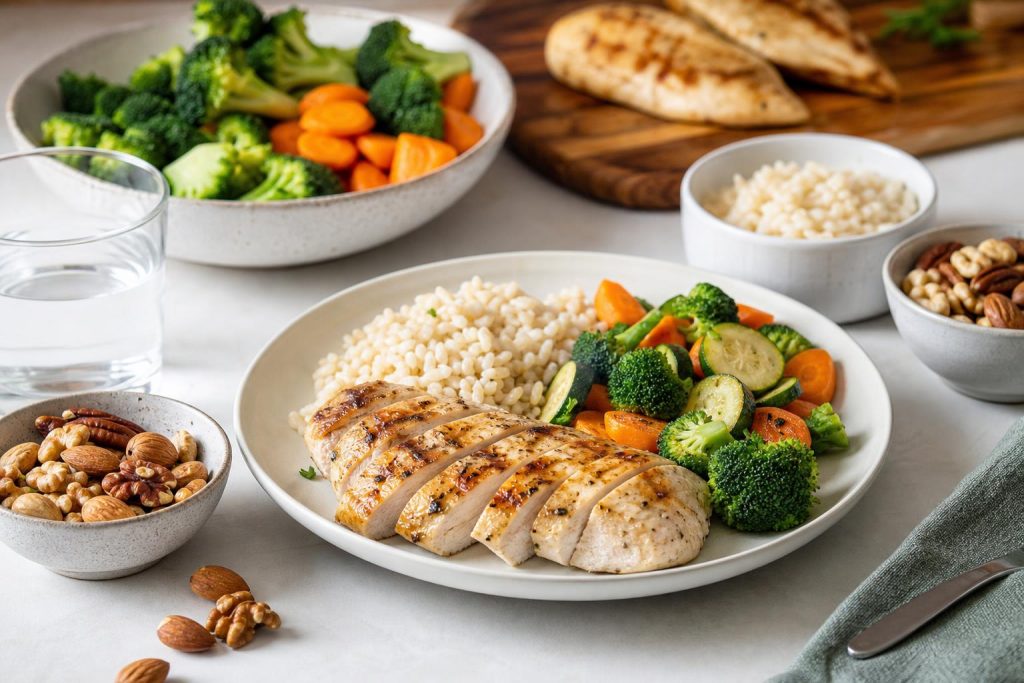
Tirzepatide suppresses appetite so effectively that some users go hours — sometimes an entire day — without feeling the urge to eat. That’s not a bug. It’s largely the point. But here’s the problem: when you consistently undereat on tirzepatide, you’re not just losing fat. You’re losing muscle, micronutrients, and potentially setting yourself up for metabolic consequences that can outlast your time on the medication. A published case report in the Journal of Eating Disorders documented starvation ketosis in a tirzepatide user who dropped caloric intake so severely that she developed marked ketonemia — a stark reminder that potent appetite suppression demands intentional, strategic eating, not passive starvation.
The appetite suppression itself is well understood mechanically. Research published in Neurogastroenterology and Motility explains that GLP-1 receptor agonists like tirzepatide retard gastric emptying and increase gastric accommodation — meaning food literally stays in your stomach longer, and your brain receives fullness signals earlier and more persistently. So when you’re not hungry, it’s not a willpower issue or a lifestyle choice. It’s pharmacology working on your gut-brain axis in real time. Knowing that, your job isn’t to fight the hunger suppression — it’s to eat smart within it.
What Your Body Actually Needs When Appetite Disappears
When tirzepatide compresses your eating window and shrinks your appetite, every calorie you do consume has to work harder. The non-negotiable priority is protein. Men on tirzepatide who aren’t eating enough protein while in a significant caloric deficit are at high risk of losing lean muscle mass — a metabolic liability that slows long-term fat loss and undermines physical function. Aim for a minimum of 100–140 grams of protein per day, even if you have to eat it methodically rather than hungrily. High-quality sources — eggs, Greek yogurt, cottage cheese, canned salmon, chicken breast, lean beef — are ideal because they’re protein-dense without requiring large volumes of food to hit your targets. A single cup of cottage cheese delivers roughly 25 grams of protein in a portion that won’t feel overwhelming when your stomach is already signaling full.
Beyond protein, your micronutrient intake deserves serious attention. When overall food volume drops, so does your intake of vitamins and minerals — potassium, magnesium, B vitamins, iron, and zinc among them. This is where food quality becomes critical. Every meal you eat should be nutrient-dense by design: leafy greens, colorful vegetables, whole eggs, fatty fish, legumes, and whole grains. A small plate of salmon over wilted spinach with a side of lentils accomplishes more nutritionally than a protein shake and a handful of crackers, even if the calorie counts are similar. Think of it as nutrition per bite, not just calories per meal.
Healthy fats also matter more than many men on tirzepatide realize. Dietary fat supports hormone production — including testosterone — and facilitates the absorption of fat-soluble vitamins A, D, E, and K. Avocados, olive oil, nuts, and fatty fish are excellent options that add meaningful caloric density without requiring large portions. This is especially important for men who are already lean or who are lifting regularly and need to support muscle retention and hormonal health through a period of aggressive weight loss.
The Cardiac Argument for Eating Well on Tirzepatide
There’s another dimension to this conversation that goes beyond aesthetics and body composition. The cardiovascular data on tirzepatide is genuinely compelling. The SUMMIT CMR substudy published in the Journal of the American College of Cardiology showed that tirzepatide reduced left ventricular mass by an average of 11 grams and decreased paracardiac adipose tissue by 45 mL compared to placebo — changes that tracked closely with weight loss and may explain the reduction in heart failure events seen in the main trial. Separately, research in the European Journal of Preventive Cardiology confirmed that epicardial adipose tissue expresses GIP and GLP-1 receptors, suggesting tirzepatide acts directly on the fat surrounding the heart — not just on subcutaneous fat or appetite centers in the brain. The medication is doing metabolic work that extends well beyond the scale. But these cardiovascular benefits are most fully realized when paired with a diet that supports heart health: anti-inflammatory fats, adequate fiber, potassium-rich vegetables, and limited processed sodium.
The Takeaway
Not being hungry on tirzepatide doesn’t mean your body has stopped needing fuel — it means the hunger signal that usually tells you to eat has been quieted. Your physiology still requires protein to preserve muscle, micronutrients to support every system from immunity to testosterone, and quality fats to keep hormones and cardiovascular health on track. Set meal times rather than waiting for hunger. Build small, dense, high-protein plates. Prioritize whole foods over processed convenience options, even when convenience feels easier. The medication is doing its part. Your job is to make sure the nutrition you do eat is doing its part too.
Scientific References
-
Kramer, Borlaug, Zile et al. (2025).
Tirzepatide Reduces LV Mass and Paracardiac Adipose Tissue in Obesity-Related Heart Failure: SUMMIT CMR Substudy..
Journal of the American College of Cardiology.
View on PubMed → -
Iacobellis et al. (2025).
Epicardial Fat Inflammation and GLP-1/GIP Receptor Analogs: Are we Shifting our Perspective?.
Current cardiology reports.
View on PubMed → -
Malavazos, Iacobellis, Dozio et al. (2023).
Human epicardial adipose tissue expresses glucose-dependent insulinotropic polypeptide, glucagon, and glucagon-like peptide-1 receptors as potential targets of pleiotropic therapies..
European journal of preventive cardiology.
View on PubMed → -
Camilleri et al. (2024).
The role of gastric function in control of food intake (and body weight) in relation to obesity, as well as pharmacological and surgical interventions..
Neurogastroenterology and motility.
View on PubMed → -
Yasui-Furukori, Tasaki, Kaiga et al. (2026).
Starvation ketosis following self-administered tirzepatide obtained via online services in a young woman later diagnosed with anorexia nervosa: a case report..
Journal of eating disorders.
View on PubMed →