Ozempic changes the relationship between your brain and food in ways that researchers are still unpacking. The STEP 5 trial — a two-year study on semaglutide 2.4 mg — found that participants experienced significant improvements in craving control, reduced desire for salty and savory foods, and better overall restraint around eating, all of which correlated directly with meaningful weight loss. That’s the good news. The challenge is that when your appetite drops this dramatically, what little you do eat carries enormous nutritional weight. Every meal becomes a decision that either supports your goals or quietly works against them.
Most men on semaglutide make a predictable mistake in the early weeks: they eat less, feel fine, and assume that’s enough. But eating less on a GLP-1 medication without eating strategically can accelerate muscle loss, trigger nutritional deficiencies, and leave you fatigued and metabolically worse off than when you started. The medication does the appetite work. You still have to do the food work.
Build Every Meal Around Protein — Without Exception
When caloric intake drops sharply, the body looks for energy wherever it can find it — and muscle tissue is a prime target. This is the central nutritional risk of semaglutide use, and protein is your primary defense against it. On a reduced-calorie intake, most research supports a target of at least 1.2 to 1.6 grams of protein per kilogram of body weight daily to preserve lean mass. For a 200-pound man, that’s roughly 110 to 145 grams per day — a number that requires deliberate planning when you’re only eating two small meals.
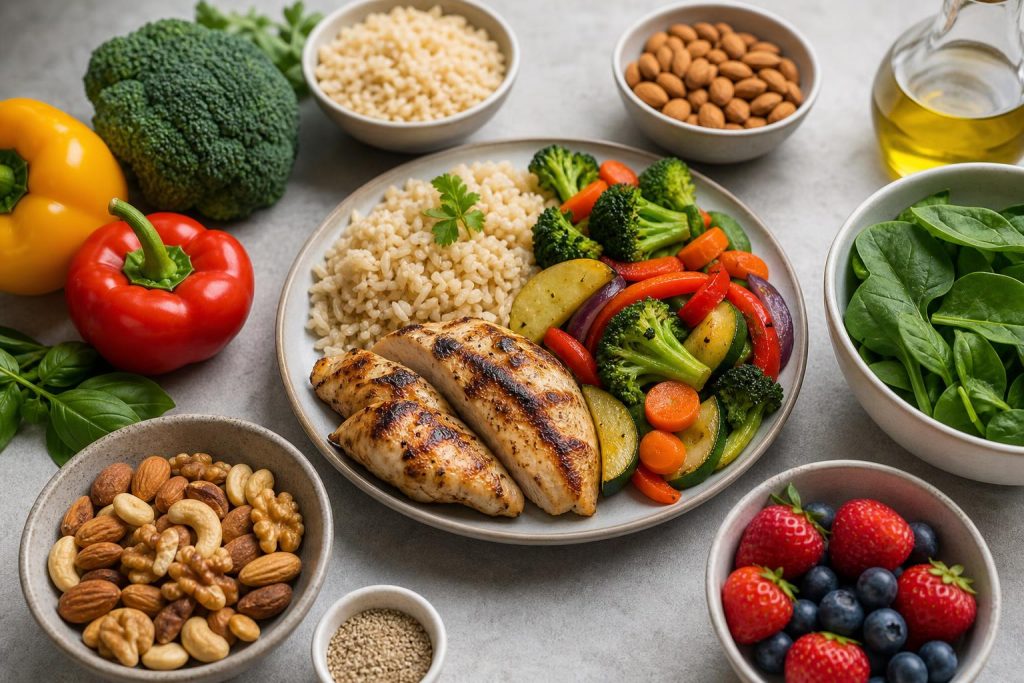
The best sources to prioritize are those that deliver a high protein yield per calorie: eggs, Greek yogurt, cottage cheese, canned tuna and salmon, chicken breast, lean ground turkey, and whey protein. These foods also tend to be well-tolerated on semaglutide, which matters. Fatty cuts of meat, fried proteins, and heavily seasoned dishes are among the most common triggers for nausea and delayed gastric emptying — two side effects the medication already amplifies. Lean, simply prepared proteins are both the smartest nutritional choice and the most practical one for how your stomach is functioning on the drug.
Aim to anchor every meal with a protein source first, before adding anything else. This isn’t just a mindset trick — it reflects the physiological reality that on semaglutide, your stomach fills faster and stays full longer. If you fill up on bread, rice, or vegetables before getting your protein in, you may not have the capacity to hit your targets, and the rest of the meal becomes nutritionally incomplete.
Prioritize Nutrient Density Because Volume Is No Longer On Your Side
Before semaglutide, eating enough vegetables, fiber, and micronutrients was mostly a matter of habit and discipline. On semaglutide, it becomes a matter of strategic selection. When you’re eating 1,200 to 1,600 calories a day — or sometimes less — every food choice has to pull its weight. Ultra-processed foods, refined carbohydrates, and calorie-dense snacks aren’t just suboptimal on this medication; they actively crowd out the nutrients your body needs to function, recover, and preserve muscle during significant weight loss.
Non-starchy vegetables — leafy greens, broccoli, zucchini, bell peppers, cucumber, asparagus — are high in fiber, micronutrients, and volume relative to their caloric load. They support gut motility, which semaglutide can slow, and they provide vitamins and minerals that are easy to fall short on during caloric restriction. Aim for at least two to three servings across your meals, even if portions feel small. Cooking them in olive oil or adding them to eggs and protein dishes makes them easier to consume without requiring a dedicated meal slot.
Complex carbohydrates still have a place in your diet on Ozempic — but timing and selection matter. Oats, sweet potatoes, quinoa, legumes, and whole grain bread provide fiber, slow-digesting glucose, and micronutrients that support energy and satiety. Simple, refined carbohydrates — white bread, sugary cereals, crackers, chips — spike blood sugar without delivering meaningful nutrition and are among the most likely foods to trigger nausea or discomfort by stressing a slowed digestive system. The medication has already done significant work to reduce your cravings for sweet and starchy foods, as the STEP 5 data confirmed. Use that neurological advantage to replace low-quality carbs with higher-quality ones rather than eliminating carbs entirely.
Healthy fats deserve attention too, though in moderation given their caloric density. Avocado, olive oil, fatty fish like salmon, and nuts provide essential fatty acids, support hormonal health, and improve the absorption of fat-soluble vitamins. That said, high-fat meals — particularly those combining fat and refined carbohydrates — are well-documented triggers for GI distress on GLP-1 medications. Keep fat sources lean and clean, and avoid the common mistake of replacing reduced calories with large amounts of cheese, nut butters, or cooking oils that quickly push you over your targets without providing satiety benefits proportional to the calories consumed.
Watch for the Risks That Don’t Get Talked About Enough
The clinical conversation around GLP-1 medications and food is expanding — and not always in a comfortable direction. A 2026 clinical spotlight published in the International Journal of Eating Disorders raised serious concerns about how semaglutide’s appetite-suppressing mechanisms may, in some individuals, reinforce restrictive eating patterns, avoidance of food, and compulsive weight control behaviors. The same neurological machinery that helps curb binge eating and cravings can, in vulnerable individuals, accelerate restriction to unhealthy levels.
This isn’t a reason to avoid the medication — for most men, semaglutide is a legitimate and effective tool. But it is a reason to monitor your relationship with food honestly. If you find yourself skipping meals regularly not because you’re not hungry but because you’ve developed anxiety around eating, or if your food intake drops so low that fatigue, hair loss, or cognitive fog becomes noticeable, those are signals worth taking seriously with your prescribing physician. The same applies if meals are becoming progressively more restricted in variety or if eating starts to feel like something to avoid rather than something to manage. Appropriate appetite modulation and disordered eating can look similar from the outside — the difference is metabolic function and psychological health.
Hydration is another underrated priority. Semaglutide slows gastric motility, and inadequate water intake compounds that effect, increasing constipation risk and reducing the absorption efficiency of the nutrients you are eating. Aim for at least two to three liters of water daily, and consider adding electrolytes if your caloric intake is very low, since sodium, potassium, and magnesium intakes naturally drop alongside food volume.
The Takeaway
Ozempic is a powerful metabolic tool, but it only reshapes your appetite — not your nutritional needs. The men who see the best long-term outcomes on semaglutide are those who treat the reduced appetite as an opportunity to eat better, not simply less. That means anchoring meals around lean protein to protect muscle, filling the rest of your plate with nutrient-dense whole foods, avoiding the processed and fatty foods that drive GI side effects, and staying genuinely attentive to how your body and your relationship with food are responding over time. The medication handles the cravings. The strategy handles everything else.
Scientific References
-
Wharton, Batterham, Bhatta et al. (2023).
Two-year effect of semaglutide 2.4 mg on control of eating in adults with overweight/obesity: STEP 5..
Obesity (Silver Spring, Md.).
View on PubMed → -
Škudar et al. (2026).
Eating Disorders in the GLP-1 Era: A Spotlight on Emerging Clinical Risks, Research Gaps, and Practice Priorities..
The International journal of eating disorders.
View on PubMed →