Semaglutide doesn’t just shrink your appetite — it rewires it. Research from the two-year STEP 5 trial found that adults taking semaglutide 2.4 mg experienced significant reductions in cravings for savory, salty, starchy, and sweet foods, alongside improved control of eating — changes that were still measurable at the 104-week mark. The average participant lost nearly 15% of their body weight. But here’s the part most people miss: what you choose to eat during that window of reduced appetite matters enormously. The drug creates the opening. Your food choices determine whether you come out the other side leaner, stronger, and metabolically healthier — or undernourished and losing muscle you can’t afford to lose.
If you’re on Ozempic or any GLP-1 receptor agonist, you’re already fighting a quieter hunger signal. That’s powerful. But reduced appetite is a double-edged sword. When you’re eating significantly less food, every bite has to count more, not less. The goal isn’t just to eat less — it’s to eat strategically.
Protein First, Every Single Meal
This is the non-negotiable. When semaglutide suppresses your appetite and reduces overall caloric intake by 300 to 500 calories or more per day, your body needs a reason to hold onto lean muscle tissue. That reason is protein. Without adequate dietary protein, a significant caloric deficit — especially in men over 35 — accelerates muscle loss, slows metabolic rate, and undermines the long-term results you’re after.
Men on GLP-1 medications should aim for at least 1.2 to 1.6 grams of protein per kilogram of body weight daily, and possibly higher if they’re resistance training. That means if you weigh 220 pounds (roughly 100 kg), you’re targeting 120 to 160 grams of protein per day — even on the days when eating feels like an obligation rather than a pleasure. Prioritize lean, whole-food protein sources: chicken breast, turkey, eggs, Greek yogurt, cottage cheese, canned tuna, salmon, and lean cuts of beef. These options are also dense in micronutrients — B vitamins, zinc, iron, selenium — that are easy to fall short on when total food volume drops.
A practical approach: build every meal around a protein anchor before adding anything else to the plate. If your stomach feels tight and you can only manage half a plate, the protein should be the half you eat. Carbohydrates and fats can be flexible. Protein cannot.
Whey protein shakes, Greek yogurt with berries, or eggs scrambled with spinach are smart breakfast options when solid food feels like a stretch in the morning — a common experience early in GLP-1 treatment. The goal isn’t to force feed. It’s to make the calories you do consume pull as much metabolic weight as possible.
Whole Foods That Work With Semaglutide’s Mechanisms
Semaglutide slows gastric emptying — meaning food stays in your stomach longer, which is part of why you feel full faster. This mechanism is helpful for appetite control, but it also means certain foods can sit uncomfortably, worsen nausea, or cause bloating. High-fat foods, fried foods, and large portions of ultra-processed carbohydrates tend to be the worst offenders. This isn’t just anecdotal — it’s a direct consequence of altered GI motility that comes with GLP-1 receptor agonism.
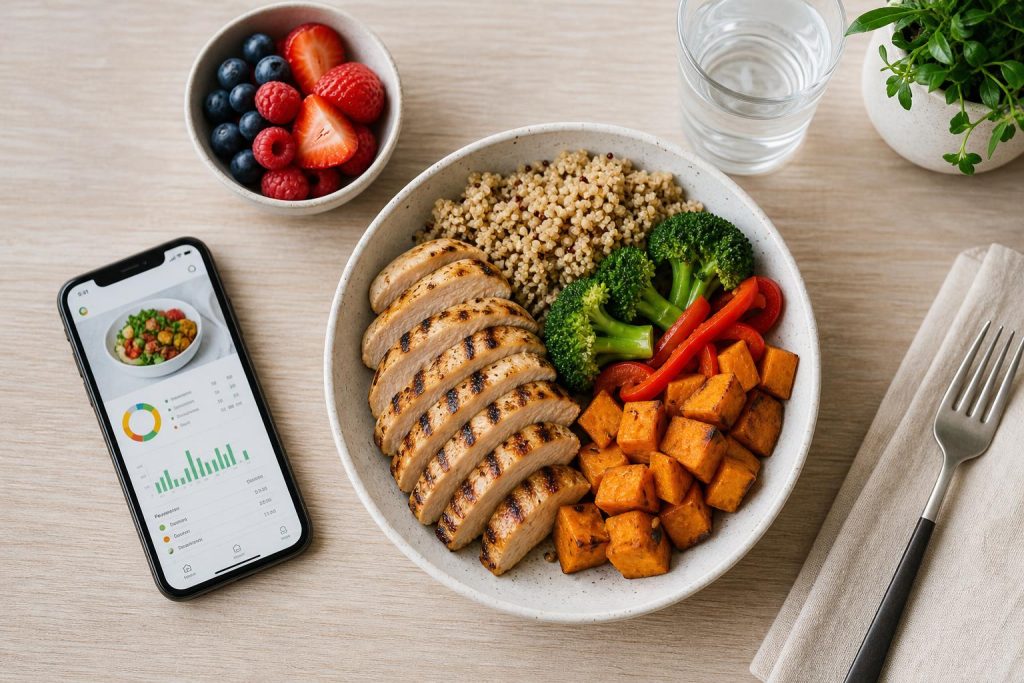
What tends to work well: fiber-rich vegetables like broccoli, zucchini, spinach, and bell peppers that provide volume, vitamins, and digestive support without overwhelming a sensitive stomach. Legumes — lentils, chickpeas, black beans — offer a useful combination of plant-based protein and soluble fiber, which supports gut health and helps stabilize blood glucose between meals. Complex carbohydrates like oats, sweet potatoes, and quinoa provide slow-digesting energy that pairs well with a reduced appetite by keeping blood sugar steadier and hunger at bay longer.
Healthy fats still belong in the picture — avocado, olive oil, nuts, and fatty fish like salmon and sardines support hormone production, cardiovascular health, and absorption of fat-soluble vitamins. But portion awareness matters more here than anywhere else. Fat is calorically dense, and when stomach capacity is limited, starting a meal with a fat-heavy appetizer can crowd out the protein and fiber your body actually needs more of. Think of fats as finishers — added to meals for flavor and nutrition, not as the foundation.
Hydration also becomes more critical on Ozempic than many men expect. Nausea and reduced food intake can both contribute to dehydration, and inadequate hydration compounds fatigue, reduces exercise performance, and can intensify GI side effects. Aim for at least 2.5 to 3 liters of water daily, and don’t rely on thirst as your only cue — semaglutide blunts hunger signals broadly, and thirst awareness can follow.
What the Research Says About the Risks of Under-Eating
There’s a clinical concern that doesn’t get enough airtime in the GLP-1 conversation: the risk of eating too little, too restrictively, or in patterns that shade into disordered territory. A 2026 clinical review published in the International Journal of Eating Disorders raised an important flag — while GLP-1 medications may benefit men with binge eating tendencies or loss-of-control eating, the same appetite-suppressing mechanisms can also reinforce excessive restriction, avoidance of regular eating, and compulsive weight control behaviors in vulnerable individuals. The authors argue that prescribing pathways often lack systematic monitoring for these risks.
This isn’t an argument against using semaglutide — it’s an argument for using it intelligently. Skipping meals because you’re not hungry isn’t a strategy; it’s a shortcut to micronutrient deficiency, muscle loss, and potentially worsening metabolic health over the long run. The drug reduces appetite, but it doesn’t eliminate the biological need for adequate nutrition. Men who go days eating 600 to 800 calories because the medication has essentially switched off their hunger signal are setting themselves up for rebound weight gain and metabolic dysregulation once they stop the medication or reduce the dose.
A practical safeguard: eat on a schedule, not just on appetite. Three structured meals per day — even if they’re smaller than what you used to eat — maintains metabolic consistency, preserves muscle protein synthesis, and keeps your relationship with food grounded in intention rather than avoidance. If you notice you’re consistently struggling to hit even 1,200 to 1,400 calories after weeks on the medication, that’s worth a conversation with your prescribing physician or a registered dietitian who understands GLP-1 pharmacology.
The Takeaway
Ozempic is a tool, not a meal plan. The drug does remarkable things for appetite control and craving reduction — the STEP 5 data over two years makes that clear. But food quality, protein adequacy, and eating consistency are what convert that reduced appetite into lasting fat loss, preserved muscle, and better metabolic health. Eat protein first. Build meals around whole, minimally processed foods. Stay hydrated. Eat on a schedule even when hunger is quiet. And take seriously the clinical reminder that less food only works in your favor when it’s the right food, eaten regularly enough to keep your physiology running the way it’s supposed to. The medication opens the door. What you eat determines what’s on the other side.
Scientific References
-
Wharton, Batterham, Bhatta et al. (2023).
Two-year effect of semaglutide 2.4 mg on control of eating in adults with overweight/obesity: STEP 5..
Obesity (Silver Spring, Md.).
View on PubMed → -
Škudar et al. (2026).
Eating Disorders in the GLP-1 Era: A Spotlight on Emerging Clinical Risks, Research Gaps, and Practice Priorities..
The International journal of eating disorders.
View on PubMed →