In 2023, researchers publishing in Nature Medicine demonstrated something that upended conventional thinking about blood sugar: glucose variability — not just fasting levels — is one of the most powerful predictors of metabolic disease risk, and it varies dramatically between individuals eating the exact same foods. Two men can eat identical meals and experience wildly different glycemic responses. One spikes into prediabetic territory. The other barely moves. This isn’t a bug in human biology — it’s a signal. And continuous glucose monitors (CGMs) are the tools that finally let you read it.
Whether you’re using a GLP-1 receptor agonist like semaglutide or tirzepatide, grinding through a structured lifting program, experimenting with time-restricted eating, or just trying to get a handle on your metabolic health after years of poor diet — a CGM gives you real-time, personalized data that no annual blood panel ever could. It’s wearable, painless, and increasingly accessible. More importantly, the information it surfaces can fundamentally change how you eat, train, sleep, and recover.
This guide breaks down everything you need to know: how CGMs work, what the data actually means, which devices are worth your money in 2024, and how to turn glucose numbers into action — whether you’re on medication or going it alone.
How CGMs Work — and Why the Data Matters More Than You Think
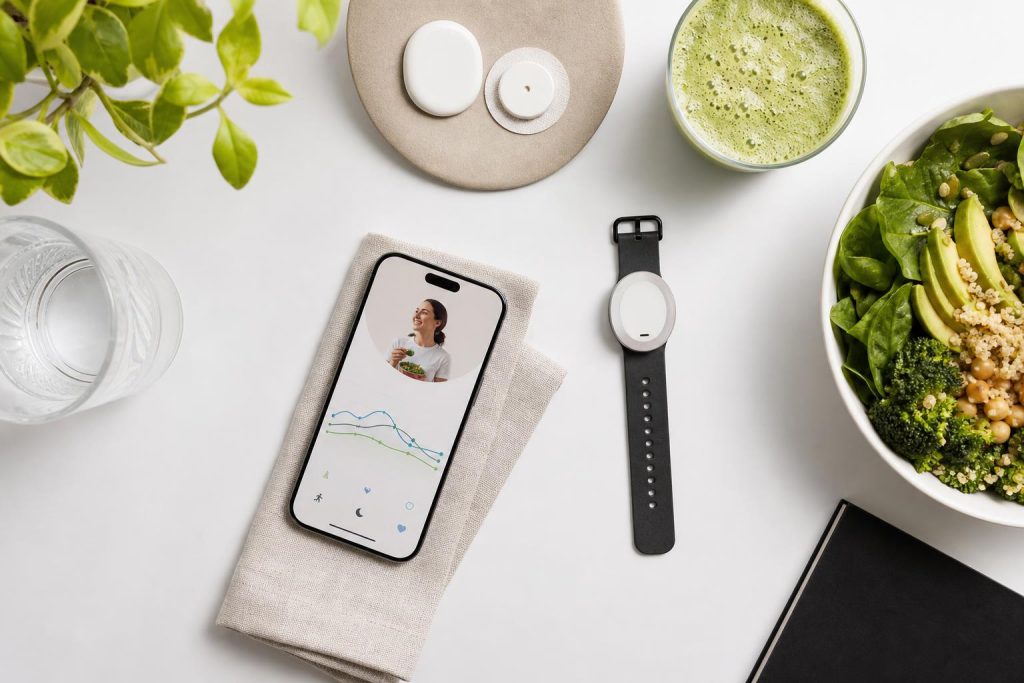
A CGM is a small sensor — typically the size of a quarter — that you apply to your upper arm or abdomen. A hair-thin filament sits just beneath the skin in the interstitial fluid, measuring glucose concentrations every one to five minutes and transmitting data wirelessly to your phone or a dedicated reader. Unlike a finger-stick glucometer that gives you a single snapshot, a CGM gives you a continuous movie of your metabolic state across hours and days.
The metrics that matter most aren’t complicated once you know what you’re looking at. Time in Range (TIR) refers to the percentage of time your glucose stays between 70 and 140 mg/dL — the generally accepted optimal zone for metabolic health. Research published in Diabetes Care established that higher TIR correlates strongly with reduced risk of complications in diabetic patients, and the principle extends meaningfully to metabolically healthy individuals tracking performance and fat loss. Then there’s glucose variability — technically measured as coefficient of variation (CV) — which captures how dramatically your glucose swings throughout the day. High variability is associated with oxidative stress, inflammation, and impaired cognitive function even in non-diabetic populations, as work from Stanford’s nutrition lab has shown.
For men using GLP-1 medications, CGM data becomes especially valuable because these drugs work in part by slowing gastric emptying and blunting postprandial glucose spikes. A CGM lets you see exactly how well your medication is working in real time — and at what meals or food types it may still be falling short. But the utility doesn’t stop there. Even men with no metabolic diagnosis who are focused on fat loss and body composition can use glucose data to optimize meal timing, identify which foods are silently spiking them, and understand how stress and sleep deprivation are affecting their insulin sensitivity before those effects show up on a scale or a blood panel.
The Best CGM Devices Available Right Now
The consumer CGM market has matured significantly over the last three years. What was once accessible only to insulin-dependent diabetics is now available over-the-counter or through simple telehealth prescriptions, and the devices themselves have become more accurate, longer-lasting, and easier to interpret.
Dexcom G7 is widely considered the clinical gold standard. It requires a prescription but is covered by insurance for diagnosed diabetic or prediabetic patients, and is increasingly prescribed off-label for metabolic monitoring. The G7 features a 10-day wear period, a 30-minute warmup (down from the two-hour warmup on earlier models), and a MARD (mean absolute relative difference) accuracy rating of around 8.2% — among the best in class. Its companion app is excellent, and it integrates with Apple Health and various glucose tracking platforms. For men who are already working with a physician — particularly those on GLP-1 therapy — the G7 is the premium option worth pursuing through your provider.
Abbott FreeStyle Libre 3 is the most widely used CGM globally, and for good reason. The sensor is the smallest on the market, worn for 14 days, and the Libre 3 now offers real-time continuous readings (an upgrade from the earlier scan-to-read model). Accuracy is comparable to the Dexcom G7 in most independent evaluations. It’s slightly more affordable and often more accessible for those navigating the prescription process. Abbott has also been aggressive in expanding availability through telehealth platforms, making it a strong practical choice for men who want CGM data without a complex setup.
Stelo by Dexcom launched in 2024 as the first FDA-cleared over-the-counter CGM for adults without diabetes. This is a significant development. You don’t need a prescription, a doctor’s visit, or an insurance battle. A 15-day sensor, designed specifically for metabolic health optimization in non-diabetic users, Stelo delivers 24-hour glucose data including overnight tracking. The glucose range it measures tops out at 250 mg/dL rather than the higher ceiling on clinical devices — appropriate given its target user. For men who are metabolically healthy but want the data, Stelo is the most frictionless entry point on the market right now.
Lingo by Abbott, also launched over-the-counter in 2024, is Abbott’s answer to the same market. Built on FreeStyle Libre technology but packaged with a consumer coaching app, Lingo is positioned squarely at the wellness and performance user. Its app interprets glucose curves and offers behavioral nudges in plain language rather than clinical terminology. Early user data suggests it’s particularly useful for men just entering the CGM space who want guided interpretation rather than raw numbers.
For those on GLP-1 medications specifically, platforms like Levels Health and January AI have emerged as interpretive layers that sit on top of CGM hardware — pairing glucose data with food logging, activity tracking, and AI-generated insights. These aren’t devices themselves but software ecosystems that can meaningfully increase the value you extract from any sensor. A 2022 study in JMIR mHealth found that combining CGM with structured behavioral feedback led to significantly greater improvements in postprandial glucose control compared to CGM alone — suggesting the coaching layer isn’t just a nice-to-have.
How to Actually Use CGM Data to Optimize Your Health
Owning a CGM without knowing how to interpret the data is like having a detailed blood panel and no idea what the reference ranges mean. The hardware is only as useful as your ability to act on the information it generates. Here’s how to build that skill set efficiently.
Start with a two-week baseline wear. Don’t change anything about your diet or training during this window. The goal is to understand your metabolic baseline — your fasting glucose patterns on waking, your typical postprandial response to your usual meals, how your glucose behaves during and after exercise, and how it shifts overnight. Most men are surprised by what they find. Common revelations include late-night glucose elevations from alcohol (even a few drinks can cause a significant rebound spike in the early morning hours), dramatic spikes from foods perceived as healthy — certain protein bars, smoothies, rice, and oat-based meals are frequent offenders — and significant glucose suppression during and after high-intensity training.
Once you have your baseline, the real optimization begins. For fat loss, the most actionable insight from CGM data is usually identifying and eliminating the meals or snacks that are driving high-amplitude glucose spikes and rapid crashes. These crash cycles are a core driver of hunger and cravings — research from the Cell Metabolism journal showed that the magnitude of the post-meal glucose dip, not the spike itself, is the strongest predictor of subsequent hunger and caloric intake. Smoothing out your glucose curve through food sequencing (eating fiber and protein before carbohydrates), reducing refined carbohydrate load, and spacing meals strategically can have a measurable effect on appetite regulation — with or without a GLP-1 medication doing the same job pharmacologically.
For muscle building and training performance, CGM data is useful in a different direction. Men in a building phase often underestimate the glucose suppression that occurs during fasted training or the caloric deficit-induced blunting of insulin signaling. Tracking glucose before, during, and after training sessions can help you identify optimal fueling windows. If your glucose is dropping sharply mid-training and your performance is suffering, you have objective evidence that pre-workout nutrition timing needs adjustment. Conversely, if your post-workout glucose is spiking dramatically from a high-carbohydrate recovery meal, you can experiment with the timing and composition of that meal to improve nutrient partitioning.
Sleep and stress deserve particular attention here, because they’re the two levers most men ignore — and they show up brutally clearly in glucose data. Poor sleep quality drives cortisol elevation and insulin resistance, both of which manifest as elevated fasting glucose and exaggerated postprandial spikes the following day. A landmark study in the Journal of Clinical Endocrinology & Metabolism found that even partial sleep restriction significantly impaired insulin sensitivity in healthy young men within days. Watching your fasting glucose rise after a bad night of sleep is a visceral reminder that recovery isn’t optional — it’s metabolic infrastructure.
For men on GLP-1 medications, CGM data offers a feedback loop that most users don’t have access to through standard care. These medications reduce appetite and blunt glucose excursions, but they do so imperfectly and differently for each person. Using a CGM, you can identify which meals are still causing problematic spikes despite medication, whether your dose timing relative to meal timing is optimized, and whether the metabolic improvements your physician expects are actually materializing between quarterly blood draws. Some GLP-1 users discover through CGM monitoring that their postprandial control is excellent but their fasting glucose remains elevated — a pattern that points to different underlying drivers that may warrant additional conversation with their provider.
There’s also a psychological dimension to CGM use that research is beginning to formalize. A 2022 systematic review in Nutrients found that CGM use in non-diabetic adults was associated with increased dietary awareness and greater motivation to make sustained behavioral changes — even when the glucose values recorded were largely in the normal range. Seeing your data in real time creates a feedback loop that abstract health advice rarely achieves. You stop eating a particular food not because someone told you it was bad, but because you watched your glucose spike to 185 mg/dL twenty minutes after eating it and crash 40 points an hour later while you were trying to focus at work.
The Final Word
Continuous glucose monitoring is no longer a clinical tool reserved for people managing diabetes. It’s a precision instrument for anyone serious about understanding and optimizing their metabolic health — and in a world where metabolic dysfunction underlies the majority of chronic disease burden in men, that’s a category that includes virtually everyone reading this.
The best CGM for you depends on your situation. If you’re working with a physician and have a diagnosed metabolic condition or are on GLP-1 therapy, push for a Dexcom G7 or FreeStyle Libre 3 through your provider. If you’re a metabolically healthy man who wants performance and fat loss data without a prescription, Stelo or Lingo are genuinely excellent starting points in 2024. If you want the richest interpretive layer on top of your hardware, explore platforms like Levels or January AI alongside your sensor of choice.
Whatever path you’re on — GLP-1 medication, keto, intermittent fasting, clean lifting and eating — glucose data will tell you things about your body that no other wearable currently can. Two weeks of wearing a CGM and paying attention will teach you more about your personal metabolic response to food, training, sleep, and stress than years of conventional dietary advice. That knowledge doesn’t expire when you take the sensor off. It changes how you eat and live permanently. That’s the real value — not the device, but the understanding it builds.