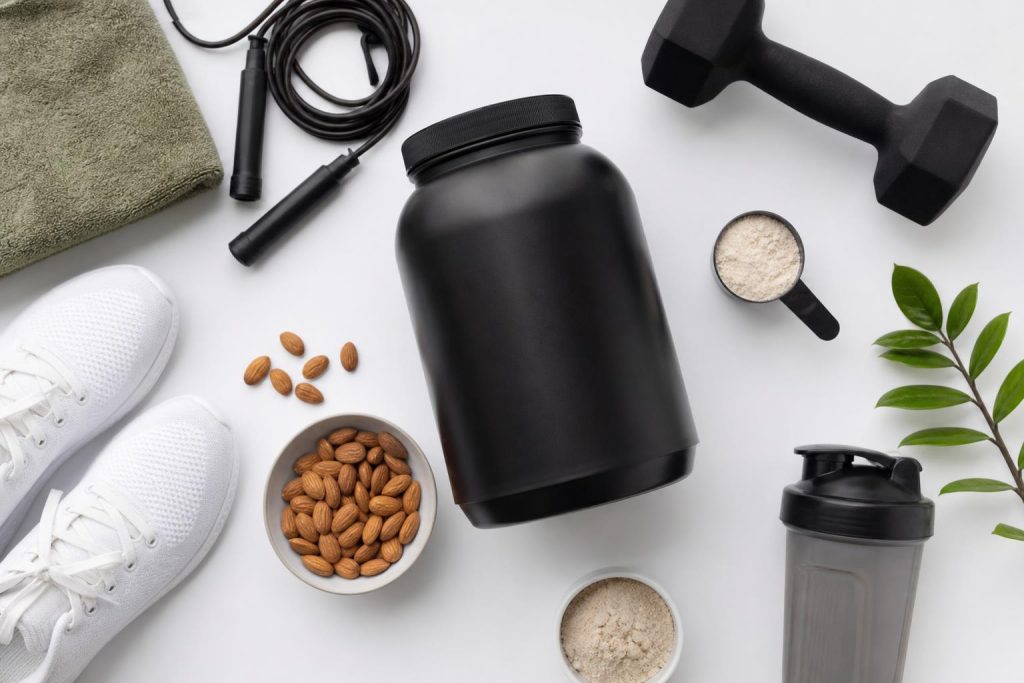
When researchers at the University of Texas Medical Branch studied what happens to muscle tissue during significant caloric restriction, they found something that should make every man paying attention to his physique take note: without adequate protein intake, roughly 25 to 40 percent of weight lost during a caloric deficit comes from lean muscle mass. Now layer on top of that the appetite-suppressing power of semaglutide — the active ingredient in Ozempic and Wegovy — and you have a situation where men are eating significantly less food, often without realizing how drastically their protein intake has fallen. The result can be a body that’s lighter on the scale but metabolically worse off than when they started.
This isn’t just a concern for GLP-1 users. Any man in a caloric deficit — whether from aggressive dieting, a structured cut, or simply eating less — faces the same fundamental challenge: how do you preserve the muscle you’ve built while the body is losing fat? The answer, almost universally, comes back to protein. And when whole food intake drops — because of medication, preference, or circumstance — a well-chosen protein supplement becomes one of the most important tools in your stack.
Why Protein Demand Goes Up When Food Intake Goes Down
There’s a paradox at the center of fat loss that most men never fully appreciate. The leaner you are — or the more aggressively you’re cutting — the more protein your body actually needs to preserve muscle. Research published in the Journal of the International Society of Sports Nutrition suggests that men in a caloric deficit, particularly those resistance training, may benefit from protein intakes as high as 2.3 to 3.1 grams per kilogram of lean body mass per day. That’s considerably higher than the outdated RDA of 0.8 grams per kilogram of total body weight that most general health guidelines still cite.
For GLP-1 users specifically, the challenge is compounded. Semaglutide slows gastric emptying and significantly blunts appetite, which means many men on Ozempic or Wegovy are eating 800 to 1,200 calories per day without really trying to. Getting 150 to 180 grams of protein from that caloric budget through whole foods alone is extraordinarily difficult. A single scoop of quality whey protein provides 20 to 25 grams of complete protein for roughly 100 to 120 calories — making it one of the most calorie-efficient tools available for hitting protein targets when appetite is suppressed.
But even if you’re not on a GLP-1, if you’re training hard and eating in a deficit, protein supplements solve the same equation. They’re not a shortcut — they’re a practical solution to a genuine nutritional math problem.
What the Research Says About Protein Type and Muscle Preservation
Not all protein supplements are created equal, and the differences matter more than the marketing suggests. Whey protein — derived from milk during the cheese-making process — remains the gold standard in the literature. It’s a complete protein containing all nine essential amino acids, and it’s particularly rich in leucine, the branched-chain amino acid that acts as the primary trigger for muscle protein synthesis. A landmark study in the American Journal of Clinical Nutrition demonstrated that whey protein stimulates muscle protein synthesis more robustly than casein or soy protein, even when total protein content is equated. For men trying to preserve or build muscle while eating less, that anabolic efficiency matters.
Whey concentrate is the most affordable form and works well for most men. Whey isolate has had most of the fat and lactose removed through additional processing, making it a better option for men with lactose sensitivity or those who are very lean and managing every calorie carefully. Hydrolyzed whey digests the fastest of all, though the practical muscle-building advantage over isolate is modest for most people outside of the immediate post-workout window.
For men who avoid dairy entirely — whether for ethical, digestive, or personal reasons — research published in Sports Medicine has shown that pea protein, when consumed in sufficient quantities, produces comparable gains in muscle thickness and strength to whey over a 12-week resistance training program. Pea protein is also notably high in arginine and iron, and it mixes reasonably well. The key is dosing it slightly higher than whey to compensate for its marginally lower leucine content — aim for at least 30 to 35 grams per serving.
Casein protein deserves mention here as a complementary tool rather than a primary source. Because it forms a gel in the stomach and digests slowly over four to seven hours, it’s particularly useful as a pre-sleep protein source. A study from Maastricht University found that 40 grams of casein protein consumed before sleep significantly improved overnight muscle protein synthesis and recovery compared to a placebo. For men on GLP-1s who may not feel like eating much before bed, a casein shake is an easy, low-volume way to keep overnight muscle breakdown in check.
One practical consideration specific to GLP-1 users: because gastric emptying is already slowed by the medication, some men find that very fast-digesting proteins or large protein boluses cause additional nausea or bloating. If that’s your experience, spreading protein intake into smaller doses — two scoops across two separate shakes rather than one large serving — tends to resolve the issue without sacrificing your daily total.
The Takeaway
Whether you’re using Ozempic to drive fat loss, eating in a deficit the old-fashioned way, or simply trying to build a leaner body while training hard, protein is the non-negotiable variable. When whole food intake drops — for any reason — a quality protein supplement is one of the most evidence-backed tools you can add to your routine. Whey isolate or concentrate is the practical first choice for most men. Plant-based eaters should look to pea protein as a well-researched alternative. Add casein before bed if muscle preservation is a priority. The brand matters less than the amino acid profile, the leucine content, and whether you can actually hit your daily target consistently. Get that right, and the rest tends to follow.