When researchers published results from the STEP 1 trial in The New England Journal of Medicine, the weight loss numbers were remarkable — participants on semaglutide lost an average of 14.9% of their body weight over 68 weeks. But buried inside those headlines was a more complicated story. Analysis of body composition data showed that a significant portion of the weight lost was lean mass, not just fat. For men who care about strength, performance, and long-term metabolic health, that distinction matters enormously.
Muscle is not simply an aesthetic asset. It is the primary driver of your resting metabolic rate, the tissue most responsible for glucose disposal, and the physical architecture that keeps you functional and injury-resistant as you age. Losing it while pursuing fat loss — whether through GLP-1 medications, aggressive caloric restriction, or any other method — is a trade-off that compounds over time. The question is not whether you can lose weight. It is whether you can lose the right kind of weight.
Why GLP-1 Medications Create a Muscle Preservation Problem
Semaglutide works by mimicking the glucagon-like peptide-1 hormone, slowing gastric emptying, suppressing appetite, and reducing caloric intake significantly. That caloric deficit is exactly what drives fat loss — but it also creates the conditions where muscle catabolism accelerates. When calories drop sharply without a deliberate nutritional and training counterstrategy, the body draws on lean tissue as an energy substrate. This is not unique to semaglutide. It is the same physiological challenge faced by anyone on a steep caloric deficit.
What makes the GLP-1 context particularly concerning is the appetite suppression itself. Many men on semaglutide report eating as little as 800 to 1,200 calories per day, not by design but simply because hunger signals have been blunted. At that intake level, hitting adequate protein targets becomes genuinely difficult — and protein is the single most critical dietary variable for muscle retention during a deficit. Research consistently demonstrates that protein intakes of 1.6 to 2.2 grams per kilogram of body weight are required to maximally stimulate muscle protein synthesis, especially in a hypocaloric state.
A secondary mechanism worth understanding is the hormonal environment that accompanies rapid weight loss. Studies have shown that aggressive caloric restriction suppresses testosterone and IGF-1, both of which are anabolic hormones critical to muscle maintenance. Semaglutide does not appear to directly impair testosterone production, but the rapid caloric reduction it facilitates can trigger the same cascade. This makes the importance of resistance training even more pronounced — it is one of the most reliable stimuli for maintaining anabolic hormone signaling during a deficit.
The Protocol That Actually Preserves Muscle
The research on this is clear enough to build a practical framework around. Muscle preservation during weight loss — regardless of whether you are using a GLP-1 medication, doing intermittent fasting, or simply eating in a caloric deficit — comes down to three things: sufficient protein intake, progressive resistance training, and adequate recovery. Everything else is secondary.
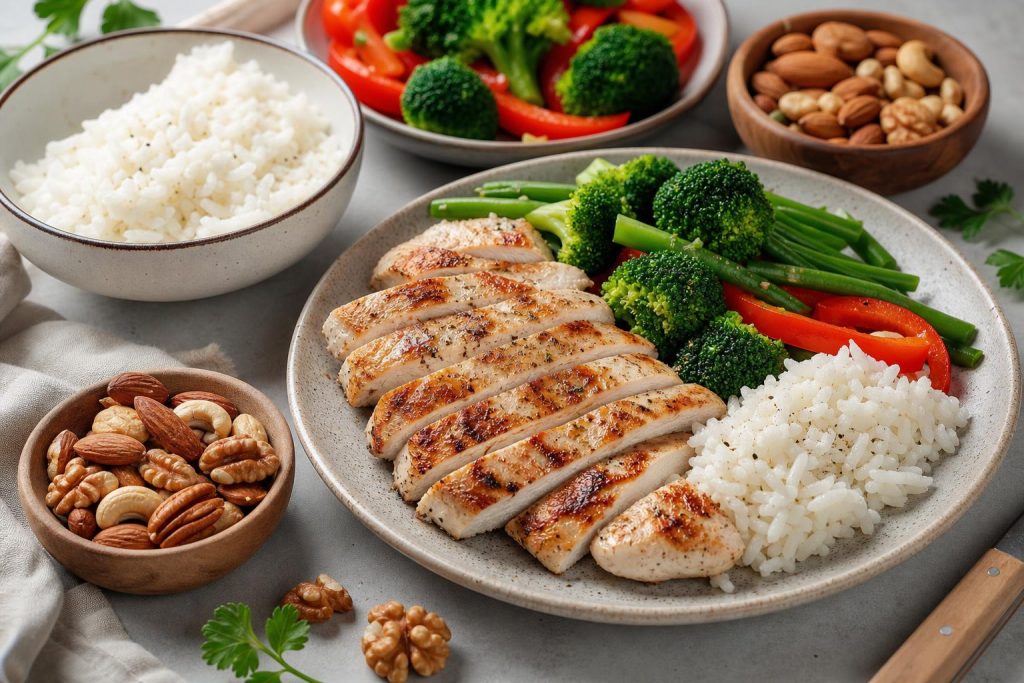
On the protein side, the practical challenge for semaglutide users is front-loading protein into the meals they do eat. If your appetite allows for only two meaningful meals per day, both of those meals need to be built around a high-quality protein source — lean meats, eggs, Greek yogurt, cottage cheese, or a well-formulated protein supplement. Aiming for 40 to 50 grams of protein per meal rather than spreading smaller amounts across four or five sittings has shown advantages in muscle protein synthesis. Research from the journal Nutrients found that even distribution or larger bolus doses of protein are both effective, but the key is hitting total daily targets consistently.
Resistance training is non-negotiable. A landmark study published in Obesity demonstrated that men who combined caloric restriction with resistance training preserved significantly more lean mass than those who relied on diet or aerobic exercise alone. The training stimulus sends a clear signal to the body that muscle tissue is needed and should be retained. For men on semaglutide or in any caloric deficit, three to four sessions of full-body or split resistance training per week, built around compound movements — squats, deadlifts, rows, presses — provides the minimum effective dose for muscle retention. Progressive overload, even modest week-to-week increases in load or volume, amplifies this effect.
Creatine monohydrate is worth mentioning here because of the strength of its evidence base. Meta-analyses have confirmed that creatine supplementation combined with resistance training increases lean mass and strength outcomes compared to training alone. For men in a caloric deficit, it offers a low-risk, well-studied way to support training performance and lean tissue retention. Three to five grams per day is the standard maintenance dose, and it requires no loading phase to be effective.
Sleep and recovery deserve more attention than they typically receive in this conversation. Research from the Annals of Internal Medicine found that when caloric restriction was combined with inadequate sleep, over 70% of weight lost came from lean mass rather than fat — a startling finding that reframes sleep as a direct muscle preservation variable. Aiming for seven to nine hours of quality sleep, managing stress, and avoiding chronic overtraining are not soft recommendations. They are metabolically significant choices that determine what kind of tissue you lose.
What This Means For You
Whether you are on semaglutide, running a traditional cut, or simply trying to stay lean while adding muscle over time, the physiology is the same. Weight loss without a deliberate muscle preservation strategy tends to erode the metabolic machinery you need most. The men who come out of a fat loss phase stronger, more metabolically resilient, and better composed are the ones who treated protein, resistance training, and recovery as non-negotiables — not afterthoughts. GLP-1 medications are a powerful tool for reducing caloric intake, but the work of preserving what matters still belongs to you.