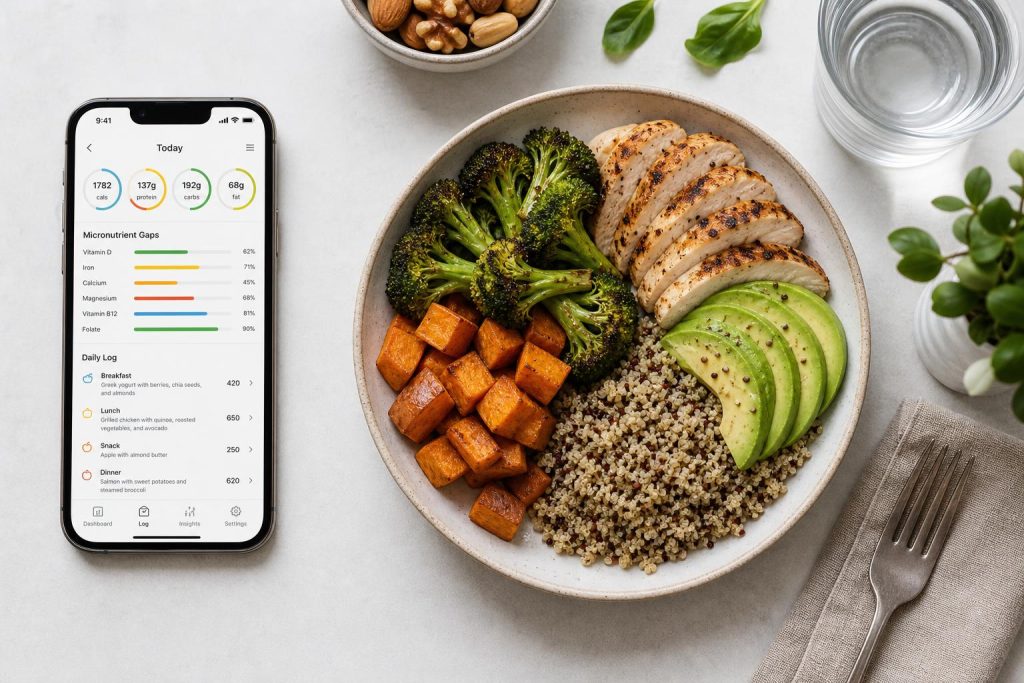
When researchers analyzed the dietary intake of adults on calorie-restricted diets, they found that even well-planned low-calorie diets consistently fall short of recommended intakes for vitamins B12, D, E, and several key minerals. Now add a medication that suppresses appetite by 20–30%, reduces food variety, and in many cases triggers nausea that further limits what you’ll actually eat — and you have a recipe for compounding nutritional deficiencies that can quietly undermine everything you’re working toward.
GLP-1 receptor agonists like semaglutide and tirzepatide have reshaped the conversation around obesity medicine. But the clinical conversation has largely focused on the scale — not what’s happening at the cellular level when a man is eating 1,200 to 1,600 calories a day, frequently skipping meals, and losing significant weight rapidly. That’s where micronutrient gaps become a serious, underappreciated issue. And while GLP-1 users face an amplified version of this problem, the truth is that any man aggressively cutting calories — whether through keto, intermittent fasting, or a structured fat-loss phase — is exposed to the same vulnerabilities.
Why GLP-1 Medications Create a Perfect Storm for Deficiency
The mechanism is straightforward even if the consequences aren’t: GLP-1 agonists work partly by slowing gastric emptying and reducing appetite signaling through the hypothalamus. The result is that most users eat substantially less food, often gravitating toward small, bland, easily tolerated meals. Protein tends to dominate what little appetite remains — which is metabolically smart — but vegetables, dairy, legumes, and nutrient-dense whole grains often fall away. You end up with a diet that technically supports weight loss but quietly erodes your micronutrient reserves.
A 2022 analysis examining nutritional adequacy in bariatric patients — whose physiological experience closely mirrors GLP-1 users — found deficiencies in thiamine, folate, zinc, iron, and fat-soluble vitamins to be nearly universal without supplementation. Bariatric surgery is a useful comparison because it also dramatically reduces food intake and, in some procedures, impairs absorption. The difference is that bariatric patients receive mandatory supplement protocols from day one. GLP-1 users typically do not.
The fat-soluble vitamins — A, D, E, and K — deserve particular attention here. These require dietary fat for absorption, and men who reduce their fat intake while on GLP-1 medications, or who experience fat malabsorption due to altered gastric function, may see these levels drop even if they’re eating foods that nominally contain them. Vitamin D insufficiency, already prevalent in roughly 40% of American adults, is further exacerbated by low-calorie dieting, and its downstream effects touch testosterone production, immune function, bone mineral density, and insulin sensitivity — all critical for men focused on metabolic health.
The Specific Nutrients Most at Risk
Vitamin B12 is arguably the most urgent concern. It’s found almost exclusively in animal products, and while most GLP-1 users still eat some meat or fish, reduced intake combined with altered gut motility can impair absorption. Research has linked B12 deficiency to peripheral neuropathy, cognitive impairment, and fatigue — symptoms that are easy to dismiss as side effects of the medication itself, which means the deficiency can go unaddressed for months. A sublingual methylcobalamin supplement (1,000 mcg daily) bypasses the gastric absorption step entirely, making it a practical insurance policy for anyone eating less than they used to.
Zinc and magnesium follow closely. Both are lost in greater amounts during rapid fat loss, both are involved in testosterone synthesis, and both are chronically underconsumed in Western diets even without medication in the picture. A landmark study found that zinc supplementation in zinc-deficient men significantly increased serum testosterone, which matters enormously for men trying to preserve or build muscle during weight loss. Magnesium glycinate at 300–400 mg before bed is well-tolerated, supports sleep quality and muscle recovery, and is one of the highest-yield supplements in this space regardless of what dietary approach you’re following.
Calcium is frequently overlooked because it isn’t dramatic in its deficiency symptoms — until it is. Men on GLP-1 medications who reduce dairy intake and eat fewer calories overall may not reach the 1,000 mg daily recommended intake through food alone. Long-term calcium insufficiency accelerates bone loss, a concern compounded by the fact that rapid weight loss itself reduces bone mineral density. If you’re not hitting three to four servings of dairy or calcium-rich foods daily, a calcium citrate supplement (better absorbed than calcium carbonate, particularly in the presence of reduced stomach acid) is worth considering.
Thiamine — vitamin B1 — has emerged as a specific concern in GLP-1 users experiencing persistent nausea and vomiting. Case reports have documented Wernicke’s encephalopathy in GLP-1 patients with prolonged nausea who developed severe thiamine deficiency, a serious neurological condition that requires immediate medical intervention. The lesson isn’t to panic — it’s to ensure that any high-quality B-complex supplement you’re taking includes adequate thiamine (at least 1.2 mg, though 50–100 mg in a B-complex is common and appropriate for those with restricted intake).
Iron deserves mention, particularly for men who significantly reduce red meat consumption. Fatigue during exercise, reduced VO2 max, and impaired recovery can all trace back to suboptimal iron status. Rather than supplementing iron without testing — excess iron carries its own risks — request a serum ferritin and complete blood count from your physician at your next visit. It’s one of the more actionable data points you can get, and it costs very little.
Building a Practical Supplement Stack
The foundation for any man in a significant caloric deficit — GLP-1 or otherwise — should start with a high-quality multivitamin that includes meaningful doses of the B vitamins, not just token percentages. Most drugstore multivitamins deliver far less than their labels imply due to poor bioavailability. Look for methylated B vitamins (methylfolate and methylcobalamin rather than folic acid and cyanocobalamin), as these forms are directly usable by the body without requiring genetic conversion steps that a significant portion of men cannot perform efficiently.
On top of a solid multi, the high-yield additions are: vitamin D3 paired with K2 (the K2 ensures calcium is directed to bones rather than arterial walls — a combination supported by research on cardiovascular and skeletal health), magnesium glycinate for sleep and muscle function, and omega-3 fatty acids at 2–3 grams of combined EPA and DHA daily. The omega-3 case is strong independent of any medication: meta-analyses consistently show benefits for triglyceride reduction, inflammation, and cardiovascular risk — all particularly relevant during aggressive fat loss phases.
Protein powder is technically a food supplement rather than a micronutrient, but it belongs in this conversation: men on GLP-1 medications who struggle to eat enough need an easy, palatable protein source to protect lean mass. Whey isolate or a high-quality plant blend taken once or twice daily can bridge the gap when appetite simply won’t cooperate with whole-food protein targets.
Finally, and this is non-negotiable regardless of what approach you’re taking: get bloodwork done. A comprehensive metabolic panel, CBC, lipid panel, 25-OH vitamin D, ferritin, and a thyroid panel provides an objective baseline that no supplement stack can replace. Supplementing blindly is better than nothing, but supplementing to address identified gaps is categorically more effective.
The Takeaway
GLP-1 medications are a powerful tool — but power without precision creates new problems. Any strategy that significantly reduces caloric intake, whether pharmaceutical or self-directed, creates real exposure to micronutrient deficiency that affects energy, hormones, bone health, and long-term body composition. The answer isn’t to stop the medication or abandon the diet. It’s to treat supplementation with the same seriousness you bring to your training and your nutrition. A few targeted, evidence-backed supplements taken consistently each day represent one of the highest-ROI decisions you can make during an active fat-loss phase. Your metabolism is doing the heavy lifting — make sure it has the raw materials to do the job right.