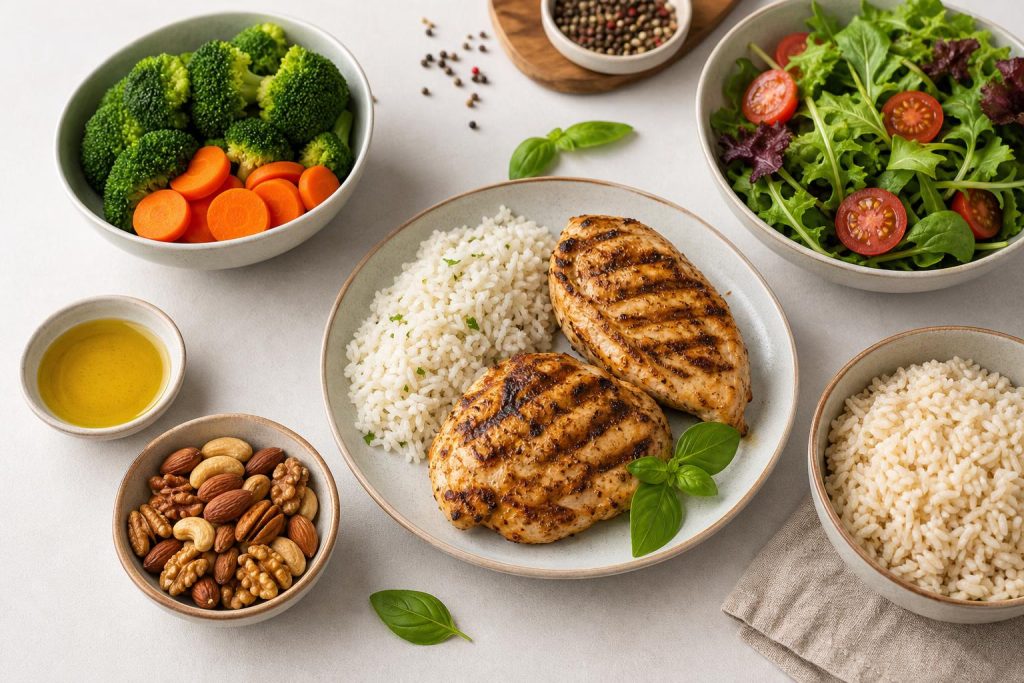
When researchers began documenting the metabolic effects of glucagon-like peptide-1 receptor agonists, the conversation focused almost entirely on blood sugar and body weight. But the more clinicians worked with men on these medications, the more a critical truth emerged: the drug changes your appetite, but your diet still determines your outcome. A GLP-1 medication is not a meal plan. It’s a tool — and without deliberate nutrition strategy behind it, men routinely lose muscle, stall on fat loss, and feel worse than they did before they started.
This is the gap a structured GLP-1 meal planner is designed to close. Whether you’re on semaglutide, tirzepatide, or exploring GLP-1 therapy, what you eat on a reduced appetite matters more, not less, than what you ate when you were eating everything in sight.
Why GLP-1 Medications Change the Rules of Nutrition
GLP-1 receptor agonists work by mimicking a naturally occurring gut hormone that signals satiety to the brain, slows gastric emptying, and modulates insulin secretion in response to meals. Research published in Diabetes Therapy confirms that GLP-1 receptor agonists are now recommended as combination therapy alongside basal insulin and oral antidiabetic agents — a recognition that these medications operate within a broader metabolic system, not in isolation. That same principle applies to nutrition: GLP-1 drugs operate within the context of what you eat, not instead of it.
The satiety effect is real and often dramatic. Many men report eating 40 to 60 percent fewer calories without consciously trying. On the surface, that sounds like an effortless win. In practice, it creates a hidden problem: when total food intake drops that sharply, so does protein consumption, micronutrient density, and the anabolic stimulus needed to preserve lean muscle tissue. The result is that a significant portion of the weight lost on GLP-1 therapy can come from muscle rather than fat — a metabolic outcome that undermines long-term body composition and metabolic rate.
A well-designed GLP-1 meal planner solves this by making every meal count. When you’re eating two small meals a day instead of four or five, the nutritional quality of those meals has to be near-perfect. This shifts the entire framework of eating from volume-based thinking to density-based thinking — prioritizing what’s in each bite, not how many bites you take.
The Core Architecture of a GLP-1 Meal Plan
The foundation of any effective GLP-1 meal plan is protein, and the target is non-negotiable: a minimum of 1.0 to 1.2 grams of protein per pound of target body weight daily. This is not a number pulled from gym lore. It reflects the scientific consensus on the protein intake required to preserve lean mass during a significant caloric deficit — which is exactly the physiological state most GLP-1 users are in. Lean sources like chicken breast, 93-percent lean ground beef, eggs, Greek yogurt, cottage cheese, salmon, and whey protein isolate become the structural anchors of every meal.
Practically, this means building meals from protein outward. If you’re eating 1,600 calories per day and targeting 160 grams of protein, you’re already allocating 640 of those calories to protein before you’ve touched a vegetable, a healthy fat, or a carbohydrate. The remaining calories become a strategic allocation — primarily to non-starchy vegetables for fiber and micronutrients, moderate healthy fats for hormonal health and satiety, and a smaller portion of complex carbohydrates timed around physical activity.
Gastric emptying is slowed on GLP-1 therapy, which means large, heavy, fiber-dense meals can cause significant discomfort. This is one reason men on these medications often abandon vegetables entirely — not because they dislike them, but because eating a large raw salad while nauseous is genuinely unpleasant. The workaround is to favor cooked vegetables over raw, eat smaller portions more frequently if tolerated, and prioritize easily digestible protein sources earlier in the day. Eggs scrambled with spinach and a side of Greek yogurt will serve a GLP-1 user far better than a massive kale salad with grilled chicken.
Hydration deserves its own mention because it’s consistently underestimated. Reduced food intake means reduced water from food sources, and mild dehydration on GLP-1 medications can amplify fatigue, headaches, and constipation — three of the most common reasons men discontinue therapy. Aiming for at least 90 to 100 ounces of water daily, with electrolytes included if appetite suppression is severe, is a practical standard that supports both medication tolerance and performance in the gym.
The role of carbohydrates in a GLP-1 meal plan is nuanced. These medications improve insulin sensitivity and postprandial glucose regulation, which means the glycemic response to a given carbohydrate load is blunted compared to pre-medication baseline. This is a metabolic advantage, not a license to eat poorly. The most effective approach is to reserve carbohydrates for around training — consuming 30 to 50 grams of easily digestible carbohydrates like rice, oats, or fruit before or after resistance training sessions. Outside of training windows, keeping carbohydrate intake lower and prioritizing protein and fat keeps insulin stable and supports the fat oxidation that GLP-1 therapy facilitates.
Sample Meal Structure for a GLP-1 Day
A practical day of eating on GLP-1 therapy doesn’t need to be complex. It needs to be intentional. A first meal of two to three whole eggs with one to two egg whites, a cup of sautéed spinach with olive oil, and a serving of cottage cheese provides roughly 40 to 45 grams of protein with moderate fat and minimal carbohydrates — digestible, anti-nausea-friendly, and nutritionally dense. A midday meal of six to eight ounces of ground turkey or salmon with a cup of roasted zucchini or broccoli and a half cup of white rice hits another 45 to 50 grams of protein with a controlled carbohydrate window ideal for a post-workout meal. An evening meal of Greek yogurt with a scoop of whey protein blended in, topped with berries, closes the day with another 30 to 35 grams of protein in a format that requires almost no preparation and is exceptionally easy on the stomach.
That structure delivers approximately 1,400 to 1,600 calories and 120 to 130 grams of protein — achievable even on days when appetite is suppressed, and flexible enough to scale up on higher-hunger days by adding healthy fats, additional protein, or a larger carbohydrate serving.
Meal prep becomes a genuine competitive advantage here. Men who pre-cook proteins at the start of the week — a batch of ground turkey, hard-boiled eggs, pre-portioned Greek yogurt containers — are far less likely to default to calorie-empty convenience foods when appetite returns unpredictably. The GLP-1 appetite window is inconsistent. Some days hunger is nearly absent; other days it returns sharply in the evening. Having high-protein, ready-to-eat food available during those windows is the difference between a great nutrition day and a poor one.
What This Means For You
A GLP-1 medication can be one of the most powerful metabolic tools available to men pursuing serious fat loss and improved health. But the medication suppresses appetite — it doesn’t replace nutrition strategy. The men who get the best results, maintain muscle, sustain energy, and keep the weight off long-term are the ones who treat their reduced food intake as a precision opportunity rather than a passive outcome. Build your meals around protein, eat for density over volume, stay ahead of hydration, and time carbohydrates around training. That is the GLP-1 meal plan. It’s not complicated — but it has to be intentional.
Scientific References
-
Silver, Ramaiya, Andrew et al. (2018).
EADSG Guidelines: Insulin Therapy in Diabetes..
Diabetes therapy : research, treatment and education of diabetes and related disorders.
View on PubMed →