When semaglutide cuts your appetite by 30 to 40 percent, the number on the scale moves fast. But here is what most men on Ozempic or Wegovy discover a few months in: the weight they are losing is not all fat. Research on GLP-1 receptor agonists shows that these medications produce weight losses of 15 to 25 percent of body weight — a remarkable achievement — but without deliberate nutritional strategy, a meaningful portion of that loss comes from lean muscle mass rather than adipose tissue. That is the hidden cost nobody talks about at the pharmacy counter, and protein intake is the single most important lever you have to prevent it.
This is not a niche concern for bodybuilders. Muscle mass is metabolically active tissue that burns calories at rest, stabilizes blood sugar, improves insulin sensitivity, and protects you from the frailty and metabolic slowdown that follows significant weight loss. Losing it while you are shedding fat means you are winning the battle and losing the war. Getting your protein goal right on semaglutide — and understanding why that number is higher than you think — is one of the most important decisions you will make on this medication.
Why Semaglutide Makes Your Protein Goal Harder to Hit
Semaglutide works by mimicking glucagon-like peptide-1, a gut hormone that signals satiety to the brain and slows gastric emptying. Holst and colleagues, writing in Nature Metabolism in 2024, describe how these drugs act on sensory afferents and GLP-1 receptors in the brain to dramatically reduce caloric intake and hunger signaling. The result is that most men on therapeutic doses of semaglutide simply do not want to eat much — and when they do eat, volume is severely restricted by that slowed gastric emptying and early fullness.
Here is the problem. When total food intake drops sharply without a conscious plan, protein is almost always the first casualty. Men tend to deprioritize protein when appetite disappears, defaulting to whatever sounds tolerable — often crackers, broth, fruit, or small amounts of whatever is convenient. These foods are easy on a suppressed stomach but essentially devoid of the amino acids your body needs to maintain muscle tissue. Meanwhile, in a significant caloric deficit, the body becomes increasingly willing to break down muscle protein for fuel through a process called gluconeogenesis. The appetite suppression that makes semaglutide so effective at driving weight loss is the same mechanism that makes hitting your protein target feel nearly impossible without a deliberate strategy.
A 2024 systematic review and meta-analysis in Endocrine Practice confirmed that GLP-1 receptor agonists produce significant weight loss averaging nearly 9 kilograms in obese individuals without diabetes, along with meaningful improvements in blood pressure and lipid profiles. These are real, clinically significant benefits. But the studies measuring total weight loss rarely disaggregate fat mass from lean mass with the precision needed to tell patients what is actually happening to their body composition. The aggregate weight number looks impressive. The composition underneath that number depends almost entirely on how well you protect your muscle through nutrition and resistance training.
The Actual Protein Numbers: What the Science Supports
The outdated Recommended Dietary Allowance for protein sits at 0.8 grams per kilogram of body weight per day. That number was established to prevent deficiency in sedentary populations, not to preserve muscle in men undergoing aggressive pharmacological weight loss. For anyone in a meaningful caloric deficit — and semaglutide users are often in a deficit of 500 to 1,000 calories daily — the requirement climbs substantially.
The current scientific consensus among sports nutrition researchers and metabolic clinicians places optimal protein intake for muscle preservation during weight loss at 1.6 to 2.4 grams per kilogram of body weight per day, with some evidence supporting even higher intakes during aggressive cutting phases. For practical purposes, many clinicians working with GLP-1 patients use a simplified target of 1 gram per pound of goal body weight per day, which maps closely to the higher end of this range for most men. A 200-pound man trying to reach 180 pounds would target approximately 180 grams of protein daily — a number that sounds manageable until you realize your appetite has been cut in half by your medication.
A 2025 precision obesity medicine review in the Journal of Endocrinological Investigation specifically highlighted that in older and sarcopenic individuals, lean mass preservation alongside anti-obesity medications requires both resistance training and adequate protein intake — naming these as co-equal requirements, not optional additions. While this finding was discussed in the context of older adults, the physiology applies across the age spectrum: pharmacological caloric restriction without sufficient protein and resistance stimulus produces disproportionate muscle loss regardless of age.
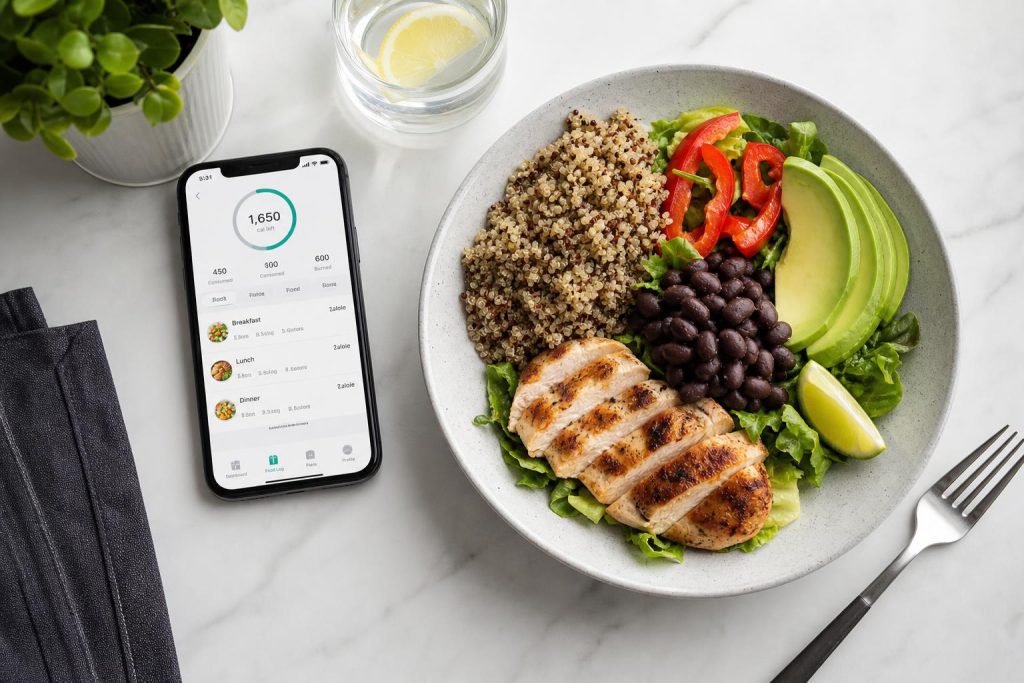
The practical implication is straightforward. Set your daily protein target first, before anything else. Every meal, no matter how small, should be anchored around a protein source. On semaglutide, where you might only comfortably eat one or two meaningful meals per day, those meals need to be dense in protein — chicken breast, eggs, Greek yogurt, cottage cheese, lean beef, fish, or a well-formulated protein shake. If you eat 600 calories in a sitting and none of it is protein, you have wasted a feeding opportunity that your suppressed appetite may not give you back later in the day.
Spreading protein intake across multiple smaller meals or snacks also matters mechanistically. Muscle protein synthesis is stimulated by the leucine content of individual meals, and there appears to be a threshold — roughly 2.5 to 3 grams of leucine per meal — needed to maximally trigger that anabolic signal. This means four or five small protein-rich meals will outperform one large protein bolus, even if total daily intake is identical. For men on semaglutide who are already eating less frequently, this suggests that every eating occasion should contain a meaningful protein source rather than saving all the protein for a single meal.
Protein Strategy in Practice: Making the Numbers Work
The most common mistake men make on semaglutide is treating protein as a background concern — something they will get around to once they feel better or once the nausea settles. That window of accommodation is precisely when the body is most aggressively catabolizing lean tissue, because caloric restriction is sharpest in the early weeks of dose escalation. This is when protecting protein intake matters most, not least.
Liquid and semi-liquid protein sources are significantly more tolerable during peak appetite suppression and gastric slowing. A well-formulated protein shake — whey isolate or casein for bioavailability and leucine density — can deliver 30 to 40 grams of protein in a few hundred calories without the volume that triggers early fullness. Greek yogurt, cottage cheese, and scrambled eggs are similarly low-volume and high-protein. Prioritizing these foods over bulkier whole foods during the adjustment phase is not cheating on nutrition — it is strategic adaptation to a physiological reality your medication creates.
Resistance training compounds the benefit of adequate protein intake in a way that cannot be replicated by either intervention alone. The precision obesity medicine framework makes clear that the combination of adequate protein and resistance training is what preserves lean mass during pharmacologically-driven weight loss — not one or the other in isolation. Even two to three sessions per week of compound resistance movements — squats, deadlifts, rows, presses — sends a powerful muscle-preservation signal that works synergistically with elevated protein intake to protect the tissue you are fighting to keep.
It is also worth contextualizing protein goals within the broader landscape of what these medications can accomplish when nutrition is optimized. confirm that weight and glycemic outcomes that were previously considered unrealistic are now achievable with these drug classes. Emerging oral GLP-1 agents like orforglipron suggest this pharmacological category will only expand. That means more men will be navigating aggressive pharmacological weight loss in the coming years, and the ones who understand protein requirements will emerge from that process with better body composition, stronger metabolic health, and a physique they can actually maintain — rather than a lighter version of themselves with less muscle and a slower metabolism.
For men not on semaglutide at all, the lesson is the same. Whether your caloric deficit comes from medication, disciplined dieting, or increased training volume, protein is the non-negotiable macronutrient during any fat loss phase. The mechanisms are identical: caloric deficit increases muscle catabolism risk, and adequate protein combined with resistance training blunts that risk. GLP-1 medication simply makes the deficit steeper and the appetite guidance less reliable, raising the stakes considerably.
The Takeaway
Semaglutide is a powerful tool for fat loss and metabolic improvement. But the medication does not know the difference between fat and muscle — your nutrition strategy does. Set your protein target at approximately 1 gram per pound of goal body weight per day, build every meal around a high-quality protein source, lean on liquid and semi-liquid proteins when appetite is suppressed, and pair your nutrition plan with consistent resistance training. That combination is what separates men who finish a course of semaglutide looking lean and strong from those who finish it simply weighing less. The number on the scale is not the whole story. Protein is what writes the rest of it.
Scientific References
-
France, Syed et al. (2024).
Tirzepatide: A Review in Type 2 Diabetes..
Drugs.
View on PubMed → -
Holst et al. (2024).
GLP-1 physiology in obesity and development of incretin-based drugs for chronic weight management..
Nature metabolism.
View on PubMed → -
Ansari, Qazi, Sajid et al. (2024).
Efficacy and Safety of Glucagon-Like Peptide-1 Receptor Agonists on Body Weight and Cardiometabolic Parameters in Individuals With Obesity and Without Diabetes: A Systematic Review and Meta-Analysis..
Endocrine practice : official journal of the American College of Endocrinology and the American Association of Clinical Endocrinologists.
View on PubMed → -
Frias, Hsia, Eyde et al. (2023).
Efficacy and safety of oral orforglipron in patients with type 2 diabetes: a multicentre, randomised, dose-response, phase 2 study..
Lancet (London, England).
View on PubMed → -
Tuccinardi, Masi, Watanabe et al. (2025).
Precision obesity medicine: A phenotype-guided framework for pharmacologic therapy across the lifespan..
Journal of endocrinological investigation.
View on PubMed →