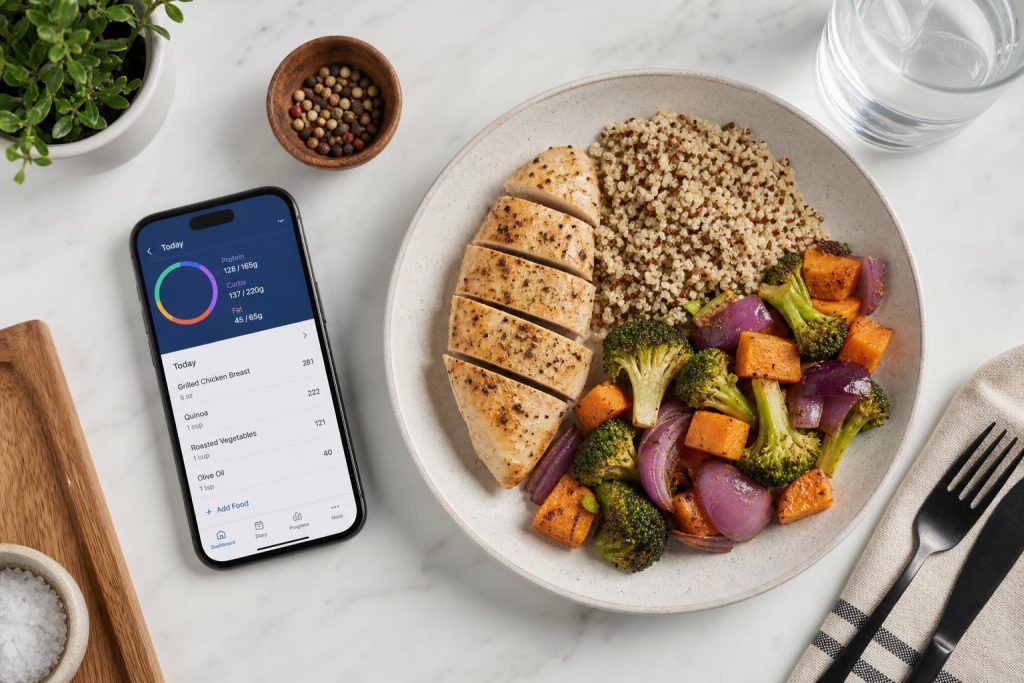
When researchers began tracking what people on semaglutide actually eat while losing weight, a troubling pattern emerged. Appetite suppression is the drug’s headline feature — but that same suppression doesn’t discriminate between calories you need and calories you don’t. Men on Ozempic often report eating far less protein than they should, not out of negligence, but because the medication is doing exactly what it’s designed to do: blunt hunger so aggressively that food becomes an afterthought. The result? Rapid weight loss that, without deliberate nutrition strategy, can strip away meaningful amounts of lean muscle mass alongside the fat you’re actually trying to lose.
This matters more than most men realize. Muscle is metabolic currency. It drives your resting metabolism, supports insulin sensitivity, protects your joints, and keeps you strong and functional as you age. Research comparing semaglutide and tirzepatide in over 41,000 adults confirmed significant weight loss with GLP-1 medications — but the composition of that weight loss depends heavily on what you do outside the pharmacy. Protein intake is the single most powerful lever you control.
Why Semaglutide Makes Getting Enough Protein Harder Than It Sounds
Semaglutide works by activating GLP-1 receptors in the gut and brain, slowing gastric emptying and suppressing appetite through multiple pathways. The clinical benefits extend well beyond the scale — a major 2025 trial published in the New England Journal of Medicine found that oral semaglutide reduced major adverse cardiovascular events by 14% compared to placebo in high-risk patients with type 2 diabetes, reinforcing that these medications offer genuine cardiometabolic protection when used appropriately. But the same mechanism that makes semaglutide so effective for appetite suppression also makes it easy to under-eat across the board — and protein is the first casualty.
Most men on Ozempic describe eating one or two small meals a day, sometimes less. Nausea, early satiety, and general disinterest in food are common, particularly during dose escalation. Real-world evidence on GLP-1 receptor agonists confirms that gastrointestinal side effects — nausea, vomiting, and reduced appetite — are among the primary reasons patients use lower doses or discontinue treatment altogether. When you’re eating 800–1,200 calories a day and feeling full from half a chicken breast, hitting an adequate protein target takes active planning, not passive eating.
The physiological stakes are real. During caloric restriction, your body increases protein breakdown to fuel gluconeogenesis and preserve organ function. Without sufficient dietary protein to counteract this, muscle tissue becomes a primary target. This is compounded by the fact that rapid weight loss — which semaglutide often produces — tends to increase the ratio of lean mass lost compared to slower, more gradual fat loss. Studies on very low-calorie diets consistently show that protein intake is the most critical variable in preserving lean body mass during aggressive caloric deficits. Ozempic doesn’t change that biology. It just makes the problem easier to overlook.
How Much Protein Do You Actually Need on Ozempic
The old RDA of 0.8 grams of protein per kilogram of body weight was never designed for men actively losing weight, lifting weights, or trying to preserve muscle. It was a minimum to prevent deficiency in sedentary individuals. For men using semaglutide, the research-backed target is considerably higher — and the range depends on your goals and activity level.
Current evidence supports a target of 1.2 to 1.6 grams of protein per kilogram of body weight per day for active men in a caloric deficit. For a 220-pound (100 kg) man, that translates to roughly 120 to 160 grams of protein daily. If you’re resistance training consistently — which you should be, for reasons discussed below — some sports nutrition researchers argue for targets closer to 1.6 to 2.2 grams per kilogram, particularly during aggressive weight loss phases. For that same 220-pound man, the upper range would be approximately 160 to 220 grams per day.
The practical challenge on Ozempic is that these numbers feel enormous when your appetite is suppressed. This is where protein density and food sequencing become critical strategies. Eating protein first at every meal — before vegetables, before any carbohydrates — ensures you prioritize it when your appetite window is open. High-protein, low-volume foods like Greek yogurt, cottage cheese, eggs, lean ground turkey, shrimp, and whey protein shakes become your best allies. A single 40-gram scoop of whey protein mixed in water delivers roughly 160 calories and 35+ grams of protein with almost no gastrointestinal burden, making it one of the most efficient tools for men who find solid food difficult during the early weeks of treatment.
Protein distribution across the day also matters. Research on muscle protein synthesis consistently shows that spreading intake across three to four meals or eating occasions — aiming for 30 to 50 grams of protein per sitting — produces better anabolic signaling than consuming the same total in one or two large meals. For Ozempic users eating smaller, less frequent meals, this means being intentional about making protein the anchor of every eating occasion, no matter how small.
It’s also worth distinguishing between men who are using semaglutide primarily for weight loss versus those managing type 2 diabetes. The original PIONEER 6 trial established cardiovascular safety for oral semaglutide in diabetic patients, and the medications have since expanded far beyond that initial indication. Regardless of why you’re taking it, the protein requirements remain the same — and for men with type 2 diabetes, preserving muscle mass has particular metabolic value given the relationship between skeletal muscle and glucose disposal.
One area that requires nuance is the emerging combination therapy landscape. A 2025 phase 3 trial of cagrilintide-semaglutide (CagriSema) in adults with obesity and type 2 diabetes showed an estimated mean body weight reduction of 13.7% over 68 weeks — a substantially larger loss than semaglutide monotherapy produces for most patients. Greater weight loss velocity means greater risk of lean mass loss, which makes hitting protein targets even more critical as these combination therapies move toward broader availability. The men who will get the best outcomes from these next-generation treatments will be the ones who treat protein as non-negotiable, not optional.
Resistance Training: The Non-Negotiable Complement to High Protein Intake
Protein alone doesn’t preserve muscle. Protein plus a mechanical stimulus to use that muscle does. This is one of the most consistent findings in exercise and nutrition science, and it applies directly to men on Ozempic who want to lose fat without sacrificing the physique and performance they’ve worked to build — or want to build for the first time.
Resistance training sends a direct anabolic signal to muscle tissue, essentially telling your body that the lean mass you carry is necessary and should be preserved even during a caloric deficit. Without that signal, high protein intake still helps, but you’re fighting an uphill battle. With it, the combination of adequate protein and consistent strength training can allow men to lose fat while maintaining — and in some cases even building — muscle mass simultaneously. This phenomenon, sometimes called body recomposition, is most achievable in men who are newer to training, carrying significant body fat, or returning to exercise after a long break. All three profiles are common among men starting GLP-1 therapy.
The practical recommendation is straightforward: lift weights at least three times per week, prioritizing compound movements like squats, deadlifts, rows, and presses that recruit large amounts of muscle tissue and drive the strongest anabolic response. You don’t need to train like a powerlifter. You need to train consistently, progressively increase the challenge over time, and fuel the effort with adequate protein. Walking, cycling, and other forms of cardio support cardiovascular health and metabolic rate, but they don’t replace the muscle-preserving signal that resistance training provides.
For men managing nausea or fatigue during semaglutide dose escalation, scaling training intensity temporarily is reasonable. A modified session at 60% effort is vastly superior to skipping the gym entirely. Maintain the habit, reduce the load when necessary, and return to full intensity as your body adjusts to the medication. Most men find that the gastrointestinal side effects of Ozempic diminish significantly after the first few weeks at a new dose.
The Takeaway
Ozempic is a powerful tool. But the outcomes it produces — in terms of body composition, metabolic health, and long-term sustainability — are shaped almost entirely by what you do around it. The medication suppresses your appetite; it doesn’t optimize your nutrition. That part is on you. Set a daily protein target between 1.2 and 1.6 grams per kilogram of bodyweight, eat protein first at every meal, use protein shakes strategically to fill gaps when solid food isn’t appealing, and never let a week go by without resistance training. The men who treat Ozempic as a metabolism reset — a period to build better habits while the drug lowers the barrier — will come out the other side leaner, stronger, and metabolically healthier. The men who let the appetite suppression do all the work, without intentional nutrition strategy, risk trading fat for muscle and ending up smaller but not necessarily better. The difference comes down to protein.
Scientific References
-
McGuire, Marx, Mulvagh et al. (2025).
Oral Semaglutide and Cardiovascular Outcomes in High-Risk Type 2 Diabetes..
The New England journal of medicine.
View on PubMed → -
Rodriguez, Goodwin Cartwright, Gratzl et al. (2024).
Semaglutide vs Tirzepatide for Weight Loss in Adults With Overweight or Obesity..
JAMA internal medicine.
View on PubMed → -
Thomsen, Mailhac, Løhde et al. (2025).
Real-world evidence on the utilization, clinical and comparative effectiveness, and adverse effects of newer GLP-1RA-based weight-loss therapies..
Diabetes, obesity & metabolism.
View on PubMed → -
Husain, Birkenfeld, Donsmark et al. (2019).
Oral Semaglutide and Cardiovascular Outcomes in Patients with Type 2 Diabetes..
The New England journal of medicine.
View on PubMed → -
Davies, Bajaj, Broholm et al. (2025).
Cagrilintide-Semaglutide in Adults with Overweight or Obesity and Type 2 Diabetes..
The New England journal of medicine.
View on PubMed →