When researchers put tirzepatide — the dual GIP/GLP-1 receptor agonist — under the microscope in a 2025 Cell Metabolism study, they found something that reframes how we should think about eating on these medications. The drug increased fat oxidation and meaningfully reduced calorie intake during an ad libitum test meal, but it didn’t eliminate the need for smart nutrition. If anything, it made food choices more consequential — because when your appetite drops and your body shifts toward burning fat for fuel, what little you do eat has to count.
GLP-1 receptor agonists like semaglutide and tirzepatide are powerful tools. But they’re not a substitute for a well-structured meal plan. They slow gastric emptying, blunt hunger signals, and improve insulin sensitivity — all of which create an ideal metabolic window. The men who get the best results are the ones who treat that window deliberately, using food to preserve muscle, support energy, and lock in long-term fat loss rather than simply eating less of whatever was already in the fridge.
The Nutritional Foundation That Actually Works on GLP-1s
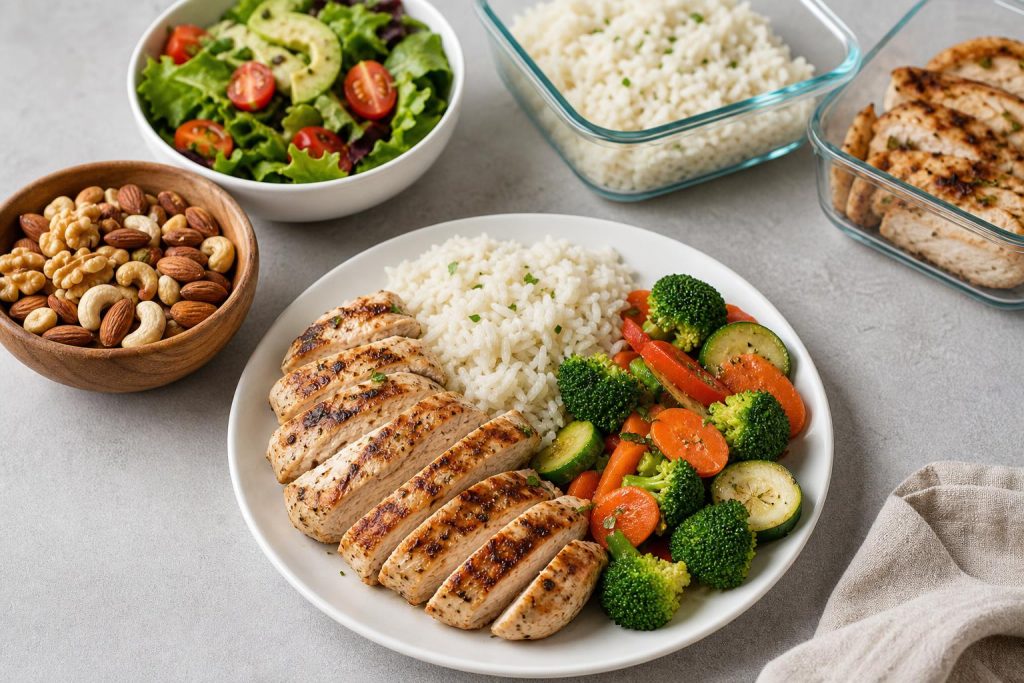
The single most important variable in a GLP-1 meal plan isn’t calories — it’s protein. When appetite suppression kicks in, the path of least resistance is to under-eat across the board. The problem is that a large share of that weight loss can come from lean muscle mass if protein intake isn’t deliberately prioritized. Men on GLP-1 medications should aim for a minimum of 1.2 to 1.6 grams of protein per kilogram of body weight daily, distributed across meals. That means every meal — even a small one — should anchor around a quality protein source: eggs, Greek yogurt, cottage cheese, chicken, salmon, lean beef, or a high-quality whey protein if appetite makes whole foods difficult.
Carbohydrates deserve more nuance than most GLP-1 content gives them. Because these medications improve insulin sensitivity and slow the rate at which food empties from the stomach, they naturally blunt post-meal blood sugar spikes. That’s an advantage — but it doesn’t mean carbohydrate quality stops mattering. Refined carbohydrates and ultra-processed foods are still calorie-dense, nutritionally empty, and more likely to cause gastrointestinal discomfort, which is already a common side effect. Complex carbohydrates — oats, sweet potatoes, legumes, quinoa, rice — provide fiber, micronutrients, and slower-digesting energy without aggravating nausea or bloating. Smaller, more frequent meals tend to work better than large ones, both for comfort and for steady energy throughout the day.
Fat intake should be moderate and strategic. High-fat meals, particularly those rich in saturated fat, slow gastric emptying even further — compounding the delay already caused by the medication. This can intensify nausea, especially in the early weeks of treatment. Prioritize unsaturated fats from sources like avocado, olive oil, nuts, and fatty fish. These also support the hormonal environment needed for muscle retention and metabolic health.
Meal Timing, Structure, and What the Research Says About Keeping Weight Off Long-Term
One of the most underappreciated challenges in GLP-1 therapy isn’t losing weight — it’s keeping it off after the medication is reduced or stopped. A 78-week clinical trial published in Clinical Nutrition found that structured dietary approaches, including intermittent total diet replacement, successfully prevented weight regain even after GLP-1 agonist withdrawal and maintained losses of more than 15 kilograms at 78 weeks. The lesson here is that the eating habits built during GLP-1 treatment determine whether the results stick. The medication creates the conditions; the meal plan creates the habit.
In practical terms, this means structuring eating windows with intention. Most men on GLP-1 medications find they do best with two to three smaller meals spaced across the day rather than three large traditional ones. A high-protein breakfast — something like scrambled eggs with smoked salmon or Greek yogurt with berries and a scoop of protein — sets the anabolic tone for the day and helps prevent the muscle loss that unstructured low-calorie eating can cause. A lunch built around lean protein, fiber-rich vegetables, and a moderate serving of complex carbohydrates keeps energy stable. Dinner can be lighter, particularly since appetite tends to be lowest in the evening for many GLP-1 users.
Hydration is non-negotiable. The appetite suppression from GLP-1 medications makes it easy to confuse dehydration with satiety. Men should be drinking a minimum of two to three liters of water daily, with electrolytes added if training intensity is high or if gastrointestinal side effects are present. This isn’t a minor point — dehydration directly impairs metabolism, cognitive function, and exercise performance.
Exercise also has a direct and measurable impact on the GLP-1 system itself. A 2026 randomized controlled trial published in Obesity found that one year of moderate-to-vigorous exercise increased late-phase postprandial GLP-1 secretion by 37% compared to baseline, and this increase was 25% greater than the group that maintained usual activity. In other words, structured exercise doesn’t just complement GLP-1 therapy — it amplifies the body’s own GLP-1 response, creating a compounding effect on appetite control and metabolic regulation. Meanwhile, a separate secondary analysis of the same trial confirmed that exercise combined with GLP-1 receptor agonist treatment led to clinically meaningful improvements in cardiorespiratory fitness and physical functional performance, while pharmacotherapy alone did not improve physical fitness. Eating to support training — adequate carbohydrates around workouts, sufficient protein for recovery — is as important as any other nutritional variable.
The Takeaway
A GLP-1 medication changes your appetite. A GLP-1 meal plan changes your physiology. The men who get the most from these treatments aren’t just eating less — they’re eating with purpose. High-quality protein at every meal, complex carbohydrates timed around activity, moderate healthy fats, consistent hydration, and structured eating windows that build lasting habits rather than temporary restriction. The medication does a significant amount of the heavy lifting. Your job is to make sure what you eat during that window builds the body you’re actually after — lean, strong, and metabolically resilient — not just a lighter version of the one you started with.
Scientific References
-
Ravussin, Sanchez-Delgado, Martin et al. (2025).
Tirzepatide did not impact metabolic adaptation in people with obesity, but increased fat oxidation..
Cell metabolism.
View on PubMed → -
Holt, Sandsdal, Byberg et al. (2026).
One Year of Exercise After Weight Loss Increases Postprandial GLP-1 Secretion in Contrast to Usual Activity or GLP-1 Receptor Agonist Treatment..
Obesity (Silver Spring, Md.).
View on PubMed → -
Jensen, Fiorenza, Juhl et al. (2026).
Physical Fitness with Exercise and GLP-1 Receptor Agonist Treatment Alone or Combined After Diet-Induced Weight Loss: A Secondary Analysis of a Randomized Controlled Trial in Adults with Obesity..
Sports medicine (Auckland, N.Z.).
View on PubMed → -
Toledo, Li, Wang et al. (2025).
Pancreatic cancer-related diabetes and type 2 diabetes differ in multiple aspects of glucose homeostasis..
Diabetologia.
View on PubMed → -
Brosnahan, Hankey, Leeds et al. (2025).
Diet strategies for maintaining substantial therapeutic weight loss: 78-week mixed methods randomised trial..
Clinical nutrition (Edinburgh, Scotland).
View on PubMed →