When researchers began tracking what actually happens to men on GLP-1 receptor agonists like semaglutide and tirzepatide, one pattern emerged that surprised almost everyone: the medication did exactly what it promised in terms of appetite suppression, but the dietary choices men made within that suppressed appetite window determined whether they lost fat and preserved muscle — or simply lost weight the wrong way. The drug, it turns out, is only half the equation. The meal plan is the other half.
This matters whether you are currently on a GLP-1 medication, considering one, or simply optimizing your nutrition for fat loss through traditional diet and training. The physiological principles that govern how your body responds to reduced caloric intake, protein timing, and food quality are universal. GLP-1 medications amplify those principles — they do not replace them.
What GLP-1 Medications Actually Do to Your Eating Patterns
GLP-1 receptor agonists work by mimicking the body’s natural glucagon-like peptide-1 hormone, which is released from the gut after eating. This signals satiety to the brain, slows gastric emptying, and — critically — influences insulin secretion in a glucose-dependent manner. Research on insulin and glucose management in metabolic disease has long established that managing postprandial glucose spikes is central to sustainable metabolic health, and GLP-1 medications address this directly by slowing how quickly food leaves the stomach and enters the bloodstream.
The practical result for most men is that meals feel more satisfying, portions shrink naturally, and the drive to snack between meals diminishes. But here is where things get complicated. When overall food volume drops significantly, the risk of protein deficiency, micronutrient gaps, and lean muscle loss increases sharply. Men who eat less but eat poorly — relying on soft, processed foods that go down easily when appetite is low — often find themselves losing muscle alongside fat, which tanks their metabolism and undermines long-term results. A structured GLP-1 meal planner is specifically designed to prevent this outcome by making every calorie count.
The same principle applies to anyone in an aggressive caloric deficit through traditional dieting. Less food means less margin for error. Your meal plan has to be built with intention.
Building a GLP-1 Meal Plan That Actually Works
The foundation of any effective meal plan in this context is protein — and the target is higher than most men expect. Research consistently supports a minimum of 1.6 grams of protein per kilogram of body weight for men in a caloric deficit who want to preserve lean mass, with many sports nutrition scientists recommending up to 2.2 grams per kilogram during aggressive fat loss phases. For a 200-pound man, that translates to roughly 145 to 200 grams of protein daily. When appetite is suppressed by a GLP-1 medication or simply by disciplined dieting, hitting this number requires deliberate planning rather than intuitive eating.
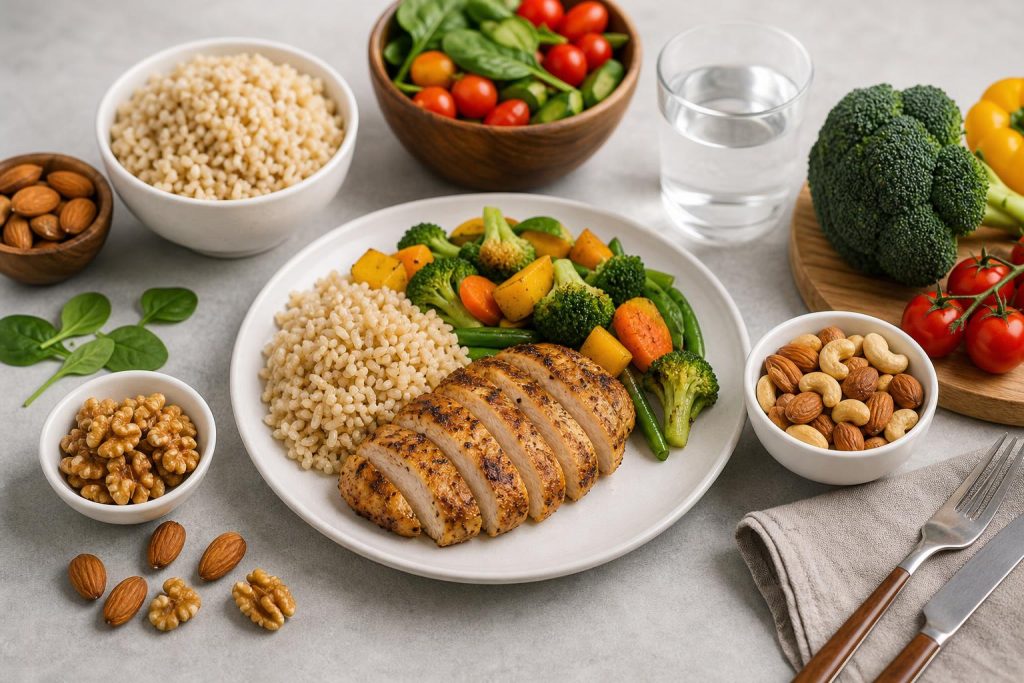
Practically, this means anchoring every meal around a dense protein source: eggs, Greek yogurt, cottage cheese, chicken breast, lean beef, salmon, tuna, or whey protein. These sources are not just high in protein — they are highly satiating, which works synergistically with the appetite-suppressing effect of GLP-1 medications rather than against it. Men on semaglutide or tirzepatide often find that a meal built around 40 to 50 grams of protein keeps them satisfied for four to six hours with minimal effort.
Carbohydrate selection becomes equally important in this framework. The goal is to avoid foods that cause rapid glucose spikes followed by crashes — not because carbohydrates are inherently problematic, but because glycemic volatility drives hunger, fatigue, and cravings that can undermine even medication-assisted appetite control. Prioritizing complex carbohydrates — oats, sweet potatoes, legumes, brown rice, and fruit — over refined grains and added sugars keeps blood glucose stable and provides fiber that supports gut health and satiety. A general target of 30 to 40 grams of fiber daily is appropriate for most men and well above what the average American currently consumes.
Healthy fats round out the macronutrient picture. Avocados, olive oil, nuts, seeds, and fatty fish provide essential fatty acids, support hormone production — including testosterone — and slow gastric emptying further, which enhances the satiety effect. Men on GLP-1 medications should be cautious with very high-fat meals, however, as the combination of slowed gastric emptying from both the medication and dietary fat can occasionally cause nausea or discomfort. Moderate fat portions of 15 to 25 grams per meal tend to be well tolerated and metabolically beneficial.
In terms of meal frequency, a two-to-three-meal structure tends to work better than traditional five-or-six-meal approaches for men on GLP-1 therapy, simply because appetite signals are genuinely suppressed and forcing extra meals can lead to discomfort. For men dieting without medication, the research on meal frequency is relatively neutral — what matters far more is total daily protein and calories. Whether you eat twice a day or five times, the macronutrient targets remain the anchor.
Hydration deserves explicit mention here. GLP-1 medications and aggressive caloric restriction both increase the risk of dehydration, partly because reduced food intake means reduced water intake from food sources, and partly because the kidneys excrete more water during fat loss. Targeting a minimum of three liters of water daily — and more if you are training — is a straightforward intervention with meaningful impact on energy, cognitive function, and muscle performance. Many men who report fatigue or brain fog on GLP-1 medications are simply under-hydrated.
Micronutrients also warrant attention. When caloric intake drops, so does the volume of vitamins and minerals consumed. A high-quality multivitamin provides reasonable insurance, but food-first strategies — emphasizing leafy greens, colorful vegetables, and organ meats or their substitutes — are superior. Magnesium, zinc, and vitamin D are particularly important for men focused on body composition, as deficiencies in these nutrients are associated with impaired testosterone production, poor sleep quality, and reduced insulin sensitivity.
For men who train — and ideally, all men in any fat loss program should be resistance training — meal timing around workouts remains relevant. Consuming 30 to 50 grams of protein within two hours of resistance training supports muscle protein synthesis regardless of whether you are on a GLP-1 medication or not. If appetite suppression makes a full post-workout meal difficult, a whey protein shake is an effective and easily digested bridge that keeps muscle preservation on track without requiring a large meal.
The Takeaway
A GLP-1 meal planner is not a rigid script — it is a strategic framework that ensures reduced caloric intake does not come at the cost of muscle, micronutrients, or metabolic function. Whether you are leveraging a GLP-1 medication to reshape your body or pursuing fat loss through disciplined diet and training alone, the principles are the same: prioritize protein at every meal, choose carbohydrates that stabilize blood glucose, include healthy fats in moderate amounts, and stay aggressively hydrated. The medication may change the appetite signals your body sends, but it does not change the nutritional requirements your body has. Build your plan around those requirements, and the results will follow.
Scientific References
-
Silver, Ramaiya, Andrew et al. (2018).
EADSG Guidelines: Insulin Therapy in Diabetes..
Diabetes therapy : research, treatment and education of diabetes and related disorders.
View on PubMed →