When researchers gave tirzepatide — a dual GIP and GLP-1 receptor agonist — to people with obesity in a controlled clinical trial, something interesting happened beyond the expected weight loss: fat oxidation increased. The 2025 Cell Metabolism study by Ravussin and colleagues found that tirzepatide shifted the body’s fuel preference toward burning fat, while also reducing appetite and calorie intake during an ad libitum test meal. That’s a meaningful combination — less hunger, fewer calories consumed, and a metabolism that’s preferentially torching fat. But here’s what the researchers didn’t spell out for you: none of that works as well as it could without the right nutrition strategy behind it.
GLP-1 receptor agonists like semaglutide and tirzepatide are genuinely powerful tools. They suppress appetite, slow gastric emptying, and improve insulin sensitivity. But they are not a replacement for a smart meal plan — they are a force multiplier for one. If you’re eating processed food in smaller quantities, you’re wasting the pharmacological advantage. The men getting the best results on GLP-1 medications are the ones pairing the drug with a deliberate, protein-forward eating strategy designed to preserve muscle, sustain energy, and make every reduced calorie count.
What Your Body Needs While on a GLP-1
The primary nutritional challenge on a GLP-1 medication isn’t willpower — it’s adequacy. When your appetite is suppressed to the point where 1,400 to 1,800 calories feels like a stretch, the nutritional quality of every bite becomes critical. Protein is the non-negotiable anchor. Men on GLP-1 therapy should be targeting a minimum of 1.6 grams of protein per kilogram of body weight daily — and given the muscle loss risk associated with rapid weight loss, erring toward 2 grams per kilogram is a defensible approach. That means prioritizing lean meats, eggs, Greek yogurt, cottage cheese, fish, and quality protein shakes when appetite makes whole food meals difficult.
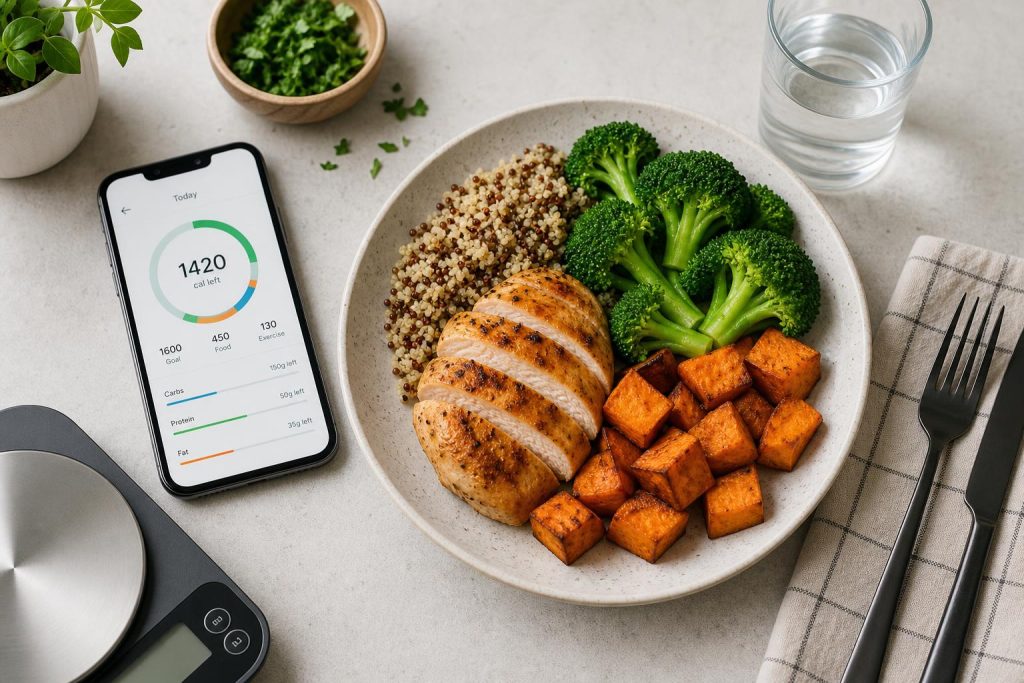
Beyond protein, fiber density matters more than most people realize. Because GLP-1 agonists already slow gastric emptying, high-fiber foods can compound satiety — which sounds like a benefit but can backfire if it prevents you from hitting your protein and micronutrient targets. The practical strategy is to build meals around protein first, add non-starchy vegetables second, and let complex carbohydrates and healthy fats fill the remaining caloric space. Think grilled salmon with roasted broccoli and a small portion of quinoa, or ground turkey with leafy greens and avocado. These aren’t exotic combinations — they’re just intentional ones.
Hydration is another underappreciated variable. Nausea — one of the most common GLP-1 side effects — is worsened by dehydration, and many men on these medications inadvertently under-consume fluids because their appetite suppression bleeds into reduced thirst signaling. Aim for at least 2.5 to 3 liters of water daily, and consider electrolyte supplementation if you’re also training.
Why Exercise Is Not Optional — And What the Research Actually Shows
Here is where many GLP-1 users leave serious results on the table. A 2026 randomized controlled trial published in Sports Medicine examined what happened when adults with obesity combined GLP-1 receptor agonist treatment with a structured exercise program after diet-induced weight loss. The findings were striking: liraglutide alone did not improve physical fitness. Exercise alone did. And the combination of exercise plus GLP-1 treatment produced the best outcomes — including an 8.6% improvement in stair climb performance and a meaningful increase in peak oxygen consumption. Relative muscle strength was also better preserved in the exercise groups, a critical point for long-term metabolic health.
The exercise component also has a direct hormonal benefit that most people haven’t heard about. A 2026 study in Obesity by Holt and colleagues found that one year of moderate-to-vigorous exercise increased late-phase postprandial GLP-1 secretion by 37% compared to baseline — and that increase was 25% greater than the usual activity control group. In other words, consistent exercise trains your gut to produce more of its own GLP-1 after meals. For men who eventually taper off GLP-1 medications, this endogenous response may be one of the most powerful tools for sustaining weight loss. For men not on medications at all, it’s an underrated reason to prioritize cardio alongside lifting.
Practically speaking, the exercise prescription that showed benefits in these trials was moderate-to-vigorous intensity, roughly two to three sessions per week, with meaningful cardiovascular challenge. Resistance training should run parallel to this — not as a replacement — specifically to preserve the lean mass that caloric restriction tends to erode. The combination of progressive resistance training and aerobic conditioning, sitting on top of a high-protein meal plan, is the structural framework that makes GLP-1 therapy work the way it’s supposed to.
Making Weight Loss Last Beyond the Medication
One of the most important conversations in obesity medicine right now is what happens after GLP-1 therapy ends. Weight regain is a documented risk — but it’s not inevitable. A 78-week clinical nutrition trial by Brosnahan and colleagues published in 2025 demonstrated that structured dietary strategies — specifically a 5:2 total diet replacement approach — could maintain weight losses greater than 15 kilograms even after GLP-1 agonist withdrawal, sustaining those results up to 78 weeks. The takeaway isn’t that you need to do intermittent fasting forever — it’s that having a deliberate, sustainable dietary structure in place is what separates men who keep the weight off from those who regain it.
Whether you’re currently on a GLP-1 medication, considering one, or pursuing fat loss through diet and exercise alone, the nutritional fundamentals don’t change. Prioritize protein at every meal. Eat foods that are dense in nutrients, not just low in calories. Build an exercise habit that your gut and your muscles will both thank you for. And have a dietary strategy robust enough to outlast any single intervention — pharmaceutical or otherwise.
The Takeaway
GLP-1 medications can accelerate fat loss and shift your metabolism in meaningful ways, but they perform best when they’re amplifying an already intelligent nutrition and training strategy — not substituting for one. The research is clear: exercise builds fitness and boosts your body’s own GLP-1 response, high-protein eating preserves the muscle you’re working to keep, and structured dietary habits are what make results permanent. Build the foundation first. Let everything else support it.
Scientific References
-
Ravussin, Sanchez-Delgado, Martin et al. (2025).
Tirzepatide did not impact metabolic adaptation in people with obesity, but increased fat oxidation..
Cell metabolism.
View on PubMed → -
Holt, Sandsdal, Byberg et al. (2026).
One Year of Exercise After Weight Loss Increases Postprandial GLP-1 Secretion in Contrast to Usual Activity or GLP-1 Receptor Agonist Treatment..
Obesity (Silver Spring, Md.).
View on PubMed → -
Jensen, Fiorenza, Juhl et al. (2026).
Physical Fitness with Exercise and GLP-1 Receptor Agonist Treatment Alone or Combined After Diet-Induced Weight Loss: A Secondary Analysis of a Randomized Controlled Trial in Adults with Obesity..
Sports medicine (Auckland, N.Z.).
View on PubMed → -
Toledo, Li, Wang et al. (2025).
Pancreatic cancer-related diabetes and type 2 diabetes differ in multiple aspects of glucose homeostasis..
Diabetologia.
View on PubMed → -
Brosnahan, Hankey, Leeds et al. (2025).
Diet strategies for maintaining substantial therapeutic weight loss: 78-week mixed methods randomised trial..
Clinical nutrition (Edinburgh, Scotland).
View on PubMed →