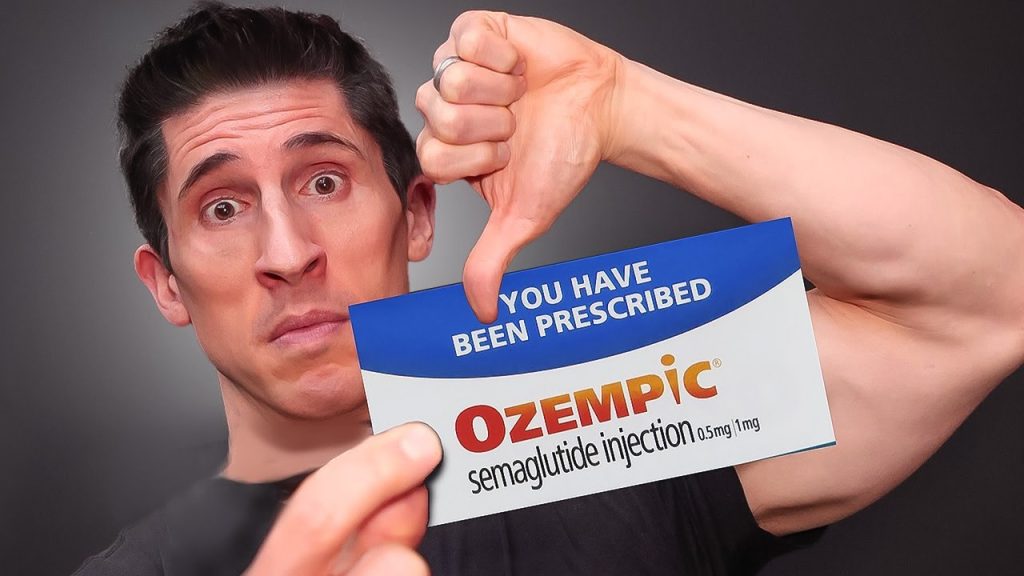
Video by AthleanX on YouTube
Most men hear “GLP-1” and immediately think of Ozempic or Wegovy. But glucagon-like peptide-1 is not a drug — it’s a hormone your gut already produces, one that regulates appetite, slows gastric emptying, improves insulin sensitivity, and signals your brain that you’re full. The medications simply amplify what your body is already trying to do. The more interesting question is: can you activate those same pathways through diet and lifestyle alone? The research says yes — and the results can be significant.
GLP-1 is released from L-cells in your small intestine in response to food, particularly protein and fermentable fiber. It suppresses appetite, blunts the post-meal glucose spike, and enhances fat oxidation. Research on tirzepatide — a dual GLP-1 and GIP receptor agonist — confirmed that this class of compounds increases fat oxidation and reduces ad libitum calorie intake, giving us a clear blueprint for what we’re trying to replicate naturally: less hunger, more fat burning, better metabolic efficiency. You don’t need a prescription to start moving those levers.
What to Eat to Naturally Boost GLP-1
The most direct dietary trigger for endogenous GLP-1 release is protein. High-protein meals — particularly those built around eggs, lean beef, chicken, fish, and Greek yogurt — stimulate GLP-1 secretion more robustly than carbohydrates or fat alone. Aiming for 35–40 grams of protein per meal is a practical target that supports both satiety and muscle retention during a calorie deficit. This isn’t just about hunger — it’s about keeping your body composition intact while the scale moves.
Fermentable fiber is the second major lever. Foods like oats, lentils, chickpeas, Jerusalem artichokes, and cooked-then-cooled potatoes feed the gut bacteria that produce short-chain fatty acids — compounds that directly stimulate L-cells to release more GLP-1. Aim for 30–40 grams of total fiber daily, with emphasis on soluble and prebiotic sources. Pair your protein anchor with a fiber-rich vegetable or legume at most meals and you’re stacking GLP-1 stimuli in a meaningful way.
Healthy fats also play a role. Olive oil, avocado, and fatty fish trigger GLP-1 via fat-sensing receptors in the gut. These aren’t foods to avoid on a fat-loss plan — they’re tools. A Mediterranean-style eating pattern, rich in olive oil, vegetables, legumes, fish, and lean protein, consistently outperforms low-fat diets for both GLP-1 activity and long-term metabolic health. That guidance applies here directly.
What suppresses GLP-1 is equally important to understand. Ultra-processed foods, refined carbohydrates, and high-fructose diets blunt GLP-1 response and accelerate gastric emptying — the opposite of what you want. Liquid calories are particularly problematic: they pass through the gut too quickly to trigger meaningful L-cell activation. If you’re eating in a way that keeps you constantly hungry two hours after a meal, the structure of your diet — not your willpower — is the problem.
Training, Weight Loss, and the GLP-1 Connection
Exercise independently increases GLP-1 sensitivity and improves the hormonal environment that supports fat oxidation. But there’s a more practical reason to prioritize structured training on a GLP-1 diet plan: preserving muscle. When you lose weight through caloric restriction alone — whether aided by medication or not — a significant portion of that weight can come from lean mass. That’s a metabolic problem that compounds over time, slowing your resting metabolic rate and making long-term maintenance harder.
A randomized controlled trial found that structured exercise significantly improved cardiorespiratory fitness and preserved relative muscle strength during weight loss maintenance, while pharmacotherapy alone did not produce the same physical fitness benefits. This is a critical finding for men using any dietary strategy — including a natural GLP-1 protocol. The diet creates the calorie deficit and hormonal environment. The training preserves and builds the lean mass that determines how you look and perform at your new weight.
Two to three sessions of resistance training per week, combined with 150 minutes of moderate-intensity cardio, is the minimum effective dose for most men. Progressive overload — gradually increasing the challenge — matters more than the specific exercises chosen. Compound lifts like squats, deadlifts, rows, and presses recruit the most muscle mass and produce the strongest anabolic and metabolic responses.
The weight loss itself also carries benefits that extend far beyond aesthetics. Clinical research found that an 8-week low-calorie diet-induced weight loss in men with obesity increased sperm concentration 1.49-fold and sperm count 1.41-fold — improvements that were maintained long-term in men who sustained their weight loss through exercise or GLP-1 analogue treatment. Metabolic health improvements from fat loss ripple across virtually every system in the male body, including hormonal and reproductive function.
Putting It Together: A Practical GLP-1 Diet Framework
The structure of a natural GLP-1 diet plan is straightforward in principle, even if it requires consistency in practice. Build each meal around a high-protein anchor — at least 35 grams. Add a substantial volume of vegetables and at least one fiber-rich source. Use healthy fats as flavor and satiety enhancers, not as the centerpiece. Eat slowly: GLP-1 release is partially driven by mechanical gut stimulation, and fast eating bypasses the satiety signaling that follows a properly paced meal.
Meal timing also matters. Compressing your eating window to 8–10 hours — a moderate form of time-restricted eating — allows GLP-1 and insulin levels to normalize between meals rather than staying chronically elevated. This isn’t about suffering through hunger; it’s about creating the hormonal rhythm your metabolic system is designed to operate on. Black coffee and plain tea are fine during fasted periods and may modestly enhance fat oxidation.
Sleep is a non-negotiable part of this protocol. Chronic short sleep elevates ghrelin, suppresses GLP-1 and leptin, and drives calorie intake up by 300–500 calories per day in controlled studies. Seven to nine hours of quality sleep is not a lifestyle luxury — it’s a metabolic intervention.
The Takeaway
GLP-1 medications work because they amplify a hormonal system your body already has. A well-designed diet — built on protein, fiber, healthy fats, and real food — activates that same system naturally. Pair it with structured resistance training and adequate sleep, and you’re not missing out on the medication. You’re building the foundation that makes any approach to fat loss sustainable. Whether you’re on a GLP-1 drug, coming off one, or never plan to use one, this is the metabolic framework that actually works long term.
Scientific References
-
Garvey, Mechanick, Brett et al. (2016).
AMERICAN ASSOCIATION OF CLINICAL ENDOCRINOLOGISTS AND AMERICAN COLLEGE OF ENDOCRINOLOGY COMPREHENSIVE CLINICAL PRACTICE GUIDELINES FOR MEDICAL CARE OF PATIENTS WITH OBESITY..
Endocrine practice : official journal of the American College of Endocrinology and the American Association of Clinical Endocrinologists.
View on PubMed → -
Ravussin, Sanchez-Delgado, Martin et al. (2025).
Tirzepatide did not impact metabolic adaptation in people with obesity, but increased fat oxidation..
Cell metabolism.
View on PubMed → -
Andersen, Juhl, Kjøller et al. (2022).
Sperm count is increased by diet-induced weight loss and maintained by exercise or GLP-1 analogue treatment: a randomized controlled trial..
Human reproduction (Oxford, England).
View on PubMed → -
Jensen, Fiorenza, Juhl et al. (2026).
Physical Fitness with Exercise and GLP-1 Receptor Agonist Treatment Alone or Combined After Diet-Induced Weight Loss: A Secondary Analysis of a Randomized Controlled Trial in Adults with Obesity..
Sports medicine (Auckland, N.Z.).
View on PubMed → -
Martin, Carmichael, Carnell et al. (2025).
Tirzepatide on ingestive behavior in adults with overweight or obesity: a randomized 6-week phase 1 trial..
Nature medicine.
View on PubMed →