Tirzepatide doesn’t just suppress appetite — it fundamentally changes how your body burns fuel. Research published in Cell Metabolism in 2025 found that people using tirzepatide showed increased fat oxidation and meaningful reductions in calorie intake during ad libitum test meals compared to placebo. In plain terms: the medication shifts your metabolism toward burning more fat while simultaneously making it easier to eat less. That’s a powerful combination — but only if your meal plan is built to take advantage of it.
Whether you’re on tirzepatide, considering it, or simply looking to optimize fat loss through smart nutrition, the principles here apply. The drug changes the context, not the fundamentals. Protein still matters. Whole foods still win. And structured eating still beats winging it every time.
How Tirzepatide Changes the Way You Should Think About Eating
Tirzepatide works by activating both GIP and GLP-1 receptors, a dual mechanism that goes beyond appetite suppression alone. The 2025 Ravussin et al. study noted a significant decrease in respiratory exchange ratio in treated subjects — a direct indicator that the body is oxidizing more fat relative to carbohydrates. That means your metabolic environment, while on this medication, is primed for fat loss in a way that pure calorie restriction typically isn’t.
The practical implication is this: you don’t need to fight your hunger the same way anymore. Many men on tirzepatide report eating substantially less without trying. The risk isn’t overeating — it’s under-eating to the point where muscle tissue becomes collateral damage. When calories drop dramatically, your body will cannibalize lean mass alongside fat unless protein intake is deliberately prioritized. Aim for at least 1.2 to 1.6 grams of protein per kilogram of body weight daily. For a 200-pound man, that’s roughly 110 to 145 grams of protein every single day, even on the days when food feels like the last thing on your mind.
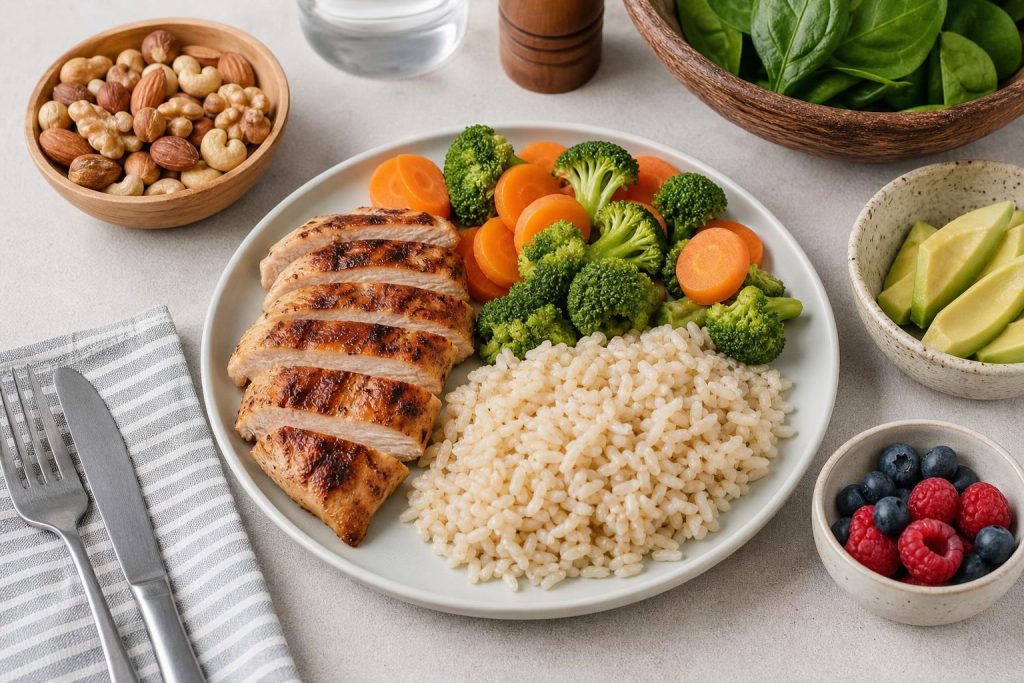
Structure your meals around protein anchors — eggs, Greek yogurt, cottage cheese, chicken, salmon, lean beef, or legumes — and build the rest of the plate around vegetables and a moderate amount of complex carbohydrates. This isn’t about following a rigid macro formula. It’s about making sure every meal you do eat is doing real work: preserving muscle, supporting recovery, and keeping micronutrient gaps from widening as total food volume drops.
Building a Practical Tirzepatide Meal Plan
Given the appetite suppression most men experience, two to three well-composed meals per day tends to work better than five or six smaller ones. Forcing frequent eating when hunger signals are blunted often leads to nausea and resistance to the medication’s effects. Instead, let hunger guide your meal timing loosely, but set a daily protein target as a non-negotiable anchor.
A reasonable daily structure might look like a high-protein breakfast — three eggs with smoked salmon and a side of fruit — followed by a midday meal built around lean protein, a large serving of vegetables, and a serving of whole grains like quinoa or brown rice. Dinner can be lighter: a palm-sized portion of protein, roasted vegetables, and a healthy fat source like avocado or olive oil. If appetite allows a snack, Greek yogurt or a small handful of mixed nuts fills nutritional gaps without taxing the digestive system.
Hydration deserves extra attention here. Reduced food intake means reduced water from food sources. Aim for at least two to three liters of water daily, and consider electrolyte support — particularly sodium, potassium, and magnesium — especially in the early weeks of treatment when gastrointestinal adaptation is underway.
Alcohol and ultra-processed foods aren’t just empty calories on tirzepatide — they’re actively counterproductive. Alcohol impairs fat oxidation, the exact metabolic advantage the medication is working to create. Processed foods spike insulin and inflammation without delivering the satiety signals that whole foods trigger, making it easier to accidentally overshoot calories on the foods that do the least good.
The Takeaway
Tirzepatide gives you a genuine metabolic edge — increased fat burning, reduced hunger, and a body more primed for body composition change than calorie restriction alone can achieve. But the meal plan still has to do its job. Prioritize protein aggressively, build meals around whole foods, stay hydrated, and let the medication work with your nutrition rather than in spite of it. The science is clear on the mechanism. The results depend on what you put on the plate.
Scientific References
-
Ravussin, Sanchez-Delgado, Martin et al. (2025).
Tirzepatide did not impact metabolic adaptation in people with obesity, but increased fat oxidation..
Cell metabolism.
View on PubMed →