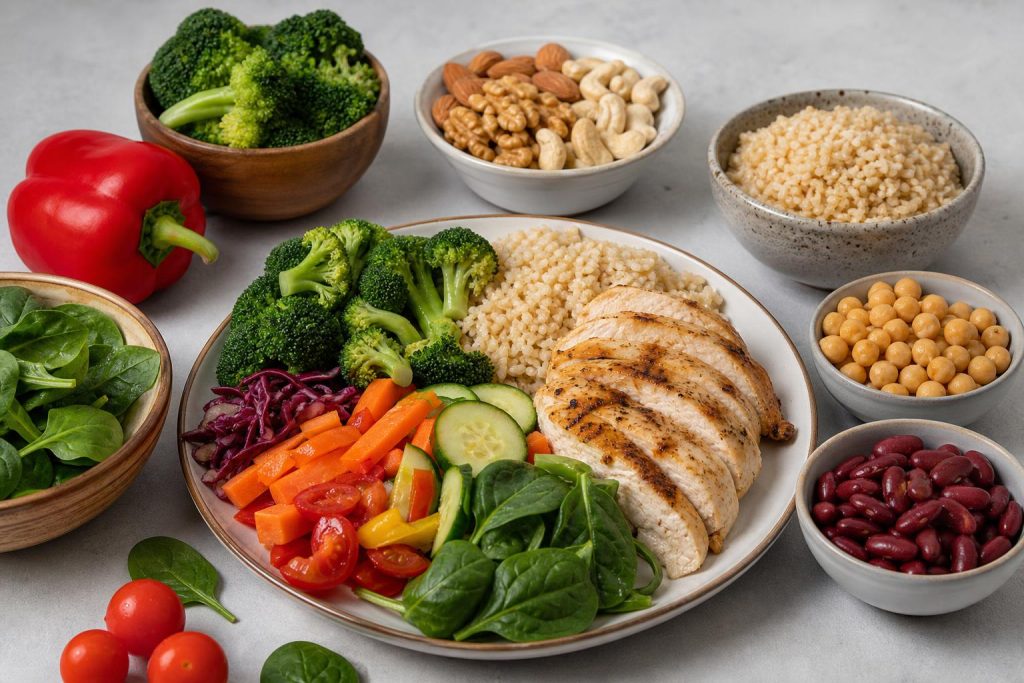
Ozempic doesn’t do the work alone. That’s the part most men miss when they start semaglutide and expect the medication to handle everything while they coast on the same eating habits that got them here. The drug suppresses appetite through GLP-1 receptor activation, yes — but what you put on your plate while your hunger is blunted determines whether you lose fat and keep muscle, or simply eat less of the wrong things and end up weaker, slower, and metabolically worse off than before you started.
The clinical trials that put semaglutide on the map — including the STEP-HFpEF trial reviewed in a 2026 condensed scientific review in Drugs in Context — demonstrated improvements in symptoms, functional capacity, and inflammatory biomarkers. But those results didn’t happen in a vacuum. They happened alongside real behavioral change. Nutrition is the lever you control. The medication just makes it easier to pull.
Why What You Eat Matters More on Ozempic, Not Less
Here’s the paradox: Ozempic reduces appetite so effectively that many men simply eat less without thinking about what they’re eating. They lose weight, feel encouraged, and assume the job is done. But appetite suppression without nutritional strategy is a trap. When caloric intake drops sharply without adequate protein, your body doesn’t just burn fat — it cannibalizes muscle. For men over 35, that’s a trade you cannot afford to make.
The mechanism matters here. GLP-1 receptor agonists like semaglutide slow gastric emptying, which means food stays in your stomach longer. That’s why you feel full faster and stay full longer. It also means every meal you do eat carries proportionally more weight — nutritionally and metabolically. A small, protein-poor snack has the same staying power as a balanced meal in terms of satiety signaling, but an entirely different impact on your body composition, energy, and long-term metabolic function.
Research from a 2025 pilot study published in Frontiers in Clinical Diabetes and Healthcare examining oral semaglutide in Japanese patients with type 2 diabetes found that timing — specifically the window between taking the medication and eating breakfast — was a clinically meaningful predictor of treatment effectiveness. This reinforces a fundamental point: how and when you eat interacts directly with how well the medication performs. Ozempic isn’t independent of your dietary behavior. It works in concert with it.
The practical upshot is straightforward. Prioritize protein at every meal — targeting a minimum of 30 to 40 grams per sitting. Lean animal proteins like chicken breast, eggs, salmon, Greek yogurt, and lean beef are ideal because they’re nutrient-dense, satiating, and anabolic. When your overall intake is lower due to suppressed appetite, protein cannot be an afterthought. It has to anchor every plate. For men doing any resistance training while on Ozempic — which you should be — the target is at least 0.7 to 1 gram of protein per pound of body weight daily.
Fiber is your second priority, both for gut health and for the glycemic control that complements GLP-1 therapy. Non-starchy vegetables — broccoli, spinach, zucchini, asparagus — contribute volume and micronutrients without meaningful caloric load. Legumes, oats, and berries add soluble fiber that feeds your gut microbiome and blunts post-meal glucose spikes. What you want to avoid is the opposite end of the spectrum: ultra-processed foods, refined carbohydrates, and high-fat fast food that spike blood sugar quickly, drive inflammation, and work against the metabolic improvements semaglutide is trying to create.
The Foods That Work With the Medication — and the Ones That Fight It
Ozempic reduces inflammation. A 2026 review in Drugs in Context highlighted that GLP-1 receptor agonists lower inflammatory markers like CRP, reduce epicardial adipose tissue — the toxic fat surrounding the heart — and improve cardiac function in patients with obesity-related heart failure. These are not trivial effects. But chronic dietary inflammation from seed oils, processed sugar, alcohol, and refined grains can blunt or outright counteract this benefit.
Alcohol deserves specific attention. That same 2025 semaglutide study found that current alcohol consumption was negatively associated with achieving blood sugar targets in patients switching to oral semaglutide. Alcohol interferes with glucose metabolism, disrupts sleep quality, and drives caloric surplus without nutritional return — three strikes against a man trying to optimize his results on Ozempic. Many men on semaglutide also report lower alcohol tolerance as a side effect. That’s your body telling you something.
Fatty fish — salmon, mackerel, sardines — deserve a prominent place in your rotation. The omega-3 fatty acids they provide reduce systemic inflammation, support cardiovascular function, and have been independently associated with improved metabolic markers. Pair them with complex carbohydrates like sweet potato, quinoa, or legumes for sustained energy without glucose volatility. This isn’t a ketogenic prescription or a low-carb mandate — it’s a nutrient-density framework. Carbohydrates are not the enemy on Ozempic. The quality and source of those carbohydrates is what matters.
Nausea is a real barrier for men in the early weeks of Ozempic, particularly during dose titration. When nausea is present, the instinct is to eat whatever feels tolerable — which often means crackers, toast, or other low-protein, high-refined-carb options. A smarter strategy is to eat smaller portions more frequently, keep meals bland and low-fat during the adjustment phase (high-fat meals worsen nausea by further slowing gastric emptying), and stay aggressively hydrated. As tolerated, reintroduce protein-first meals. Bone broth, soft-cooked eggs, and cottage cheese tend to be well-tolerated options during the adaptation window.
Hydration is chronically underestimated in this context. Reduced food intake means reduced water from food sources. Combined with increased urinary output common among men with any metabolic improvement, dehydration is a real and frequent problem. Aim for a minimum of 90 to 100 ounces of water daily, and consider electrolytes — particularly sodium, potassium, and magnesium — especially if you are physically active. Constipation is another common complaint on Ozempic, and adequate fiber plus hydration is the first-line fix before reaching for anything else.
A 2026 discrete-choice experiment published in Diabetes, Obesity & Metabolism found that among adults with overweight or obesity, weight-loss efficacy and cardiovascular risk reduction were the top priorities when choosing obesity medications. Men on Ozempic are motivated. What they often lack is a clear nutritional framework to match that motivation. The irony is that the medication makes it easier to eat less, but the discipline of eating well — protein-forward, anti-inflammatory, fiber-rich — still has to come from you.
The Takeaway
Ozempic is a powerful tool. It quiets hunger, improves metabolic signaling, reduces inflammation, and in the right patient, delivers meaningful cardiovascular protection. But it cannot decide what goes on your fork. The men who get the best results on semaglutide are not the ones who eat whatever they want in smaller portions — they’re the ones who treat the medication as a window of opportunity to build better dietary habits that last. Lead with protein. Prioritize anti-inflammatory whole foods. Minimize alcohol and ultra-processed junk. Time your meals thoughtfully relative to your dose. Stay hydrated. Lift weights. The medication gives you the edge. The nutrition plan determines what you do with it.
Scientific References
-
Roy, Parent, Ducharme et al. (2026).
GLP1 receptor agonists in heart failure with preserved ejection fraction (HFpEF) – beyond weight loss: a condensed scientific review..
Drugs in context.
View on PubMed → -
Hirotsu, Taniguchi, Nishimura et al. (2025).
Exploring factors predicting the effectiveness of oral semaglutide in Japanese individuals with type 2 diabetes switching from dipeptidyl peptidase 4 inhibitors: a pilot study..
Frontiers in clinical diabetes and healthcare.
View on PubMed → -
Siegel, Mumford, Kresovich et al. (2026).
Eating Disorder Screen Results and GLP-1 Awareness, Interest, and Use in a Nationally Representative Sample of Adults in U.S. Households..
The International journal of eating disorders.
View on PubMed → -
Almandoz, Tchang, Myers et al. (2026).
Preferences for Obesity Medications Among People With Overweight or Obesity in the United States: A Discrete-Choice Experiment (OPTIC)..
Diabetes, obesity & metabolism.
View on PubMed →