Tirzepatide doesn’t just suppress appetite — it fundamentally rewires how your body handles glucose. And if you’re not thinking carefully about your carbohydrate intake while on it, you’re likely leaving a significant portion of its metabolic benefit on the table. Research published in the Journal of Cardiovascular Pharmacology and Therapeutics confirms that dual GIP/GLP-1 receptor agonists like tirzepatide promote positive effects on nearly every component of the cardiometabolic risk profile — but the degree to which that happens depends heavily on what you eat alongside the drug.
This matters because tirzepatide’s mechanism is uniquely tied to glucose-dependent pathways. Unlike older diabetes medications that force insulin secretion regardless of blood sugar levels, tirzepatide’s GLP-1 component amplifies insulin release only when glucose is present, while its GIP component adds a second layer of metabolic signaling that improves how tissues actually respond to that insulin. Understanding how dietary carbohydrate interacts with those pathways isn’t academic — it’s practical, and it can meaningfully change your results.
What Tirzepatide Actually Does to Insulin Sensitivity
To appreciate why carbohydrate quality and timing matter so much here, it helps to understand what the drug is doing at the receptor level. Tirzepatide is a unimolecular dual agonist at both the glucose-dependent insulinotropic polypeptide receptor (GIPR) and the GLP-1 receptor. A 2022 review in Peptides described tirzepatide as part of a new generation of incretin-based therapies that target multiple complementary receptor systems to achieve sustained metabolic improvement — and crucially, the GIP component appears to independently improve glucose tolerance beyond what weight loss alone would explain.
This point deserves emphasis. A 2026 study in Diabetes, Obesity and Metabolism comparing GIPR agonism versus antagonism in male mice found that GIPR agonism improved glucose tolerance independently of weight loss, while GIPR antagonism actually reduced insulin sensitivity compared to pair-fed controls — even when body weight outcomes were similar. In plain terms: tirzepatide’s GIPR agonist activity appears to have a direct, weight-independent benefit on how your cells handle glucose. That’s a meaningful distinction, and it means how you eat while on this medication can either amplify or blunt that effect.
When you eat high-glycemic carbohydrates — refined starches, sugary foods, ultra-processed grains — you create rapid, large glucose spikes. Tirzepatide will buffer some of that through enhanced incretin signaling, but repeatedly overwhelming your system with fast carbohydrates keeps insulin demand chronically elevated and can contribute to the kind of post-meal glucose volatility that erodes insulin sensitivity over time. The drug is not a license to eat carelessly. It’s more like a metabolic amplifier — it works best when paired with inputs that support the same biological goals.
Structuring Carbohydrate Intake to Work With the Drug
The practical question is what kind of carbohydrate strategy best supports tirzepatide’s insulin-sensitizing effects. The answer isn’t necessarily low-carb, though some men on tirzepatide do well with reduced carbohydrate intake simply because appetite suppression makes it easier to maintain. The more important variables are carbohydrate quality, glycemic load per meal, and timing relative to activity.
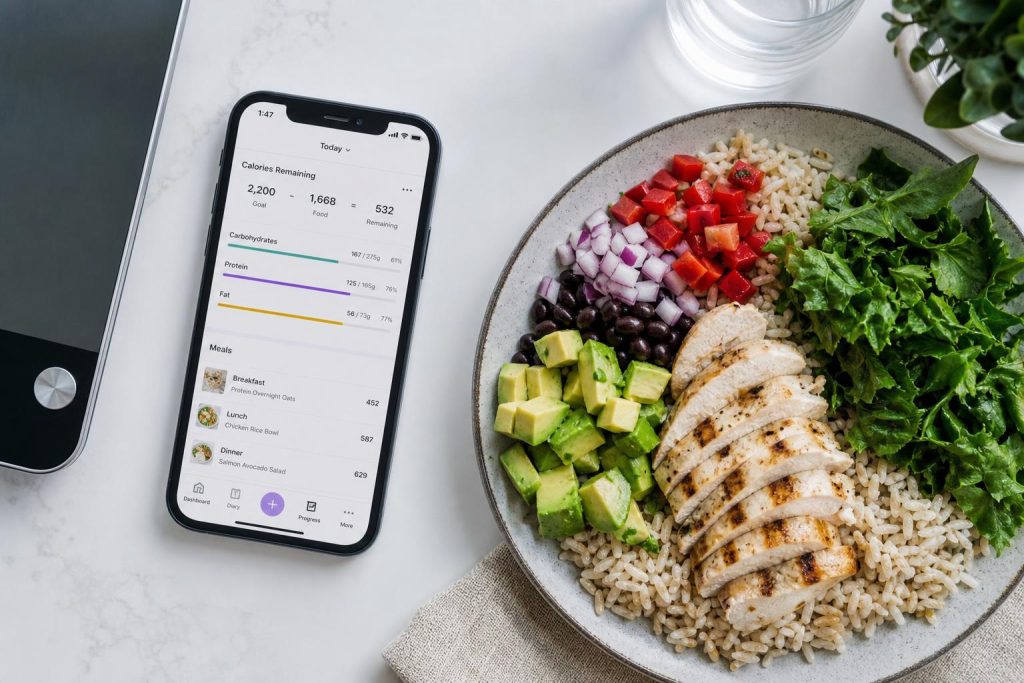
Whole food carbohydrates — legumes, oats, sweet potatoes, whole fruit, minimally processed grains — come packaged with fiber that slows gastric emptying and flattens the glucose curve. This is exactly what you want when your incretin system is already primed to respond to incoming glucose. Slower glucose entry means a more measured insulin response, better nutrient partitioning, and less post-meal energy crash. Tirzepatide already slows gastric emptying as part of its GLP-1 mechanism, so pairing it with high-fiber carbohydrates compounds that benefit rather than fighting against it.
Meal timing also interacts with insulin sensitivity in ways that matter here. Carbohydrate tolerance is generally higher earlier in the day and in the window surrounding resistance training. If you’re lifting weights — which remains the single most potent non-pharmacological intervention for improving insulin sensitivity and preserving lean mass — placing a moderate carbohydrate serving around your training session takes advantage of elevated GLUT4 translocation in muscle tissue, meaning glucose gets directed into muscle glycogen rather than adipose storage. Emerging research on next-generation GLP-1 multi-agonists continues to underscore that pharmacological tools work best within a framework of structured diet and training — the medications optimize the environment, but the inputs still determine the output.
Men on tirzepatide who are also trying to build or preserve muscle face a specific tension: the appetite suppression is profound, and hitting adequate protein targets becomes the priority, sometimes crowding out carbohydrates entirely. This can work in the short term for fat loss, but over months it may blunt training performance and recovery. A practical middle ground is anchoring meals around protein first — somewhere in the range of 0.7 to 1 gram per pound of bodyweight — and then filling remaining calories with mostly fiber-rich carbohydrates timed around activity. Tirzepatide users often eat fewer total meals, so the composition of those meals matters more, not less.
There’s also the question of what happens as the weight loss slows and the focus shifts to metabolic maintenance. The insulin-sensitizing effects of GIPR agonism documented in the preclinical literature suggest that tirzepatide users may retain improved glucose handling even at a stable weight — but that benefit will erode if dietary habits revert to high-glycemic patterns. Building the habit of carbohydrate quality now creates a metabolic foundation that persists whether you continue the medication long term or eventually taper off.
The Takeaway
Tirzepatide is one of the most metabolically sophisticated tools available for improving insulin sensitivity and driving fat loss — but it operates within a system that still responds to the quality of your inputs. The research makes clear that its GIP component improves glucose tolerance through mechanisms independent of weight loss, which means dietary carbohydrate choices can either reinforce or undermine that effect. Prioritize whole food carbohydrates with substantial fiber, time carbohydrate intake around resistance training, and maintain a protein-first meal structure. The drug creates a favorable metabolic environment. What you eat determines how much of that environment you actually use.
Scientific References
-
Davies, Turland, Tran et al. (2026).
A metabolic comparison of GIPR agonism versus GIPR antagonism in male mice..
Diabetes, obesity & metabolism.
View on PubMed → -
Conlon, O’Harte, Flatt et al. (2022).
Dual-agonist incretin peptides from fish with potential for obesity-related Type 2 diabetes therapy – A review..
Peptides.
View on PubMed → -
Muzurović, Volčanšek, Tomšić et al. (2022).
Glucagon-Like Peptide-1 Receptor Agonists and Dual Glucose-Dependent Insulinotropic Polypeptide/Glucagon-Like Peptide-1 Receptor Agonists in the Treatment of Obesity/Metabolic Syndrome, Prediabetes/Diabetes and Non-Alcoholic Fatty Liver Disease-Current Evidence..
Journal of cardiovascular pharmacology and therapeutics.
View on PubMed → -
Burmeister, Brown, Greer et al. (2026).
Glucagon-like peptide-1 and peptide YY multi-agonism with GEP44 to optimize weight loss and glycemic control while reducing gastrointestinal side effects: the future of anti-obesity pharmacotherapy?.
Frontiers in endocrinology.
View on PubMed →