Nausea is the most common reason people struggle with tirzepatide — and it’s also the most common reason they stop eating altogether. That’s a problem. A 2026 case report in the Journal of Eating Disorders documented a patient who developed starvation ketosis after tirzepatide-induced nausea led to severe caloric restriction — her serum 3-hydroxybutyrate spiked to 2,057 µmol/L while her BMI dropped to 15.6 kg/m². The takeaway isn’t that tirzepatide is dangerous. It’s that eating too little — even unintentionally — while on a powerful appetite suppressant carries real metabolic consequences. If you’re on tirzepatide and feeling queasy, you still need to eat. The question is: what?
Why Nausea Happens — and Why It Makes Eating Strategy Critical
Tirzepatide works by activating both GIP and GLP-1 receptors, slowing gastric emptying and dialing down appetite signals in the brain. That’s exactly why it drives weight loss — but it’s also why your stomach can feel like it’s staging a protest, especially in the first few weeks or after a dose increase. When food sits in your stomach longer, even small amounts can trigger that full, nauseated feeling. The instinct is to stop eating. But going too long without adequate nutrition — particularly protein and carbohydrates — can push your body into a starvation-like state that undermines everything you’re working toward: muscle preservation, metabolic health, and sustainable fat loss.
The goal during a nauseous phase isn’t to eat a perfect diet. It’s to eat enough of the right things to keep your metabolism functional, your muscle tissue intact, and your blood sugar stable. That means prioritizing foods that are easy to digest, low in fat (fat slows gastric emptying further), and high enough in protein to protect lean mass.
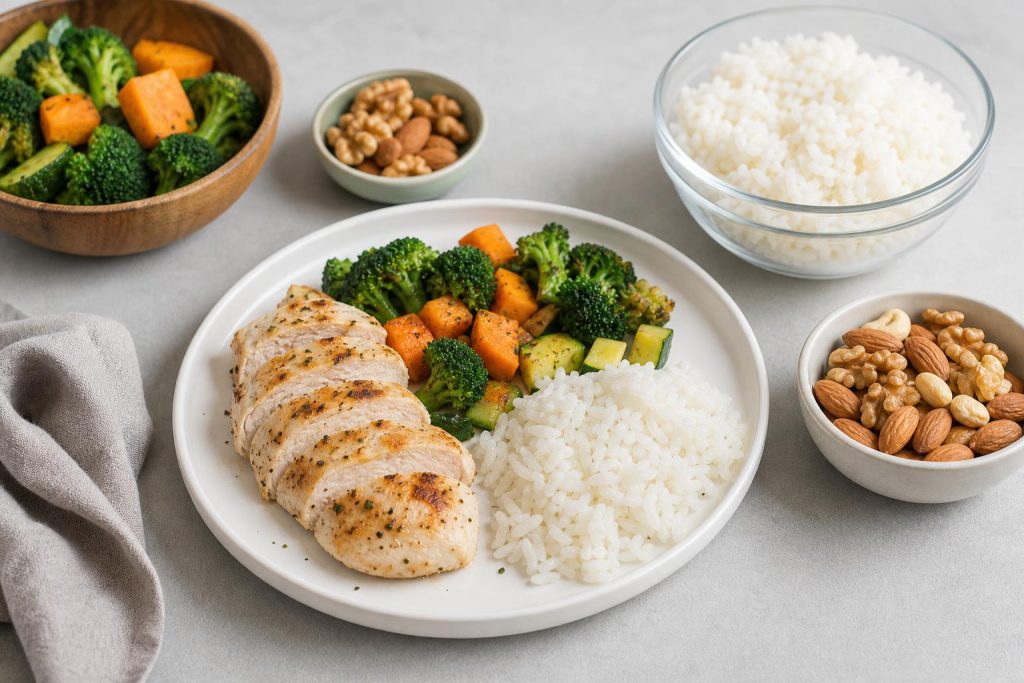
Start with small portions — think half a cup to a cup at a time — eaten slowly and at room temperature or slightly cool. Hot foods and strong smells tend to amplify nausea, so keep things simple and mild. Plain scrambled eggs, Greek yogurt, cottage cheese, and soft tofu are excellent protein sources that are gentle on a delayed digestive system. Bland, easily digestible carbohydrates like plain rice, oatmeal, toast, or bananas help stabilize blood sugar without overwhelming the gut. Avoid high-fat meals entirely during flare-ups — fried food, heavy cream sauces, and fatty cuts of meat are exactly the kind of foods that will linger in your stomach and worsen symptoms.
Hydration matters more than most men realize. Nausea often reduces the urge to drink, but dehydration compounds the problem. Sip water, diluted electrolyte drinks, or clear broths consistently throughout the day rather than drinking large amounts at once. Ginger — whether as tea, chews, or capsules — has modest but real evidence supporting its anti-nausea effects and is worth keeping on hand. Peppermint tea is another simple option that many find soothing.
The Foods That Will Actually Work For You
In practical terms, the best eating pattern on a nauseous tirzepatide day looks something like this: a small serving of Greek yogurt or a scrambled egg early in the morning, followed by plain rice or toast a few hours later, with a protein shake or cottage cheese in the afternoon if solid food still feels like too much. Protein shakes — particularly whey or a high-quality plant-based option — can be a lifeline here because they deliver the amino acids your muscles need without requiring you to chew through a full meal. Aim for at least 100 grams of protein daily, even on your worst days, even if it means leaning heavily on shakes to get there.
What you want to actively avoid: greasy or fried foods, spicy dishes, cruciferous vegetables like broccoli and Brussels sprouts (which produce gas and bloating), carbonated drinks, caffeine in large amounts, and alcohol. These aren’t just unpleasant — they actively slow digestion and amplify the nausea that tirzepatide is already producing.
Eating five to six very small meals across the day is significantly better tolerated than two or three larger ones. Your gastric emptying is already slowed — working with that physiology rather than against it is the practical move. Keep portions modest, chew thoroughly, and sit upright for at least 30 minutes after eating.
The Takeaway
Nausea on tirzepatide is real, it’s common, and it passes — but the worst response to it is stopping eating altogether. Starvation ketosis, muscle loss, and metabolic disruption are the consequences of not eating enough, and the research makes clear that these risks are not theoretical. Eat small, eat often, keep protein high, keep fat low, stay hydrated, and give your body the fuel it needs to do what you’re asking it to do. The medication is a tool. You still have to show up and do the work of fueling yourself properly.
Scientific References
-
Yasui-Furukori, Tasaki, Kaiga et al. (2026).
Starvation ketosis following self-administered tirzepatide obtained via online services in a young woman later diagnosed with anorexia nervosa: a case report..
Journal of eating disorders.
View on PubMed →