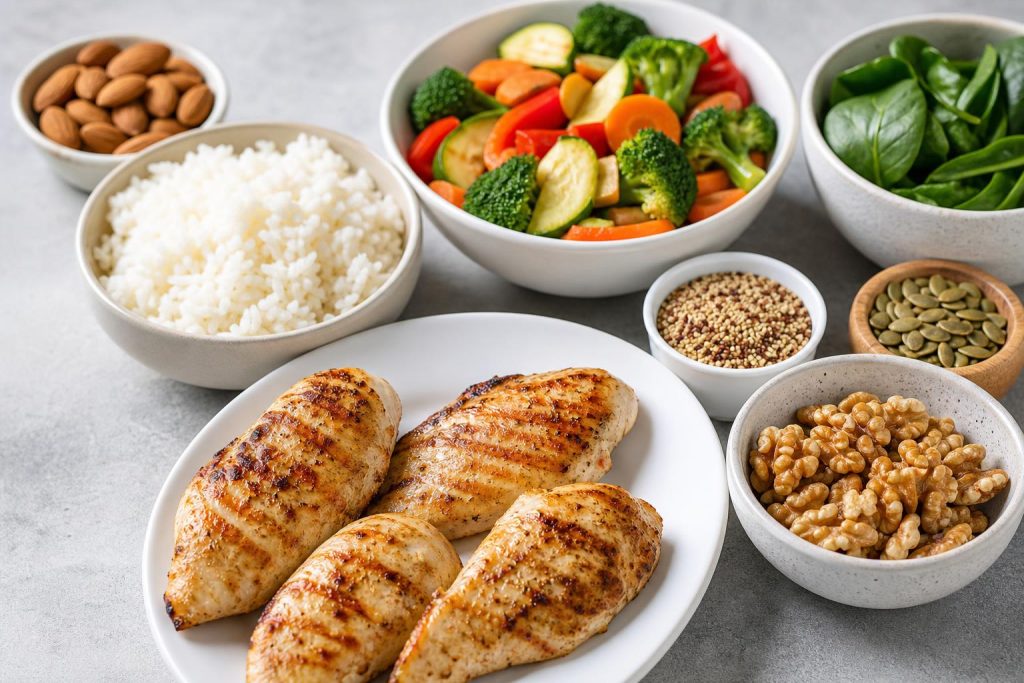
Here’s the problem with eating less: protein needs don’t shrink with your appetite. Whether you’re on a GLP-1 medication like semaglutide, deep into a caloric deficit, or simply trying to eat cleaner, your muscles still require adequate amino acid delivery to stay intact. Research published in the American Journal of Clinical Nutrition consistently shows that protein intakes of 1.6 to 2.2 grams per kilogram of body weight are necessary to preserve lean mass during a caloric deficit — and that target doesn’t get easier to hit when your stomach feels full after four bites.
This is the quiet challenge facing a growing number of men right now. GLP-1 receptor agonists have dramatically reduced appetite for millions of users, but the physiological need for protein hasn’t changed. Even without medication, aggressive dieting, stress, or illness can suppress hunger to the point where hitting 150 grams of protein a day feels like a part-time job. The solution isn’t to force feed yourself — it’s to get strategic about protein density per bite.
Why Protein Density Per Bite Is the Metric That Actually Matters
Most men think about protein in terms of daily totals. That’s the right instinct, but when stomach capacity is limited — whether from GLP-1 medications, dieting fatigue, or just a busy schedule — the more useful metric is grams of protein per ounce of food. You want foods that deliver maximum amino acids in minimum volume, without high fat or carbohydrate loads crowding out the protein signal.
Egg whites are the textbook example. A single cup of liquid egg whites provides roughly 26 grams of protein and just 120 calories, with almost no fat or carbohydrate taking up gastric space. Studies examining protein quality consistently rank egg white protein near the top for digestibility and amino acid completeness — meaning your body actually uses what you eat. Scrambled soft, they go down easily even when appetite is suppressed.
Canned tuna and salmon sit in the same category. Three ounces of albacore tuna packs approximately 22 grams of protein in a portion that fits in your palm. The texture is soft, the prep is zero, and it mixes into Greek yogurt, cottage cheese, or avocado without resistance. Speaking of Greek yogurt — plain, full-fat or 2% varieties offer around 17 to 20 grams of protein per cup with a creamy, easy-to-eat consistency that doesn’t demand much from a sensitive stomach. Research on dairy protein and satiety shows it also promotes muscle protein synthesis efficiently, making it one of the most practical whole-food protein sources available.
Cottage cheese deserves a dedicated mention. Half a cup delivers 13 to 15 grams of protein with a soft curd texture that most people can tolerate even on low appetite days. Blend it smooth and it becomes a sauce, a dip, or a base for a protein bowl. Ricotta follows a similar profile and works well in savory applications when you need variety.
For men who prefer animal proteins but struggle with volume, consider shrimp. Six large shrimp — barely a handful — provide about 18 grams of protein with minimal fat. Soft, mild, and fast to cook, shrimp fits the low-volume, high-protein brief better than almost any other whole food. Lean ground turkey or chicken breast, cooked moist and mixed into soft dishes, rounds out the practical whole-food list.
Protein shakes remain a legitimate tool here — not as a crutch, but as a low-volume, fast-absorbing option when solid food feels like too much. Whey protein has been shown to stimulate muscle protein synthesis acutely and effectively, and a single scoop mixed in water or milk delivers 20 to 25 grams in under eight ounces of liquid. For men on GLP-1 therapy especially, liquid protein can be the difference between hitting your daily target and falling 50 grams short.
What This Means For You
The principle is simple even if the execution requires some planning: when volume is limited, every bite has to work harder. Prioritize egg whites, Greek yogurt, cottage cheese, canned fish, shrimp, and lean ground proteins — foods that lead with protein and don’t waste stomach space on excess fat or carbohydrate. Build meals around two or three of these anchors, keep portions soft and easy to digest, and supplement with whey when whole food falls short. Your appetite may be reduced. Your protein requirement is not.