Wegovy (semaglutide 2.4 mg) has redefined what’s possible in weight loss. Clinical data shows patients losing 15% or more of their body weight — outcomes that, as Holst and colleagues noted in Nature Metabolism, were previously considered unrealistic with any non-surgical intervention. But here’s the problem nobody talks about enough: a significant portion of that weight loss isn’t fat. It’s muscle. And the single most powerful lever you have to prevent that from happening is protein intake — something most men on Wegovy are getting dangerously wrong.
When appetite is suppressed to the degree semaglutide achieves, eating enough becomes genuinely difficult. Men who were previously consuming 2,500–3,000 calories per day find themselves satisfied on 1,200–1,600. That’s not inherently bad — it’s the mechanism. But when total food intake collapses, protein is almost always the first macronutrient to take the hit. The result is a caloric deficit that’s working against you: yes, the scale is moving, but you’re losing the metabolically active tissue that keeps your resting metabolism humming and your physique looking the way you want it to.
Why Muscle Loss on GLP-1s Is a Real and Serious Risk
The research on GLP-1 receptor agonists like semaglutide is overwhelmingly positive for metabolic outcomes. A systematic review and meta-analysis in Diabetes & Metabolism confirmed that once-weekly semaglutide produces significantly greater reductions in body weight and HbA1c compared to other incretin-based therapies — but weight loss studies routinely show that anywhere from 25% to 40% of total weight lost during aggressive caloric restriction comes from lean mass, not fat. That number can skew even higher when protein intake is inadequate.
This matters enormously for long-term health. Muscle tissue is not just about aesthetics or athletic performance. It’s your primary site of glucose disposal, meaning more muscle equals better insulin sensitivity. It drives your resting metabolic rate, meaning losing it now makes weight regain far more likely later. And for men over 35, preserving lean mass becomes progressively more difficult with each passing year even under ideal conditions. Add a powerful appetite suppressant that makes eating feel like a chore, and you have a recipe for muscle loss that compounds over months of treatment.
The good news is that this outcome is not inevitable. The research on protein and lean mass preservation during weight loss is unambiguous: higher protein intake consistently protects muscle, supports satiety, and improves body composition outcomes. The goal on Wegovy isn’t just to lose weight — it’s to lose the right kind of weight.
The Actual Protein Numbers You Should Be Hitting
The current RDA for protein — 0.8 grams per kilogram of body weight — was designed to prevent deficiency, not to optimize body composition during aggressive caloric restriction. For men actively trying to preserve muscle while losing fat, the evidence-based target is substantially higher. Most sports nutrition and clinical nutrition research converges on a range of 1.6 to 2.2 grams of protein per kilogram of body weight per day for individuals in a caloric deficit. For a 220-pound (100 kg) man, that translates to roughly 160 to 220 grams of protein daily.
On Wegovy, many practitioners lean toward the upper end of that range — and there’s a practical reason for this beyond the muscle-sparing effect. Protein is the most satiating macronutrient per calorie. When you’re already eating less, anchoring your meals around high-quality protein sources means the calories you do consume are doing the maximum amount of work: preserving muscle, supporting recovery, and keeping hunger manageable even as semaglutide’s appetite suppression begins to wane between doses.
A reasonable working target for most men on Wegovy: aim for a minimum of 1.0 gram of protein per pound of your goal body weight — not your current body weight. If you’re 240 pounds and targeting 190, shoot for at least 190 grams of protein per day. This approach automatically scales your intake to where you’re headed rather than anchoring it to a body composition you’re actively trying to change. Some men will find this target genuinely challenging on reduced appetite, which is why strategy matters as much as the number itself.
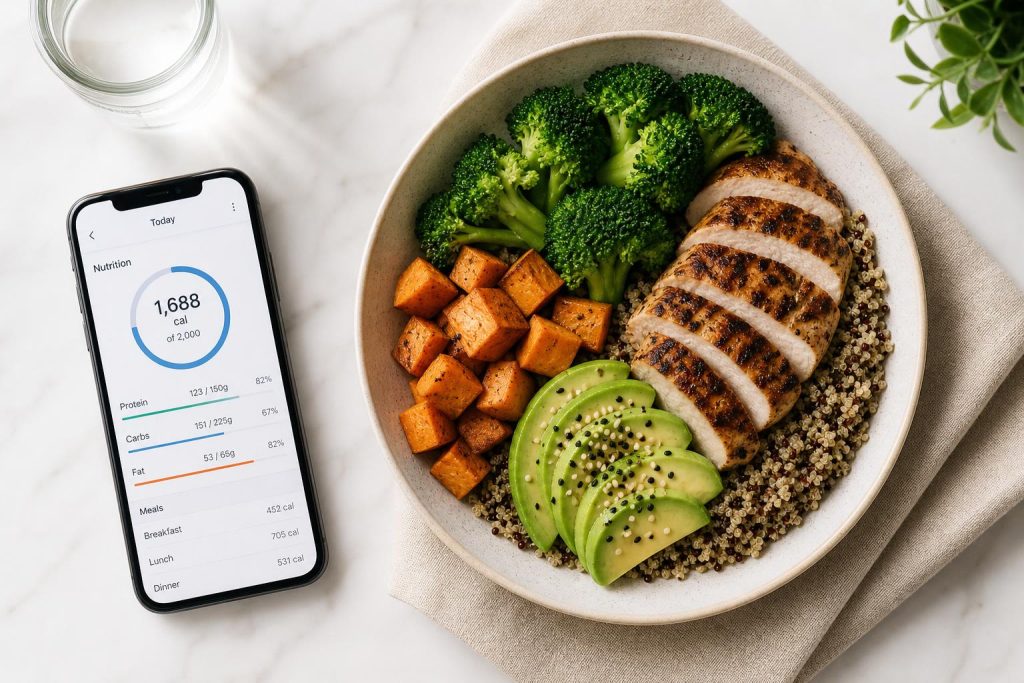
Prioritizing protein at the start of every meal is one of the most effective tactics. When Wegovy blunts your appetite, you often have a narrow window of genuine hunger before fullness sets in. Eating your protein source first — grilled chicken, eggs, Greek yogurt, cottage cheese, lean beef, fish — ensures you hit your most critical nutritional target before capacity runs out. Liquid protein sources like high-quality whey or casein shakes can be a practical bridge on days when solid food feels unappealing, as they deliver substantial protein without requiring the same gastric volume as whole food meals.
Training Is Non-Negotiable — Here’s Why It Changes the Equation
Protein intake alone is a necessary but not sufficient condition for muscle preservation. Resistance training provides the anabolic signal that tells your body to hold onto muscle even in a significant caloric deficit. Without that mechanical stimulus, even optimal protein intake cannot fully prevent lean mass atrophy during sustained weight loss. This principle applies whether you’re on Wegovy, in a traditional caloric deficit, or using any other weight management approach.
For men on semaglutide specifically, the combination of adequate protein and consistent resistance training represents the most evidence-supported strategy for improving body composition rather than simply reducing body weight. The distinction matters: two men can lose the same 30 pounds on Wegovy, with one emerging leaner and stronger and the other losing nearly as much muscle as fat — the difference being primarily protein intake and whether they lifted weights throughout the process.
Three to four sessions of resistance training per week, covering all major muscle groups, is sufficient to provide the retention signal your body needs. You don’t need to train like a competitive bodybuilder. Progressive overload — gradually increasing the challenge over time — is the key variable. Even when energy is lower due to reduced caloric intake, maintaining training frequency and effort preserves the hormonal and cellular environment that favors muscle retention.
It’s also worth noting that the broader landscape of GLP-1 and dual-agonist therapies is expanding rapidly. Emerging agents like orforglipron and Tirzepatide (Mounjaro) is a treatment for type 2 diabetes mellitus. are producing even greater weight loss in clinical trials — which makes the muscle preservation question even more pressing. The more weight you lose, the greater the absolute risk of losing lean mass along with it, and the more critical dietary protein becomes as a protective factor.
The Takeaway
Wegovy can do remarkable things for your body weight and metabolic health — but the medication doesn’t discriminate between fat and muscle when creating a caloric deficit. That job falls to you. Hit a minimum of 1.0 gram of protein per pound of your target body weight every single day, prioritize protein at the start of every meal, use shakes strategically when appetite suppression makes eating difficult, and keep lifting weights consistently throughout your treatment. The goal isn’t just a lower number on the scale. It’s a leaner, stronger body that performs better and holds onto its results long after the prescription ends. Protein is how you get there.
Scientific References
-
France, Syed et al. (2024).
Tirzepatide: A Review in Type 2 Diabetes..
Drugs.
View on PubMed → -
Cowart et al. (2020).
Oral Semaglutide: First-in-Class Oral GLP-1 Receptor Agonist for the Treatment of Type 2 Diabetes Mellitus..
The Annals of pharmacotherapy.
View on PubMed → -
Frias, Hsia, Eyde et al. (2023).
Efficacy and safety of oral orforglipron in patients with type 2 diabetes: a multicentre, randomised, dose-response, phase 2 study..
Lancet (London, England).
View on PubMed → -
Holst et al. (2024).
GLP-1 physiology in obesity and development of incretin-based drugs for chronic weight management..
Nature metabolism.
View on PubMed → -
Mishriky, Cummings, Powell et al. (2019).
Comparing once-weekly semaglutide to incretin-based therapies in patients with type 2 diabetes: a systematic review and meta-analysis..
Diabetes & metabolism.
View on PubMed →