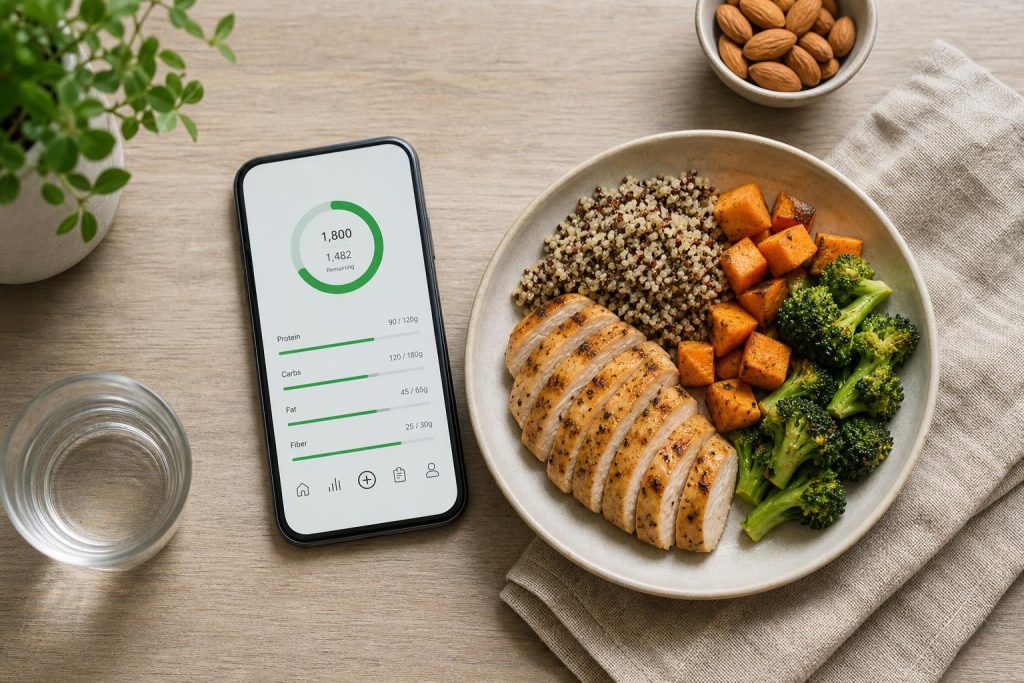
There’s a reason GLP-1 receptor agonists like semaglutide and tirzepatide have become some of the most talked-about medications in modern medicine. Glucagon-like peptide-1 — the gut hormone at the center of this revolution — is proving to be far more than a blood sugar regulator. Emerging research suggests GLP-1 receptor activation is associated with reductions in cognitive decline in adults with type 2 diabetes and Alzheimer’s disease, on top of its well-established roles in appetite regulation, insulin secretion, and metabolic control. But here’s what most men don’t realize: your body already makes GLP-1. It’s produced by specialized L-cells lining your small intestine and colon every time you eat, and everything from what’s on your plate to how you sleep at night influences how much of it your gut releases.
You don’t need a prescription to start working with this system. While GLP-1 medications deliver pharmacological doses that far exceed what your gut produces naturally, the underlying biology can still be meaningfully supported through diet, exercise, sleep, and gut health strategies. Whether you’re on a GLP-1 medication and want to optimize its effects, or you’re pursuing fat loss and metabolic health entirely through lifestyle, understanding how to naturally stimulate this hormone gives you a real physiological edge. This is the research-backed playbook for doing exactly that.
What GLP-1 Actually Does in Your Body
GLP-1 is an incretin hormone — meaning it’s released in response to food and amplifies your body’s insulin response before blood sugar even begins to rise. When you eat, L-cells in your gut detect nutrients passing through and begin secreting GLP-1 within minutes. That GLP-1 travels to the pancreas, triggering insulin release and suppressing glucagon, which keeps post-meal blood sugar from spiking. It also slows gastric emptying, meaning food moves more slowly from your stomach into your small intestine. The practical result? You feel full longer, eat less at your next meal, and your blood sugar stays more stable throughout the day.
Beyond metabolism, GLP-1 acts directly on the brain. Receptors for this hormone are found throughout the central nervous system, including in regions that govern reward, satiety, and executive function. This is part of why GLP-1 receptor agonists have shown cognitive benefits in diabetic patients — the hormone appears to have genuine neuroprotective properties. For healthy men, this means optimizing your natural GLP-1 secretion isn’t just about managing your waistline. It’s about supporting brain function, reducing inflammation, and building a metabolic foundation that pays dividends for decades.
The catch is that GLP-1 has an extremely short half-life in the bloodstream — roughly two minutes before enzymes called DPP-4 break it down. This is why pharmaceutical versions are engineered to resist that degradation. Natural strategies work by increasing how much GLP-1 your gut produces in the first place, by slowing its breakdown, or both. The research on this is more robust than most people expect.
The Nutritional Levers That Drive GLP-1 Release
Food is the most direct stimulus for GLP-1 secretion, and the composition of your meals matters enormously. Not all macronutrients are equal in this regard. Research consistently shows that protein is among the most potent triggers of GLP-1 release. Fermentable proteins and certain amino acids — particularly leucine, glutamine, and cysteine — activate specific receptors on L-cells, prompting robust hormone secretion. This is one of the physiological reasons high-protein diets are so effective for appetite control and fat loss. A meal built around chicken thighs, eggs, Greek yogurt, or grass-fed beef isn’t just delivering amino acids for muscle protein synthesis — it’s actively stimulating your gut’s satiety signaling system.
Dietary fiber, especially soluble and fermentable fiber, may be the single most underrated GLP-1 lever available. When fiber reaches your large intestine and gets fermented by gut bacteria, the byproducts include short-chain fatty acids (SCFAs) like butyrate, propionate, and acetate. These SCFAs bind to G-protein coupled receptors on L-cells — specifically GPR41 and GPR43 — and directly stimulate GLP-1 secretion. This is the gut microbiome-GLP-1 connection that researchers have been unpacking over the past decade, and it helps explain why diets rich in vegetables, legumes, oats, and whole grains consistently improve metabolic markers. Practically speaking, targeting 30 to 40 grams of fiber per day from diverse whole food sources — not a fiber supplement as an afterthought — meaningfully supports your body’s natural GLP-1 output.
Healthy fats, particularly long-chain fatty acids like those found in olive oil, fatty fish, avocado, and nuts, also stimulate GLP-1 release by activating fat-sensing receptors in the upper small intestine. Omega-3 fatty acids from fatty fish deserve particular mention here. Beyond their anti-inflammatory profile, EPA and DHA have been shown in clinical studies to enhance GLP-1 secretion and improve insulin sensitivity through complementary mechanisms. Eating salmon three times a week isn’t a small thing metabolically — it’s stacking multiple benefits simultaneously.
Fermented foods add another dimension. Yogurt, kefir, kimchi, sauerkraut, and similar foods feed a diverse gut microbiome, which in turn supports the SCFA production that drives GLP-1 from your L-cells. The microbiome-incentin axis is an active area of research, but the direction of evidence is clear: a healthier, more diverse gut ecosystem supports better hormonal signaling. For men who eat a narrow diet of ultra-processed food, the gut environment is often dysbiotic enough that natural GLP-1 output is chronically blunted — one of many reasons the standard Western diet promotes overeating.
Two specific compounds worth knowing about are berberine and curcumin. Berberine, an alkaloid found in plants like barberry and goldenseal, has demonstrated the ability to increase GLP-1 secretion in clinical studies while also inhibiting DPP-4 — the enzyme that breaks GLP-1 down. This dual action makes it one of the more pharmacologically interesting natural compounds for metabolic support, and it’s been studied extensively in the context of type 2 diabetes management with genuinely meaningful effect sizes. Curcumin, the active compound in turmeric, similarly shows evidence for enhancing GLP-1 secretion and improving insulin sensitivity, though bioavailability is a practical challenge that requires a formulation with piperine or a phospholipid complex to address. These aren’t magic bullets, but for men who are serious about metabolic optimization, they’re worth considering alongside a strong dietary foundation.
Exercise, Sleep, and the Lifestyle Variables Most Men Overlook
Physical activity influences GLP-1 through several mechanisms that the research is still fully characterizing, but the broad picture is encouraging. Acute aerobic exercise — a hard run, a cycling session, a long row — has been shown to transiently increase circulating GLP-1 levels, likely by stimulating intestinal motility and modifying the hormonal environment of the gut. More importantly, regular exercise training improves the sensitivity of tissues that respond to GLP-1, meaning you get more metabolic benefit from the GLP-1 you do produce. Resistance training appears particularly valuable for this purpose. Building and maintaining muscle mass improves insulin sensitivity systemically and enhances the downstream signaling pathways that GLP-1 activates. For a man doing three to four days of strength training per week alongside regular cardio, the cumulative metabolic effect includes a more favorable hormonal environment across the board — GLP-1 included.
The timing of meals also plays a meaningful role. Eating in alignment with your circadian rhythm — concentrating more of your caloric intake earlier in the day and avoiding large late-night meals — supports more favorable hormonal secretion patterns, including GLP-1. The gut, like most organs, follows circadian timing, and L-cell responsiveness appears to be higher during daylight hours. This doesn’t mean you need to eat breakfast if intermittent fasting works for you, but it does suggest that front-loading your nutrition earlier in the day rather than eating a 1,200-calorie dinner at 10 PM is metabolically smarter in multiple ways.
Sleep is where a lot of men silently undermine their metabolic health without realizing it. Chronic sleep deprivation elevates cortisol and ghrelin, blunts leptin, and disrupts the hormonal signaling that governs appetite and insulin sensitivity. There is evidence that poor sleep quality directly impairs GLP-1 secretion and reduces incretin effectiveness. Seven to nine hours of quality sleep isn’t a lifestyle luxury — for a man trying to manage his weight, maintain muscle, and keep metabolic markers trending in the right direction, it’s a physiological requirement. If your sleep is consistently poor, no dietary optimization is going to fully compensate.
Chronic stress is another variable that suppresses the gut-hormone signaling axis in ways that are easy to underestimate. Elevated cortisol promotes visceral fat accumulation, impairs gut motility, and creates an inflammatory environment in the intestine that blunts L-cell function. Stress management — whether through structured breathwork, regular time outdoors, adequate social connection, or whatever consistently works for you — isn’t soft advice. It’s addressing a real physiological mechanism that affects your hormone levels.
Alcohol deserves a direct mention. Regular alcohol consumption disrupts gut microbiome diversity, promotes intestinal permeability, and impairs the hormonal signaling that governs appetite. Men who drink regularly and then wonder why they overeat consistently are dealing in part with an alcohol-mediated suppression of the very satiety signals — including GLP-1 — that would otherwise help them self-regulate. Reducing alcohol intake is one of the highest-leverage interventions for men trying to improve metabolic health, and it works at least in part through restoration of gut-derived hormonal signaling.
It’s also worth understanding what GLP-1 medications are doing in this broader context. Pharmaceutical GLP-1 receptor agonists like semaglutide, liraglutide, and the dual GIP/GLP-1 agonist tirzepatide work by activating these same receptors with a sustained, high-potency signal that natural secretion cannot match. Research on tirzepatide has shown it reduces inflammatory pathways including Th17 cell differentiation, suggesting these medications have systemic anti-inflammatory effects that extend well beyond glycemic control. For men who need the magnitude of effect that only pharmacological doses can deliver — significant obesity, metabolic syndrome, or type 2 diabetes — these medications are legitimate and powerful tools. But the lifestyle strategies described here aren’t made irrelevant by a prescription. They work synergistically, reinforcing the hormonal environment that the medication is amplifying.
The intestinal biology underlying GLP-1 is also being studied in the context of gut health more broadly. Research examining glucagon receptor biology and intestinal growth continues to refine our understanding of how the gut endocrine system functions, including the complex interplay between GLP-1, GLP-2, and intestinal cell populations. This basic science reinforces why maintaining a healthy gut environment — through diet, sleep, stress management, and avoiding unnecessary antibiotic use — matters not just for digestion but for the hormonal output of the gut itself.
What This Means For You
Boosting your natural GLP-1 doesn’t require a pharmacy. It requires treating your gut like the endocrine organ it actually is. Build your meals around high-quality protein, diverse fiber sources, and healthy fats — not because these are generic healthy eating guidelines, but because they are the specific macronutrient signals that tell your L-cells to produce GLP-1. Prioritize sleep and manage chronic stress, because these variables directly affect how well your gut-hormone signaling functions. Train consistently, build muscle, and include regular cardio — not just for the calories burned, but for the systemic metabolic improvements that make your body more responsive to the hormones it’s already producing.
If you’re already using a GLP-1 medication, these strategies amplify what you’re getting pharmacologically. If you’re not, they’re your most direct path to working with this system through the tools you already control. Either way, understanding the biology gives you something more powerful than a trend to follow — it gives you a mechanistic reason to stay consistent.
Scientific References
-
Ballum, Dri, Liao et al. (2026).
The effect of glucagon-like peptide 1 (GLP-1) receptor agonists on cognition: A systematic review of systematic reviews and meta-analyses..
Journal of affective disorders.
View on PubMed → -
Sun, Yao, Zuo et al. (2025).
Tirzepatide improves neutrophilic inflammation in obese asthmatic mice by downregulating Th17 cell differentiation..
Molecular biology reports.
View on PubMed → -
Hunt, Yassin, Olsen et al. (2021).
Intestinal Growth in Glucagon Receptor Knockout Mice Is Not Associated With the Formation of AOM/DSS-Induced Tumors..
Frontiers in endocrinology.
View on PubMed →